13 Attorneys General Ask Supreme Court to Revive Florida’s Stop WOKE Act
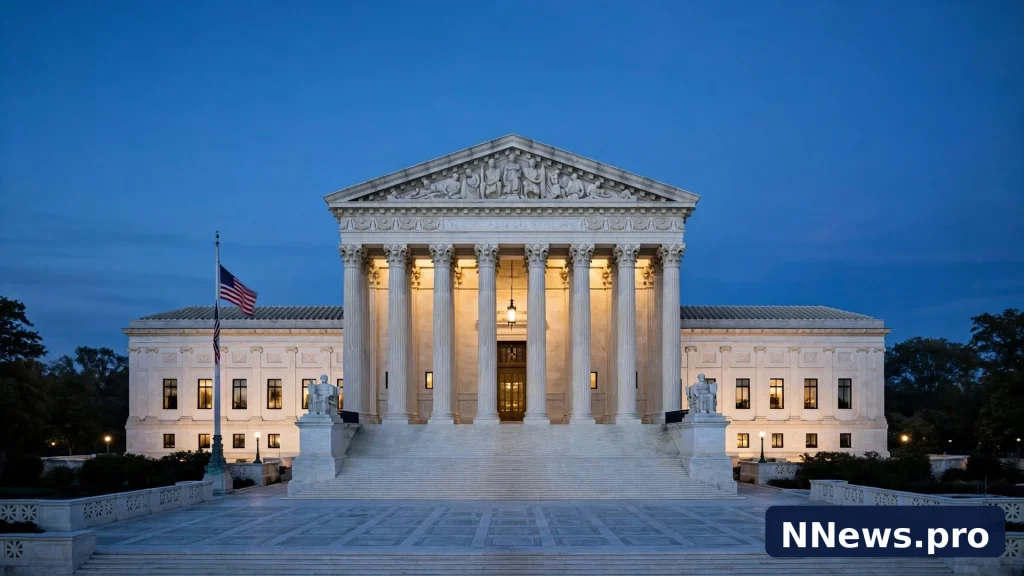
Attorneys general from 13 states have asked the U.S. Supreme Court to revive Florida’s Stop WOKE Act, a 2022 law that limits what public university professors can require students to believe about race and sex in the classroom. The filing sets up a major test of academic freedom and the First Amendment rights of public employees — one that could reach far beyond Florida’s campuses.
The amicus brief, filed on Monday, November 9, supports Florida’s petition asking the justices to review a July ruling by the U.S. Court of Appeals for the 11th Circuit that blocked the law’s higher-education provisions. Alabama Attorney General Steve Marshall and Kentucky Attorney General Russell Coleman led the filing, which was announced on November 10.
What the brief asks the justices to decide
Florida’s petition, filed by Attorney General James Uthmeier, asks the Supreme Court to determine “whether public university professors have a special status under the First Amendment, such that the speech they express in the course of their official duties, unlike the official-duty speech of all other public employees, is protected by the First Amendment from regulation by their employer, the state.”
The 13 states want the Court to clarify its 2006 decision in Garcetti v. Ceballos, which held that the First Amendment protects public employees’ private speech but not remarks made while they exercise their official duties. The attorneys general argue that public university professors should be held to that same standard — and that academic freedom, while an important societal norm, cannot be read into the First Amendment to give professors special rights no other public employee has.
“Academic freedom is a vital principle, but not a trump card,” Marshall said in announcing the brief. “No public employee, whether a professor, teacher, or a clerk, get a bigger share of the First Amendment than anyone else.”
Joining Alabama and Kentucky in the brief are the attorneys general of Arkansas, Georgia, Idaho, Indiana, Iowa, Kansas, Louisiana, Montana, Nebraska, South Carolina, and Texas.
What the Florida law does
The law at the center of the case is Florida’s Individual Freedom Act, better known as the Stop WOKE Act. Passed in 2022, it prohibits professors at public universities from compelling students to believe eight listed concepts, including that members of one race, color, national origin, or sex are morally superior to members of another race, color, national origin, or sex.
Professors may discuss the concepts as part of a larger course of instruction, the law provides, but they may not promote them or require students to believe them. A group of public university professors challenged the law, arguing it violated their right to academic freedom under the First Amendment.
A lower court quickly blocked the law, and in July a divided panel of the 11th Circuit concluded it likely violates the First Amendment. In the majority opinion, the judge wrote that Garcetti does not extend to professors’ classroom speech — the very question Florida now wants the Supreme Court to settle.
Alabama has a similar law of its own, which was also challenged and is currently on appeal at the 11th Circuit. The state argues in the brief that public university professors should not have veto power over their public employer over how and what they may teach in class, and that students must be able to learn without professors forcing them to believe concepts the brief describes as racist.
Why this matters
“If SCOTUS takes up the case, the petition has the potential to do enormous damage to public universities,” Robert Post, a professor at Yale Law School, told Inside Higher Ed. The decision could also influence two lawsuits brought by the American Association of University Professors against the Texas A&M University and Texas State University systems, which argue that those systems’ course-content restrictions violate professors’ academic freedom and the First and 14th Amendments.
Related Articles

The case arrives as states continue to clash over who controls what is taught in public classrooms. Florida’s university system delayed a vote on admitting undocumented students, the Justice Department sued Penn State over in-state tuition for undocumented students, and Virginia pulled out of a federal school scholarship program — all in recent weeks, each testing the boundary between state authority and the classroom.
Latest developments
The Supreme Court has not yet decided whether it will hear Florida’s appeal in Florida Board of Governors v. Pernell. The justices typically announce whether they will take up a case weeks or months after a petition is filed, and a decision on review could come at any of the Court’s regular conferences.
If the Court declines the case, the 11th Circuit’s ruling stands and the law’s higher-education provisions remain blocked in Florida. If it grants review, the case would likely be argued in the spring, with a decision by the end of the term — and with consequences for public universities in every state that has adopted, or is considering, similar classroom restrictions.
Frequently asked questions
What does Florida’s Stop WOKE Act actually ban?
The law bars professors at Florida’s public universities from compelling students to believe eight listed concepts about race, color, national origin, or sex — for example, that members of one race are morally superior to members of another. Professors can discuss the concepts in class, but they cannot promote them or require students to accept them as true.
What is Garcetti v. Ceballos and why does it matter here?
Garcetti v. Ceballos is a 2006 Supreme Court decision holding that the First Amendment protects public employees’ private speech, but not speech they make as part of their official duties. The 13 states argue professors should be treated like other public employees under that rule. The 11th Circuit disagreed, holding that Garcetti does not extend to a professor’s classroom speech — and that disagreement is the question Florida is asking the justices to resolve.
Has the Supreme Court decided to hear the case?
No. The Court has not yet decided whether it will grant review of Florida’s petition in Florida Board of Governors v. Pernell. The 13-state brief urges the justices to take the case.
The Supreme Court now holds the next move in a fight over classroom speech that began in Florida’s legislature in 2022 and has since spread to more than a dozen states. Whatever the justices decide — to hear the case or to leave the 11th Circuit’s ruling in place — the answer will shape what public university professors across the country can be told to teach, and what they can be told not to.
Sources: Alabama Attorney General’s Office, “Attorney General Marshall Co-Leads Brief Urging U.S. Supreme Court to Uphold State Anti-DEI Laws for Public Universities” (November 10, 2026) | Inside Higher Ed, “13 AGs Ask Supreme Court to Uphold Florida’s Stop WOKE Act” (November 12, 2026) | Daily Beltway, “13 States Urge Supreme Court to Revive Florida’s Stop WOKE Act” (November 13, 2026)