Canada Offers Stellantis a New Deal to Save Its Brampton Plant a Day After Threatening to Sue

Canada Offers Stellantis a New Deal to Save Its Brampton Plant a Day After Threatening to Sue
Canada’s federal and Ontario governments have offered Stellantis a new package of funding and production options to persuade the automaker to cancel the sale of its idled Brampton, Ontario, assembly plant — one day after Ottawa threatened to sue the company to recover hundreds of millions of dollars in subsidies.
Industry Minister Mélanie Joly said Friday that the two governments, working with the union representing the plant’s workers, had put what she called an “aggressive package” in front of Stellantis. She said the parties remain “in solution mode to prevent the sale” of the factory to Canadian defence contractor Roshel Inc.
“We’ve put an aggressive package to Stellantis to prevent the sale, and we are still in solution mode to prevent the sale,” Joly said at an auto-sector funding announcement in Vaughan, Ontario, alongside Ontario Economic Development Minister Vic Fedeli.
A carrot offered a day after the stick
The offer came just 24 hours after Joly served Stellantis with a formal notice of default on a 2022 funding agreement, giving the world’s fourth-largest carmaker 30 days to fix alleged breaches or face a lawsuit.
“We sent a notice of default and, basically, they have 30 days or else. Of course, we’ll sue them,” Joly told reporters in Toronto on Thursday after meeting with Stellantis Canada, the union and Ontario Premier Doug Ford.
Joly said the governments will now present new scenarios, worked out with Unifor, to Stellantis global chief executive Antonio Filosa. No date has been set for that meeting. Fedeli said a $2.5-billion federal-provincial auto fund would be “part of the solution, not all of it,” and that supports are available if Stellantis can “buy some time” for the idled plant rather than completing the sale.
The lawsuit threat has not been withdrawn. Joly reiterated Friday that if Stellantis proceeds with the sale, it would be on the hook for “hundreds of millions of dollars” Ottawa provided to retool its Brampton and Windsor plants for electrified vehicles.
What Ottawa says Stellantis did wrong
At the centre of the dispute is a contribution agreement signed in September 2022 under Canada’s Strategic Response Fund. Ottawa committed up to C$529 million (about US$380 million) to help Stellantis retool its Brampton and Windsor plants, while Ontario pledged C$513 million under the same accord. Federal money actually disbursed to Stellantis stood at roughly C$222 million as of December 2025, including at least C$55 million tied to Windsor.
Joly’s letter to Stellantis Canada chief executive Trevor Longley identified several alleged violations: the suspension of the Brampton retooling on February 20, 2025, the relocation of planned Jeep Compass production to Illinois, the failure to identify a replacement vehicle for Brampton, and the planned sale of the plant — which the agreement says cannot close before 2033 unless specified conditions render it commercially unviable.
Ottawa says it could demand repayment of all or part of the contribution, with interest, and could terminate the 2022 agreement outright. Joly is seeking a response by December 12.
Stellantis said Thursday it intends to repay only $24 million it said it received for the Brampton retooling. Joly rejected that offer. “The Brampton facility of Stellantis is linked to the Windsor plant and the battery investment, and that’s why I continue to say Stellantis is on the hook for hundreds of millions of dollars,” she said.
The plant at the centre of the fight
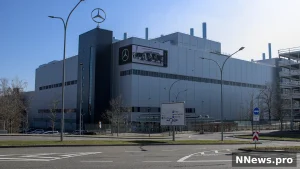
The Brampton plant has been idle since 2023, when production stopped so the facility could be retooled to build the Jeep Compass. Stellantis shelved that retooling early in 2025 and shifted planned Compass output to Illinois, leaving more than 2,200 Canadian workers without jobs. The company announced Monday that it had agreed to sell the site to Roshel, which builds armored vehicles for defence and security customers. The price was not disclosed, and the sale is expected to close by the end of the year.
Prime Minister Mark Carney has described the situation as “unacceptable” and a “betrayal” of Canadian workers. Joly was blunter still about the plant’s future: “When it comes to Stellantis our position is clear: they cannot close the plant.”
Related Articles


Stellantis Canada said the sale “provides a path to return the facility to productive industrial use” while allowing the company to focus on keeping manufacturing in Canada competitive “in the face of challenging market realities.” The company said it is prepared to collaborate with Unifor, the union representing more than 9,000 Stellantis workers across Canada. Unifor members voted last month to authorize a potential strike, with 97.3 per cent of those who took part backing the mandate.
Why this matters
The standoff is the sharpest clash yet between Ottawa and an automaker over the tariff pressure reshaping North American car production. President Donald Trump has repeatedly pressed automakers to move production south of the border, and Stellantis cited U.S. tariffs and other market headwinds when it redirected Compass output to Illinois.
For American readers, the dispute is a window into how the trade war is redrawing factory maps: a plant built for the North American market is being fought over by two governments, a global automaker and a defence contractor, with the outcome likely to set a precedent for how Canada enforces the subsidy deals it signed to keep auto jobs at home.
The case also tests whether subsidy clawback threats can actually reverse a signed sale. The Roshel deal is expected to close before the end of the year, while Ottawa’s 30-day clock runs to December 12 — leaving only a narrow window for the new package to change Stellantis’s mind.
Latest developments
The next step is the meeting with Filosa, Stellantis’s global chief, where Joly and Fedeli plan to present the new scenarios. No date has been set. Until then, both tracks run in parallel: the offer of new funding and production options on one side, and the notice of default and the threat of a lawsuit on the other.
The dispute also reaches beyond Brampton: Ottawa says it wants the Windsor money back as well, and Joly has said the Brampton facility is linked to the Windsor plant and the battery investment. The plant’s electric-vehicle plans remain in limbo, with no replacement vehicle named and no production scheduled.
Frequently asked questions
Why is Canada threatening to sue Stellantis?
Ottawa says Stellantis breached a 2022 agreement by halting the Brampton retooling, moving planned Jeep Compass production to Illinois, failing to name a replacement vehicle, and agreeing to sell the plant. The government says the company could owe hundreds of millions in repayment, with interest.
What is in the new package Ottawa is offering?
The full details have not been disclosed. Joly described it as an “aggressive package” of new funding and production options, worked out with Ontario and Unifor, and Fedeli said a $2.5-billion federal-provincial auto fund would be part of the solution. The governments want Stellantis to “buy some time” for the plant while new scenarios are presented to its global chief executive.
Can Ottawa actually stop the sale?
That is uncertain. Stellantis expects the Roshel sale to close by the end of the year, while Ottawa’s 30-day deadline runs to December 12. The government is betting the lawsuit threat plus the new funding offer will persuade the company to reconsider before the deal closes.
How many workers are affected?
More than 2,200 workers lost their jobs when Compass production was moved out of Brampton, and Unifor represents more than 9,000 Stellantis workers across Canada. Union members voted last month to authorize a potential strike, with 97.3 per cent of voters in favour.
The coming weeks will show whether Ottawa’s two-track approach — a lawsuit threat in one hand and a funding package in the other — can save a plant that has not built a vehicle in three years, or whether the Roshel sale closes first and the fight moves to the courts.
Sources: The Canadian Press via The Globe and Mail, The Canadian Press, Industrial Equipment News, BigGo Finance, The Canadian Press