Trump Threatens to Double Tariffs on Mexico Over Migrant Caravan Heading North
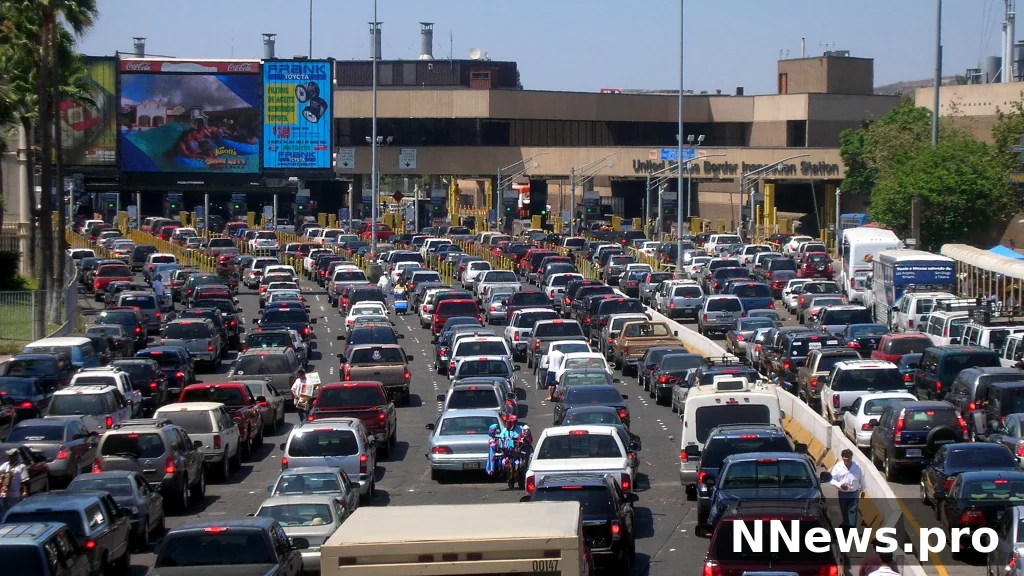
President Donald Trump on Thursday threatened to immediately double tariffs on Mexico unless the country stops a migrant caravan of about 1,500 people walking north from its southern border, warning that the group “will not be accepted” into the United States.
The threat, posted on Truth Social on Thursday morning, ties trade penalties directly to border enforcement and lands as the United States and Mexico negotiate a new bilateral trade deal. It is the first time Trump has threatened to raise tariffs on Mexico over migration since last week’s midterm elections, in which Democrats won control of both chambers of Congress.
“Here We Go Again”
“Here we go again!” Trump wrote on social media. “They will not be accepted! MEXICO MUST STOP THEM, NOW, and if they do not do so, the Tariffs on Mexico will be IMMEDIATELY DOUBLED. MEXICO, THE GOVERNOR OF TEXAS, THE VERY LIBERAL NEW GOVERNOR OF TEXAS, OUR GREAT BORDER PATROL, & ICE, HAVE BEEN SO INFORMED. There will be no leniency!”
The post set no deadline and did not say which tariff rates would be doubled, according to Reuters, which first reported the threat. Trump also said he had informed Texas Governor Gina Hinojosa, the U.S. Border Patrol and Immigration and Customs Enforcement of his position.
The Caravan From Tapachula
The group at the center of the threat is an estimated 1,500 people, mostly from Central America, who set off on Tuesday from Tapachula, a city in southern Mexico near the Guatemalan border. Reuters reported that many in the group are families, including parents traveling with young children, and that the caravan has been dubbed “God With Us.”
The migrants are initially heading toward Mexico City, more than 1,000 kilometers (about 620 miles) from Tapachula. According to Reuters, many set out hoping that the Democrats’ victory in the U.S. midterm election could open pathways for them to live and work in the United States.
It is a long road to the U.S. border. Mexico City is still roughly 1,000 kilometers from the nearest U.S. crossing, and past caravans have typically broken up or been dispersed by Mexican authorities long before reaching the frontier.
Mexico Pushes Back
Mexican President Claudia Sheinbaum responded on Thursday, saying that no migrant caravan has arrived at the U.S. border since Trump returned to power. She said people in the caravan have been informed that it is very difficult to enter the United States, and that Mexico is looking to return them to their countries of origin.
There was no immediate response from the Mexican government to the tariff threat itself on Thursday morning. Sheinbaum was due to hold a news conference on Thursday, and her office had not issued a public statement on the threat by then.
The exchange comes a day after Sheinbaum said she had a “very good” phone call with Trump on Wednesday as the two countries work toward a bilateral trade deal. She said she is seeking a reduction in U.S. tariffs on Mexican products, including relief for steel, aluminum and cars.
What Tariffs Apply Now
The threat raises an immediate question: which tariffs would be doubled? Trump did not specify, and the current tariff landscape for Mexican goods is complicated.
The 25 percent tariffs on Mexican goods imposed in 2025 under emergency powers no longer apply. On February 20, 2026, the Supreme Court ruled that the International Emergency Economic Powers Act does not authorize tariffs, and collection of those duties ended on February 24, 2026.
Since July 24, 2026, a 10 percent Section 301 tariff has applied to Mexican goods that do not qualify under the U.S.-Mexico-Canada Agreement (USMCA). Goods that qualify under USMCA and are entered with a claim are exempt. About 80 percent of Mexican exports to the United States already enter tariff-free under existing trade arrangements, according to Reuters, and 88 percent of U.S. imports from Mexico were USMCA-compliant in the first five months of 2026, according to the Congressional Research Service.
Separate Section 232 tariffs remain in force regardless of USMCA status: 25 percent on vehicles, listed auto parts and medium and heavy trucks, and 50 percent, 25 percent or 15 percent on steel, aluminum and copper products depending on the category.
A Legal Question Hangs Over the Threat
Bloomberg reported that it is uncertain whether Trump can lawfully double the levies, given the Supreme Court ruling earlier this year that limited his tariff powers. That uncertainty matters because the tariff threat is the leverage itself: if the legal basis for doubling duties is in doubt, the threat may carry less weight in Mexico City than Trump intends.
Related Articles



The timing also matters. Trump chose in July not to extend the USMCA in its current form, and the agreement now goes through annual joint reviews until it expires in 2036 unless the three countries confirm an extension. The United States and Mexico are negotiating a replacement bilateral trade deal, and Sheinbaum has said she hopes it will result in lower U.S. tariffs on Mexican products.
U.S. stocks have reacted sharply to tariff news this year, and any escalation with Mexico, the United States’ largest trading partner, would be closely watched by American businesses that depend on cross-border supply chains, particularly automakers with plants on both sides of the border.
Why This Matters
The threat links two of the most politically charged issues in American politics — trade and immigration — at a moment when both are in flux. Trump is using tariffs as a tool to pressure Mexico on migration, just as he did in his first term, but the legal ground has shifted since the Supreme Court’s February ruling, and Mexico is now negotiating a trade deal from a stronger position than it held a year ago.
For American consumers, the stakes are concrete. Mexico is the top source of U.S. imports, and higher tariffs on Mexican goods would raise costs for cars, electronics, produce and other products. For Mexico, the threat is a reminder that trade access to the U.S. market remains tied to migration enforcement, whatever the outcome of the trade negotiations.
The Supreme Court cleared the way for border wall construction in Texas earlier this week, and the administration has made border enforcement a central theme of its post-midterm agenda. The caravan’s progress in the coming days — and Sheinbaum’s response — will show whether the tariff threat turns into action or remains a negotiating tactic.
Latest Developments
- Trump issued the tariff threat on Truth Social on Thursday morning, November 12, 2026.
- The caravan of about 1,500 people left Tapachula on Tuesday, November 10, and is heading toward Mexico City.
- Sheinbaum said Thursday that no caravan has reached the U.S. border since Trump returned to power and that Mexico is working to return migrants to their countries of origin.
- The U.S. and Mexico are negotiating a bilateral trade deal; Sheinbaum spoke with Trump by phone on Wednesday and described the call as “very good.”
- No deadline was given for Mexico to act, and no specific tariff rates were named in Trump’s post.
Frequently Asked Questions
What did Trump threaten to do to Mexico?
President Donald Trump said on Truth Social on Thursday that tariffs on Mexico will be “IMMEDIATELY DOUBLED” unless Mexico stops migrant caravans heading toward the United States. He gave no deadline and did not say which tariff rates would be doubled.
How big is the migrant caravan, and where is it?
The caravan is an estimated 1,500 people, mostly from Central America, including many families with young children. It left Tapachula, near Mexico’s border with Guatemala, on Tuesday, November 10, and is initially heading toward Mexico City, more than 1,000 kilometers away.
What tariffs does the U.S. currently charge on Mexican goods?
Since July 24, 2026, a 10 percent Section 301 tariff applies to Mexican goods that do not qualify under the USMCA. Goods that qualify under USMCA are exempt, and about 80 percent of Mexican exports enter the U.S. tariff-free. Separate Section 232 tariffs of 25 percent on vehicles and up to 50 percent on steel, aluminum and copper remain in force.
Has Mexico responded to the threat?
Mexican President Claudia Sheinbaum said on Thursday that no migrant caravan has reached the U.S. border since Trump returned to power, and that Mexico is looking to return caravan members to their countries of origin. Her government had not issued a public response to the tariff threat itself by Thursday morning.
Sources
- Reuters, “Trump threatens to double tariffs on Mexico if it does not halt migrants,” November 12, 2026
- Bloomberg (via Unbiased Headlines), on the legal uncertainty around doubling the levies
- Devdiscourse, “Mexico says no migrant caravan has reached US border during Trump’s second term,” November 12, 2026
- Ossiano Capital, “US Tariffs on Mexican Goods: What Applies in October 2026”
- Al Jazeera, “Mexico’s Sheinbaum says she spoke with Trump as trade negotiations continue,” November 11, 2026