Mayon Volcano Grows New Lava Dome as Philippines Keeps Alert Level 3 in Place
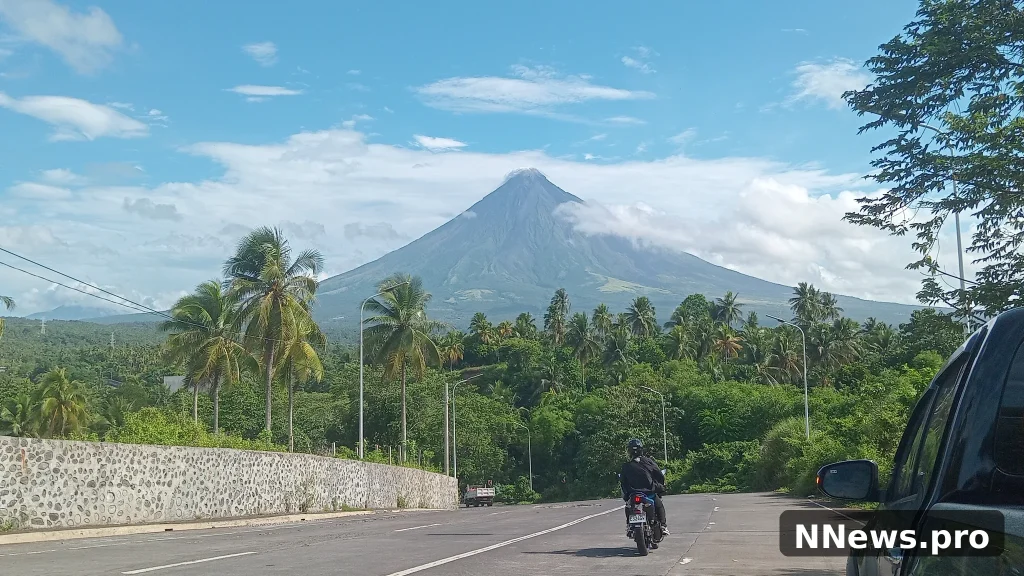
A new lava dome has formed inside the summit crater of Mayon Volcano in the Philippines, the country’s volcanology agency said on Friday, November 13, as it kept the volcano at Alert Level 3 and warned that a hazardous eruption remains possible.
The Philippine Institute of Volcanology and Seismology (PHIVOLCS) said the dome was first spotted on Friday morning through the close-up camera system at the Mayon Volcano Observatory in Legazpi City, Albay province. Comparison images released by the agency show the crater on November 6 with no dome, and the same view on November 13 with a dark mound now sitting inside the crater.
What PHIVOLCS Found
The dome did not appear overnight without warning. PHIVOLCS said an international partner had already detected the crater floor bulging in satellite images taken between November 2 and 4, suggesting magma had been pushing upward for days before the dome became visible on camera.
In its November 13 monitoring update, the agency recorded eight volcanic earthquakes in the previous 24 hours, along with minor Strombolian activity — small bursts of lava fragments from the vent — and moderate plumes of gas and vapor drifting toward the west-southwest and southwest.
Then, on Saturday, November 14, thermal-camera footage published by PHIVOLCS showed a small ash plume beginning to rise from the crater at around 9:30 p.m. local time, growing into a distinct column over several minutes. The agency has not raised the alert level further, and no eruption has been confirmed.
What Alert Level 3 Means
Mayon remains at Alert Level 3, which PHIVOLCS uses to signal intensified magmatic unrest and the possibility of a hazardous eruption within weeks. Entry into the six-kilometre permanent danger zone around the volcano is prohibited, and aircraft are advised to avoid flying close to the summit.
PHIVOLCS said it will continue monitoring the volcano around the clock and may raise the alert level if activity escalates. Residents in Albay province are advised to follow official guidance from PHIVOLCS and local government, and travellers should check the latest official alerts before heading to the area.
Why the Dome Matters
A lava dome forms when thick, slow-moving lava piles up around a vent instead of flowing away. Its growth is a direct sign that magma is rising beneath the volcano. If the dome grows unstable and collapses, it can send rockfalls down the slopes that may develop into fast-moving pyroclastic flows — one of the most dangerous hazards at Mayon.
Philippine media note that similar domes formed before Mayon’s eruptions in 2014 and 2023. That history is why volcanologists are watching this dome closely. At the same time, officials stress that a dome alone does not confirm an eruption is imminent: domes can grow, stall, or collapse without a full eruption, and only continued monitoring can show which way Mayon is heading.
Related Articles

Background
Mayon, in Albay province in the Bicol region near Legazpi City, is one of the most active volcanoes in the Philippines and is famous for its near-perfect cone. It has erupted dozens of times in recorded history, and its steep slopes mean that ash, lava, and fast-moving flows can threaten communities living around its base. That is why the six-kilometre danger zone exists and why even a change inside the crater — invisible to most people on the ground — draws an immediate official response.
The warning comes in a week of major incidents tracked around the world, including a deadly building collapse in Nairobi and a tanker striking a river cruise ship in New Orleans, both covered in the World Risks section.
What Happens Next
PHIVOLCS will keep its cameras, seismometers, and gas sensors trained on Mayon and issue new bulletins as the data changes. The key questions now are whether the dome keeps growing, whether earthquake numbers climb, and whether gas emissions rise — the combination that would point toward an eruption. For now, the official message is watchfulness, not alarm: the volcano is restless, the danger zone is closed, and the next official update will say whether the unrest is easing or building.
Frequently Asked Questions
Is Mayon Volcano about to erupt?
No eruption has been confirmed. Alert Level 3 means a hazardous eruption is possible within weeks, and the new lava dome shows magma is rising — but a dome alone does not guarantee an eruption. PHIVOLCS is monitoring the volcano continuously and will raise the alert level if activity escalates.
What is a lava dome?
A lava dome is a mound of thick, slow-moving lava that piles up around a volcanic vent instead of flowing downhill. It forms when magma reaches the surface but is too viscous to spread, and it can grow, collapse, or feed lava flows and rockfalls.
Is it safe to visit Mayon Volcano right now?
No. Entry into the six-kilometre permanent danger zone is prohibited while Alert Level 3 is in force, and aircraft must avoid the area. Visitors should follow PHIVOLCS and local government guidance and check official alerts before travelling to Albay province.
Sources: Philippine Daily Inquirer (via Crawlio), ad-hoc-news, PHIVOLCS-DOST, Office of Civil Defense PH.