Mercedes-Benz Freezes All German Plant Investment and Weighs Closures as Labour-Cost Talks Stall
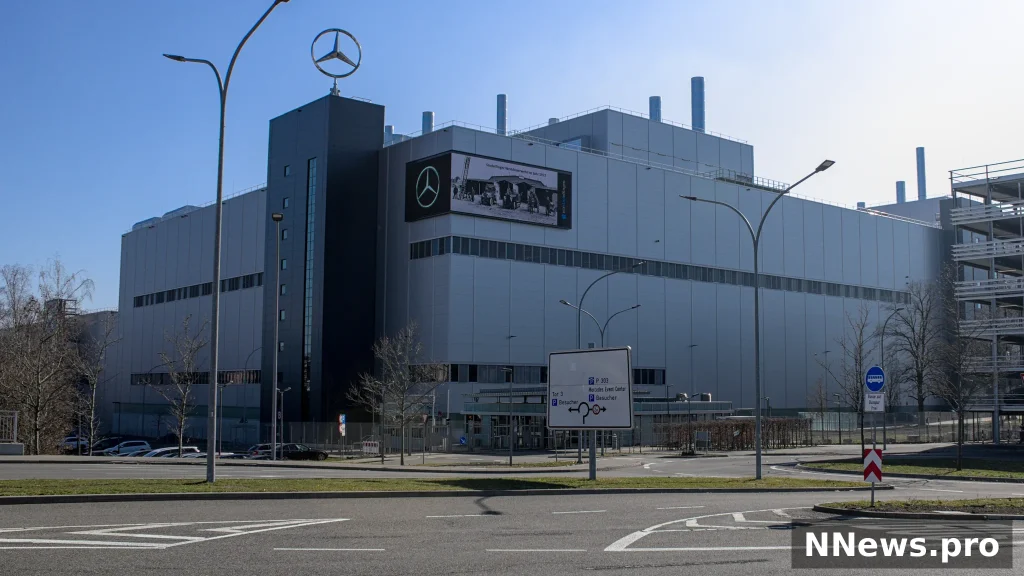
Mercedes-Benz has halted all further investment in its German plants and is now examining possible site closures, escalating a standoff with workers over the high cost of building cars in Germany. The decision, set out in a memo to staff seen by Reuters on Thursday, marks the latest blow to an industry that employs hundreds of thousands of people in Europe’s largest economy.
The premium carmaker said it took the step because it could not reach agreement with its works council and union representatives on cutting labour costs. Management has not named any plant for closure and has not put a figure on how many jobs could be affected, but the message to staff made clear that closures are now being studied in detail rather than ruled out.
A board decision after talks broke down
Production chief Michael Schiebe told workers that management had “jointly decided to halt all further investments in our German locations,” according to the memo. The freeze follows months of pressure on staff to find cost savings, and it comes after Schiebe warned in September that two German plants could close if there was no progress on costs.
“We all want to avoid plant closures at all costs. Unfortunately, however, we must now explore this option in more detail,” management board member Britta Seeger said in the memo, according to Reuters. In an interview shared on the company’s intranet, Seeger said the company was now forced to examine in concrete terms which German sites it could still afford to maintain.
Negotiations with IG Metall, Germany’s biggest industrial union, are continuing. The union represents workers across the car industry, and the outcome of the Mercedes talks is being watched closely because Volkswagen starts its own negotiations with IG Metall on November 24, with strikes looming around the turn of the year. Volkswagen’s plans could lead to as many as 100,000 job losses and the closure of up to four German plants, according to Reuters.
The freeze applies to future spending. German media reported that projects already under way, including a billion-euro paint shop at the Sindelfingen plant, would continue as planned. Mercedes has not said when investment might resume or what conditions would have to be met for the freeze to end.
A sector in its deepest crisis
The Mercedes decision is the latest escalation in a crisis spreading across Germany’s car industry, the country’s most important manufacturing sector. Volkswagen has already begun the biggest restructuring in its history, and suppliers are cutting jobs as demand for combustion-engine cars weakens.
Schaeffler, one of the industry’s largest suppliers, said last week it would cut 3,460 jobs and close five sites in Europe, four of them in Germany, citing weak demand for combustion-engine cars. Consultancy Roland Berger has warned that at least 200,000 automotive jobs could be lost in Germany by 2030.
For months, Mercedes has been warning that the situation in Germany is difficult. Car sector analyst Ferdi Dudenhoeffer said the news came as little surprise. “For months, Mercedes has been emphasising just how difficult the situation is in Germany,” he said, adding that the future of the industry was in the balance unless its cost structures could be overhauled.
China, once the carmaker’s biggest source of profit growth, has fallen away as a key profit driver because of intense competition from domestic brands. Those Chinese rivals are now gaining market share in Europe, prompting executives to call for protectionist measures from Brussels. Mercedes lowered its profit guidance for the 2026 financial year late last month, citing a more challenging market environment in China and higher fourth-quarter costs for raw materials and product lifecycle measures.
The warning signs are not limited to Mercedes. Stellantis warned on Thursday of rising costs over at least the next year, underlining how broad the pressure on European carmakers has become. Stellantis itself is in a separate dispute with Canada over the future of its Brampton plant, where Ottawa has threatened to sue after the carmaker moved production of the Jeep Compass to Illinois.
Related Articles


Why this matters
Germany’s car industry is the backbone of its manufacturing economy, and a permanent pullback by Mercedes would carry consequences well beyond one company. Berlin is already planning near-record borrowing in Germany’s 2027 budget, leaving the government with limited room to cushion the industry if factories close. Plant closures would hit suppliers, local economies and the tax base of the towns that host the factories, while a shift of investment abroad would weaken Germany’s claim to remain a centre of car production.
For American readers, the dispute matters because it shapes the cars and prices reaching the United States. Mercedes builds vehicles in the US as well as in Germany, and the company’s cost problems in its home market influence where it invests next, including a $4 billion commitment announced in March to upgrade and expand its van facility in Tuscaloosa County, Alabama, through 2030.
The episode also shows how quickly labour disputes in Europe can turn into industrial strategy. What began as a negotiation over wages has become a board-level decision to stop spending at home, and it sets the tone for Volkswagen’s talks later this month. If IG Metall cannot reach a deal with Mercedes, the union will face an even harder fight at Volkswagen, where strikes are already being prepared.
Latest developments
Talks between Mercedes management, the works council and IG Metall are continuing, and no closure decision has been announced. The union has not yet responded publicly to the investment freeze in detail, and Mercedes has not said which sites are under review or how long the freeze will last.
The next test comes on November 24, when Volkswagen opens its own negotiations with IG Metall. Any deal at Mercedes could set a pattern for those talks, while a failure could harden positions on both sides and raise the risk of strikes across the German car industry in early 2027.
Frequently asked questions
Has Mercedes-Benz announced which German plants will close?
No. Mercedes has halted further investment at its German sites and is examining possible closures in more detail, but it has not named any plant for closure and has not announced a closure decision. Production chief Michael Schiebe warned in September that two plants could close if cost savings were not found.
Why did Mercedes freeze investment in Germany?
The company said it could not agree with its works council and union representatives on labour cost reductions. Management decided to halt further investment while it examines which German sites it can afford to maintain, with talks with IG Metall continuing.
How many jobs are at risk?
Mercedes has not given a figure for its own workforce. Across the wider German car industry, consultancy Roland Berger has warned that at least 200,000 automotive jobs could be lost by 2030, and Volkswagen’s plans could involve up to 100,000 job losses. Supplier Schaeffler is cutting 3,460 jobs and closing five European sites, four of them in Germany.
Does the freeze affect Mercedes plants outside Germany?
The memo covers the company’s German locations. Mercedes has separately committed $4 billion through 2030 to upgrade and expand its van facility in Tuscaloosa County, Alabama, in the United States.
Mercedes-Benz built its reputation on German engineering, and its decision to stop investing at home is a measure of how severe the pressure on that model has become. Whether the freeze proves to be a negotiating tactic or the start of a lasting shift will depend on the talks now under way with IG Metall — and on whether Germany’s carmakers can cut costs fast enough to compete with rivals from China.
Sources: Reuters (https://www.sowetan.co.za/motoring/2026-11-13-german-car-jobs-at-risk-as-mercedes-ponders-plant-closures/), AFP via Deutsche Welle (https://www.devector.nl/en/edition/2026-11-12/mercedes-duitse-investeringen.html), Just Auto (https://www.just-auto.com/news/mercedes-benz-freezes-german-investment/), Autocar India (https://www.autocarindia.com/car-news/mercedes-benz-freezes-all-german-plant-investment-441319), Finimize (https://finimize.com/content/mercedes-puts-german-spending-on-ice-as-plant-closures-loom)