Democrats Poised to Take Control of Texas State Board of Education for First Time in 30 Years
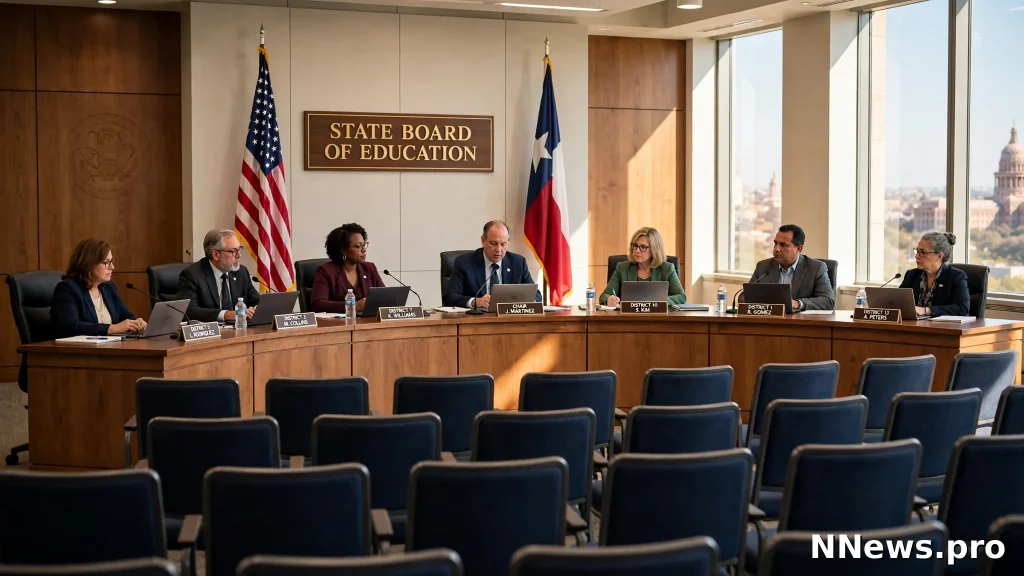
Democrats are poised to take control of the Texas State Board of Education for the first time in more than 30 years, after the November 3 midterm election ended the Republican supermajority on the 15-member panel that sets curriculum standards and approves textbooks for roughly 5.5 million public school students.
The majority is not yet final. It hinges on a single uncalled race in District 8, where Democrat Dana Van de Walker leads Republican incumbent Audrey Young by fewer than 600 votes, according to unofficial returns. If that lead holds through certification, Democrats will hold an 8-7 majority when the new members take office in January — their first majority on the board since 1994.
A narrow flip after a campaign fought over classrooms
Democrats won at least four seats on the board, breaking up an 11-4 Republican majority. Among the winners was Michelle Palmer, a high school history and government teacher who won her state board race after losing two previous campaigns. Thomas Ray Garcia, a Democrat and community college professor, also won a seat and will join Palmer on the board in January.
The results followed months of debate over school vouchers, Bible-based classroom materials, new social studies standards, and the treatment of students involved in protests against immigration enforcement. An August survey found that 45% of Texans disapproved of the state’s handling of K-12 education, while only 28% approved.
“People don’t like for their kids to be messed with,” Palmer said, explaining why she believed voters turned out. “I really think that’s a lot of why what happened here in Texas happened.”
The election also brought victories for Gina Hinojosa, who made education a central part of her successful campaign for governor, and James Talarico, a former teacher who has criticized the inclusion of Bible passages in public school curricula.
What the new majority could change
The board’s power is wide-ranging: it sets the curriculum standards known as the Texas Essential Knowledge and Skills, approves textbooks and instructional materials, and reviews proposals for new charter schools. Its upcoming agenda includes an overhaul of the state’s math standards, approval of social studies textbooks, and charter school reviews.
Incoming Democrats have signaled they will revisit two decisions made under the outgoing Republican majority. The first is the state’s first required reading list, approved this year, which includes Bible passages and other works. The second is a rewrite of the social studies standards that critics said could present Islam in a negative way while reducing attention to the history of slavery and the contributions of Black Americans and women. Neither the standards nor the reading list has yet gone into effect, giving the incoming board time to review them before they reach classrooms.
Longtime board member Marisa Pérez-Díaz described the moment as “a new day for Texas public education policy,” with priorities including more inclusive history, evidence-based science, and curriculum that does not minimize the contributions of Mexican Americans, African Americans, Indigenous peoples, and others.
The board also approved Bluebonnet Learning in 2024, a curriculum that uses Bible stories and verses in lessons, including a kindergarten lesson based on the Sermon on the Mount. The materials are optional for districts, but schools that adopt them can receive extra state funding.
What the board cannot change on its own
The flip has clear limits. The board does not control the state’s $1 billion school voucher program, which was established in 2025 and directs public money toward private school options. Ending or sharply reducing it would require action by the state Legislature, where Republicans still control the Texas Senate.
Related Articles



Governor-elect Hinojosa will have influence of her own: she appoints the board’s chair and a new commissioner of education. Lawmakers have already filed bills that would increase the basic allotment per student, repeal the voucher program, and roll back the 2025 law requiring public schools to display the Ten Commandments in classrooms.
Garcia said the incoming members want decisions grounded in research about how children learn rather than political pressure. “I think we can turn toward local control, toward putting educators at the table again, and making sure that all the decisions we make at the Texas state board of education are based in research and the science of learning, and not in what I call the science of politics,” he said.
The shift comes as Texas rewrites general education statewide: Texas Tech cut 21 courses from its core curriculum list this month under Senate Bill 37, a 2025 law that gave regents more control over what public universities teach. State education boards have become political battlegrounds nationwide: Florida delayed a vote on letting some undocumented students attend public universities last week, and 13 attorneys general asked the Supreme Court to revive Florida’s Stop WOKE Act.
Latest developments
Certification of the District 8 result is still pending, and the race could go to a recount. Some provisional ballots remained to be counted, so the final result has not been confirmed. If Van de Walker’s lead is certified, the new board will be sworn in at the board’s January meeting.
Even if Republicans hold the seat and keep an 8-7 majority, Democrats will still have a much stronger voice than they did under the 11-4 split, and the board’s direction will be shaped by the new governor’s appointments.
Frequently asked questions
Has the Democratic majority on the Texas State Board of Education been confirmed?
No. Unofficial results point to an 8-7 Democratic majority, but the District 8 race remains uncalled. Democrat Dana Van de Walker leads Republican incumbent Audrey Young by fewer than 600 votes, with certification and a possible recount still to come.
When does the new board take office?
The newly elected members take office in January 2027, when they will be sworn in at the board’s January meeting.
What can the new board actually change?
It can revisit curriculum standards, the required reading list, and textbook approvals, because those have not yet taken effect. It cannot end the state’s $1 billion voucher program on its own, because that program is controlled by the Legislature, not the board.
The next steps are certification of the District 8 result and the January swearing-in. Until then, the balance of power on the board that decides what millions of Texas students read and study remains one close race away from settled.
Sources: University Herald; Texas Classroom Teachers Association; Texas Secretary of State (unofficial 2026 election results). Reporting on the race also comes from The Texas Tribune (Nov. 4, 2026) and Texas Public Radio (Nov. 11, 2026).