Florida Bars Voucher Money for Schools Tied to Terrorist Groups as CAIR-Florida Shuts Down
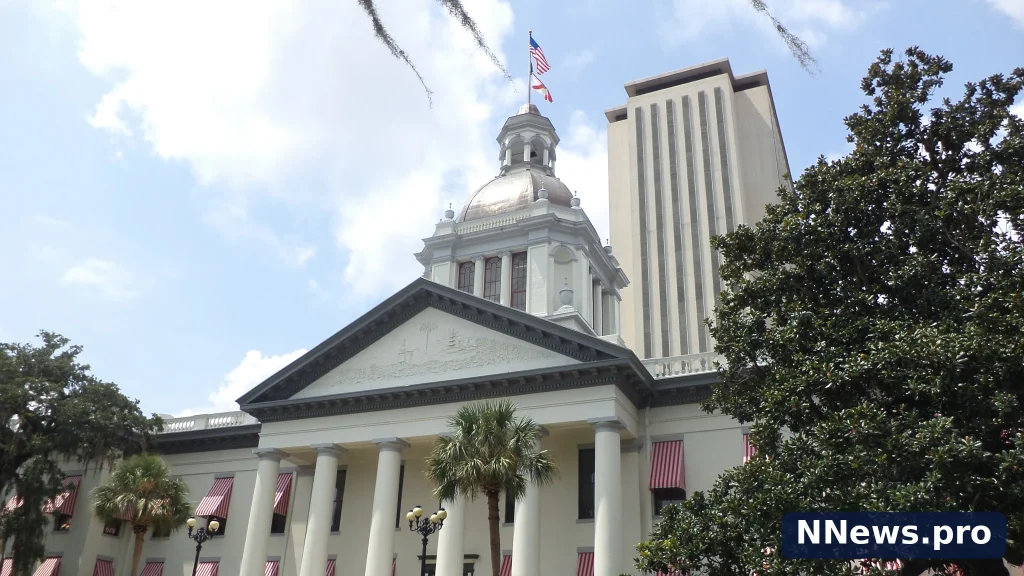
Florida’s education department said this week that private schools with ties to designated terrorist organizations will not receive state voucher money, a rule that took practical effect as the Council on American-Islamic Relations’ Florida chapter suspended its operations after a federal judge declined to block the state’s terrorist designation.
The Florida Department of Education reiterated the policy in a post this week, declaring: “In the Free State of Florida, our message is clear: private schools who have any affiliation with a terrorist group have no business operating in our state.” The message landed days after CAIR-Florida said it was shutting down because the designation made it impossible to operate, setting up a legal fight over free speech, due process and the reach of the nation’s largest school voucher program.
What the new rule does
The State Board of Education approved amended rules last month to comply with House Bill 1471, a law the Legislature passed in April that took effect July 1. The rules bring the Scholarship Program Compliance Form — the document private schools must sign to take part in the state’s scholarship programs — into line with the law.
Under the law, a participating private school may not employ or contract with people or entities affiliated with a designated terrorist organization, accept funds from them, or be owned or operated by them. The restrictions also cover criminal gangs and other specified organizations, as well as people or entities that have provided material support or resources to those groups, or received support from them.
Gov. Ron DeSantis and the Cabinet approved the state’s terrorist designations in September. Ninety groups were labeled as domestic or international terrorist organizations, including the Council on American-Islamic Relations and its Florida chapter, the Muslim Brotherhood, the Venezuelan crime syndicate Tren de Aragua, the Islamic Revolutionary Guard Corps of Iran and the anti-fascism movement known as antifa.
A federal judge lets the label stand — for now
The designation of CAIR and CAIR-Florida took effect Nov. 5. That same day, U.S. District Judge Allen Winsor of the Northern District of Florida denied the groups’ emergency request to block it. CAIR-Florida suspended its operations that day, saying it was being “forced to shut down” its advocacy and operations in the state, and announced plans to appeal.
Attorney General James Uthmeier called the ruling a “great win” in a social media post. But Winsor also placed a limit on the state: he prohibited it from taking any punitive action under the law against the Muslim civil rights group, its employees or those providing it with legal services.
CAIR argued the label violates its rights under the First Amendment and the due process clause of the Fourteenth Amendment. Winsor ruled the groups had failed to show that their freedom of association had been unconstitutionally restricted or that the designation forbids any communications. “It does not say what a (designated terrorist organization) can or cannot say,” he wrote, adding that even if the designation effectively shut the groups down, “that does not make the designation itself (or the regime that authorizes the designation) a prior restraint on speech.”
The judge agreed with CAIR that the “overall scheme is novel — and perhaps unprecedented.” But, he added, “the Constitution does not prohibit legislation simply because it is novel.”
The dispute is sharply contested on the facts. At an Oct. 28 hearing, Ashley Gorski, senior counsel for the ACLU National Security Project, who represented the group in court, said the designation would make it impossible for the nonprofit to operate and that its members were prepared to resign. Charles Cooper, an attorney representing the state, told the judge that CAIR serves as a “terrorist front group” for Hamas and the Muslim Brotherhood, hiding its activities behind a charitable organization. CAIR disputes the designation and denies any ties to Hamas.
The law behind the voucher ban
House Bill 1471 goes well beyond school vouchers. It gives the state’s Chief of Domestic Security — currently Florida Department of Law Enforcement Commissioner Larry Keefe — the power to designate domestic or foreign terrorist organizations. It also bars a court from enforcing any provision of a religious or foreign law, with an emphasis on the Islamic code known as Sharia law.
In education, the law requires a student in the Florida College System who “promotes” a terrorist organization to be expelled, and it bars public universities and colleges from spending state or federal funds on programs or campus activities that promote a designated organization.
This is DeSantis’ second attempt to place the terrorist label on CAIR and the Muslim Brotherhood. In March, U.S. District Court Judge Mark Walker issued a preliminary injunction against an executive order DeSantis issued in December 2025, ruling it violated CAIR’s rights by targeting and threatening those providing the organization with material support. The state has appealed that ruling.
Related Articles


Why this matters
The stakes are high because Florida’s voucher program is the biggest in the country. According to Step Up for Students, the nonprofit that administers some of the state’s scholarship programs, Florida has the largest private school and home education programs in the nation.
A legislative fiscal analysis estimates that approximately $4.9 billion will go to the state’s school voucher programs during the 2026-27 school year to cover a projected 570,325 scholarships. This school year, 2,477 private schools are participating, and the average scholarship is worth about $8,000. The figures include 279,369 students receiving the Family Empowerment Scholarship for Educational Options, 161,993 receiving the Family Empowerment Scholarship for Students with Unique Abilities, and 76,869 home-education scholarships, with the largest numbers of participating students in Hillsborough, Polk, Orange, Palm Beach and Duval counties.
Schools that receive more than $250,000 a year from voucher programs must hire an independent certified public accountant to prepare annual financial reports examining their use of the funds — a requirement that now sits alongside the new compliance form barring terrorist affiliations.
For supporters, the policy closes a loophole: taxpayer money should never flow, directly or indirectly, to organizations the state has designated as terrorist. For critics, the designation power itself is the problem. They argue that a state official can label a group without a criminal trial, that the label chills lawful advocacy even when no crime is alleged, and that the rule could be applied selectively — a concern sharpened by the fact that the most prominent group affected so far is a Muslim civil rights organization.
The fight also fits a wider pattern. Florida delayed a vote on letting some undocumented students attend public universities last week, and the Justice Department sued Penn State over in-state tuition for undocumented students. At the same time, the Pell Grant program faces a $17 billion shortfall, putting college affordability under strain even as states expand their own scholarship programs.
Latest developments
CAIR and its Florida chapter have said they will appeal Judge Winsor’s ruling, and the state is already appealing Judge Walker’s earlier injunction against the December 2025 executive order. The two cases could define how far a state can go in labeling advocacy groups as terrorist organizations — and what happens to the schools, students and programs caught in the middle.
No school has yet been publicly identified as losing voucher funds under the new rule, and the education department has not said how it will verify a school’s affiliations. That enforcement question — who checks, what evidence counts, and whether a school can challenge a finding — is likely to be the next flashpoint.
Frequently Asked Questions
What does Florida’s new rule actually bar?
Private schools that take part in the state’s scholarship programs may not employ or contract with people or entities affiliated with a designated terrorist organization, accept funds from them, or be owned or operated by them. The ban also covers criminal gangs and material support for designated groups.
Why did CAIR-Florida suspend its operations?
The state’s designation of CAIR and CAIR-Florida took effect Nov. 5, the same day a federal judge declined to block it. The group said the designation made it impossible to operate and announced plans to appeal the ruling.
Does the terrorist designation stop CAIR from speaking?
No, according to the judge. Winsor ruled that the designation does not forbid communications and that the groups had not shown their freedom of association was unconstitutionally restricted. He also barred the state from taking punitive action against the group, its employees or its legal-services providers.
How big is Florida’s voucher program?
About $4.9 billion is expected to flow through the state’s school voucher programs in the 2026-27 school year, covering a projected 570,325 scholarships at 2,477 participating private schools. The average scholarship is worth about $8,000.
Florida’s voucher rule is now in force, but its legal future is unsettled. With appeals pending in two federal cases and no school yet publicly cut off, the question is no longer whether the state will enforce the ban — it is whether the courts will let it stand.
Sources: The Center Square via Brushwood Media Network; News Service of Florida via FOX 13 Tampa Bay; Florida Department of Education; Step Up for Students.