US Shoots Down Two Iranian Drones Headed for Bahrain and Denies Radar Strike Claim
US Shoots Down Two Iranian Drones Headed for Bahrain and Denies Radar Strike Claim
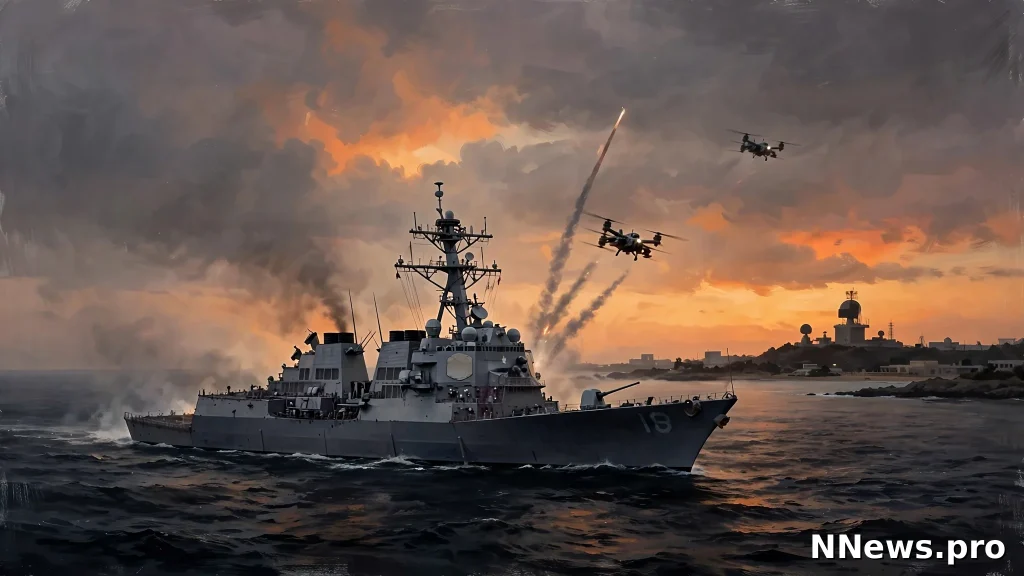
The United States military said on Friday that it shot down two Iranian attack drones headed toward Bahrain, directly contradicting Iran’s claim that its forces had destroyed an American early-warning radar system in the Gulf kingdom. US Central Command said there were no injuries or damage from the attempted attack, in the latest confrontation in a conflict that has repeatedly spilled into the shipping lanes and US bases of the Gulf.
What CENTCOM said
US Central Command, the American military command covering the Middle East, said the drones were launched by Iran’s Islamic Revolutionary Guard Corps and were intercepted by US forces before they could reach their target. In a statement posted on X on Friday, CENTCOM presented its account as a fact check of the Iranian claim: the Guard, it said, claimed to have attacked a US early-warning radar in Bahrain, but the actual event was the launch of two one-way attack drones toward Bahrain, both of which were shot down.
“There were no injuries or damage,” CENTCOM said, according to the Associated Press. Bahrain’s Ministry of Information did not immediately respond to requests for comment.
The episode is the first time Iran has reported targeting a facility in Bahrain since September, according to the Associated Press, and it comes at a moment of rising tension around the Strait of Hormuz, the narrow waterway through which about a fifth of global petroleum liquids shipments pass, according to the US Energy Information Administration.
The claim from Tehran
Iran’s Revolutionary Guard said earlier on Friday that its Aerospace Force had targeted and destroyed a US early-warning radar installation on Bahrain Island. In its Statement No. 22, the Guard said the strike was retaliation for what it described as an enemy air attack on a telecommunications tower in the southern Iranian port of Sirik, in Hormozgan province. Iran’s official IRNA news agency cited the Guard’s statement.
Iran’s claim that it had destroyed a US radar in Bahrain was reported earlier in the day, but neither that claim nor the Guard’s separate account of a tanker incident in the Strait of Hormuz could be independently verified, the Associated Press reported. No independent evidence confirming damage to a radar site in Bahrain has been made public, and Bahrain’s government had not publicly confirmed any damage as of Friday morning.
The two accounts cannot both be true, and the gap between them is the story: Tehran says it destroyed a radar; Washington says the attack was two drones, both destroyed in the air.
A tanker claim in the Strait of Hormuz
The Guard also said on Friday that a liquefied petroleum gas tanker struck a naval mine and suffered an explosion while trying to sail through the Strait of Hormuz. According to the state-run IRNA news agency, the Guard said the vessel had ignored repeated warnings while transiting the eastern part of the strait.
That claim, too, could not be independently verified, and there was no immediate report of the incident from the United Kingdom Maritime Trade Operations, the British military agency that monitors incidents at sea. The Guard had said a day earlier that four oil tankers were hit by explosions in the strait after entering what it considers restricted areas, according to Reuters.
Background: an eight-month war that keeps reaching the Gulf
The confrontation is part of an air war that began in February, when the United States and Israel launched joint strikes on Iran. Iran targeted US bases in neighboring Arab nations, including Bahrain, in retaliation for US strikes, and it has routinely targeted oil tankers in the Strait of Hormuz since then, according to the Associated Press.
Bahrain matters to the American military presence in the region because it hosts Naval Support Activity Bahrain, the headquarters of the US Navy’s Fifth Fleet and US Naval Forces Central Command, near the capital, Manama. An attack on a facility in Bahrain would therefore strike at the heart of the US naval posture in the Gulf, which is one reason the competing claims about Friday’s events are being watched so closely.
Related Articles



Diplomacy, meanwhile, has stalled. On Thursday, Trump said the United States does not need a deal with Iran and directed Vice President JD Vance to shift his attention to domestic issues, a day after reports that Vance was weighing face-to-face talks with a senior Iranian security official. Days earlier, Trump said the war with Iran was effectively over, even as limited strikes and the naval blockade continued.
Why this matters
The incident shows how quickly a single morning in the Gulf can produce two incompatible versions of events, each with real consequences. If Iran’s account were accurate, it would mean Tehran had successfully struck an American military installation in a Gulf ally. If the American account is accurate, the attack failed completely, and the Guard’s claim was an attempt to claim a success it did not achieve.
For shipping and energy markets, the stakes are practical. The Strait of Hormuz carries a large share of the world’s oil, and even unverified claims of mine strikes and tanker explosions can push up insurance costs and freight rates. For the United States and its Gulf allies, the episode is a reminder that the conflict is not confined to Iran’s borders: Bahrain, which hosts the Fifth Fleet, is now a recurring target in Tehran’s public messaging.
Latest developments
The situation remained fluid on Friday afternoon. CENTCOM’s statement was the clearest American account of the day, but it did not address the reported strike on the telecommunications tower in Sirik or who carried it out. Bahrain’s government had not issued a public statement on the incident as of Friday morning. Neither side has released radar data, photographs, or damage assessments that would settle which version of events is correct, and independent monitors have not confirmed either the radar strike or the tanker explosion.
Frequently Asked Questions
Did the US shoot down Iranian drones near Bahrain?
Yes, according to US Central Command. It said Iran’s Revolutionary Guard launched two one-way attack drones toward Bahrain on Friday, November 13, and that US forces shot both down. CENTCOM reported no injuries or damage.
Did Iran destroy a US radar in Bahrain?
That is what Iran’s Revolutionary Guard claimed, saying its Aerospace Force targeted and destroyed an early-warning radar on Bahrain Island. The claim has not been independently verified, and CENTCOM’s account directly contradicts it, saying the actual event was the launch of two drones that were intercepted.
What happened to the tanker in the Strait of Hormuz?
Iran’s Revolutionary Guard said a liquefied petroleum gas tanker struck a naval mine in the eastern Strait of Hormuz and suffered an explosion after ignoring warnings. The claim could not be independently verified, and the United Kingdom Maritime Trade Operations had not reported the incident.
Why is Bahrain important to the US military?
Bahrain hosts Naval Support Activity Bahrain, the headquarters of the US Navy’s Fifth Fleet and US Naval Forces Central Command, making it a central hub for American naval operations in the Gulf.
Final paragraph
Friday’s clash of accounts leaves the facts of the morning in the Gulf unresolved, but the direction of the conflict is clear: Iran is again testing American defenses around Bahrain, and Washington is answering in public, in real time. What happens next will depend on whether either side produces evidence for its version of events, and whether the tanker incidents in the Strait of Hormuz escalate into a wider disruption of shipping.
Sources: Associated Press | Al Jazeera | Iran International (CENTCOM statement) | US Energy Information Administration