Iran Claims It Destroyed a US Early-Warning Radar in Bahrain in Retaliation for Sirik Attack
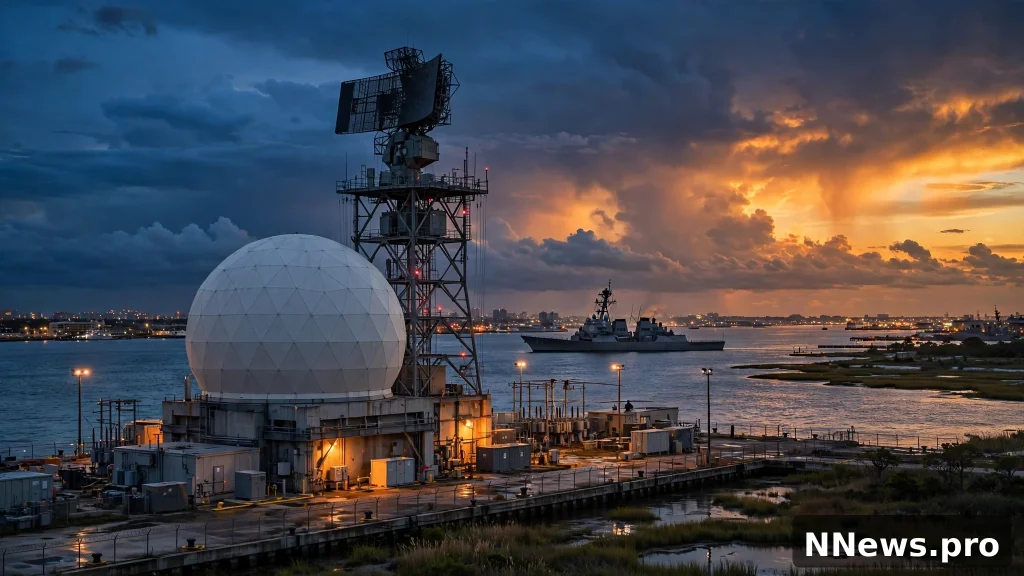
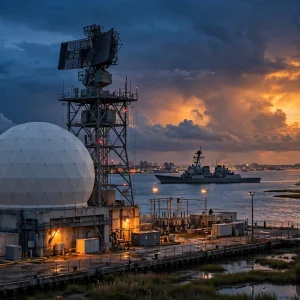
Iran’s Islamic Revolutionary Guard Corps said early Friday that it targeted and destroyed a United States early-warning radar installation in Bahrain, claiming the action was retaliation for an alleged attack on a telecommunications tower in southern Iran. The claim, carried by Iranian state media and reported by Reuters, has not been independently verified, and neither Washington nor Manama had commented by Friday morning.
The announcement is the first Iranian claim of an attack on American military assets in a Gulf country since early September, according to Reuters, and it lands in the middle of a fragile lull in a war that began on February 28, 2026, with American and Israeli strikes on Iran.
What Iran Claims Happened
In a statement carried by the semi-official Tasnim news agency, the Revolutionary Guards said their Aerospace Force had “targeted and destroyed” the American radar system in Bahrain. The IRGC-affiliated Fars news agency used the same wording, saying the force had “targeted and destroyed” the installation.
The Guards said the strike was retaliation for what they described as an air attack on a telecommunications tower in Sirik county, in Iran’s southern Hormozgan province, on the coast near the Strait of Hormuz. In the Tasnim statement, the Guards called the operation a “serious warning” to the “aggressor enemy” to stop what it described as a series of aerial provocations and oil smuggling in the Strait of Hormuz. According to FXStreet, the Guards also warned that any repeated attacks would trigger an “unlimited confrontation.”
No details were given about the weapon used, the exact time of the alleged strike, or the precise location of the radar. The radar’s exact location and operating unit have not been established publicly, and the extent of any damage remained unclear on Friday morning.
The Sirik Attack That Iran Cites
The claim came hours after Iran’s state news agency IRNA reported late Thursday that the port city of Sirik had come under “enemy fire.” IRNA, citing official sources, did not identify the attacker, and its initial account gave no information about damage or casualties.
Tasnim had earlier reported several consecutive explosions in the county, saying their cause was unclear. The United States has not claimed the strike on Sirik, and Iranian state media gave no details of damage or casualties there either.
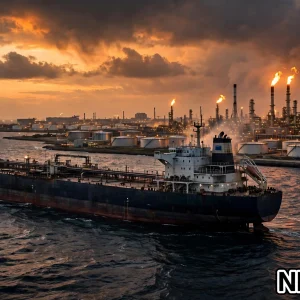
Sirik is a port city in Hormozgan province, on Iran’s southern coast east of the Strait of Hormuz, the narrow waterway through which a large share of the world’s seaborne oil passes. That geography is central to the standoff: the US naval blockade of Iranian ports remains in force, and shipping through the strait has been repeatedly disrupted in recent weeks.
Why Bahrain Matters
Bahrain hosts the headquarters of the US Navy’s Fifth Fleet in Manama, a key hub for American naval operations across the Middle East. The Fifth Fleet oversees US naval operations across the Persian Gulf, the Strait of Hormuz, the Red Sea, the Arabian Sea, and parts of the Indian Ocean.
An attack on an American radar installation in Bahrain, if confirmed, would be a direct strike on US military infrastructure in a Gulf ally’s territory — a significant escalation even in a war that has already spread across the region. That is why the absence of confirmation matters so much: the claim alone is enough to move oil markets and rattle Gulf capitals, but the facts on the ground remain unknown.
Iran has made similar claims before. In June 2026, the Guards said their forces had damaged the Fifth Fleet headquarters in Bahrain with missile and drone strikes. US Central Command said at the time that the claim was false, that American forces had intercepted the incoming weapons, and that there were no reports of harm to US personnel and no damage to the headquarters. That history is a reminder that Tehran’s announcements in this conflict have not always matched independent assessments.
Related Articles


A Fragile Lull Under Strain
The claim arrives at a moment when the conflict’s fragile lull was already fraying. Trump said on Monday that the war with Iran was ‘effectively over’ after meeting Qatar’s prime minister, while stressing that there was no formal ceasefire and that the naval blockade would continue. On Thursday, Trump said on Truth Social that the United States does not need a deal with Iran.
At the same time, the region’s energy infrastructure has been under sustained attack. Saudi Arabia’s East-West oil pipeline was attacked again near Medina earlier this week, and oil prices jumped $3 on Thursday as Houthi attacks on Saudi sites and disruptions to shipping through the Strait of Hormuz rattled markets. The radar claim adds a new flashpoint to a week in which the war’s economic fallout has been spreading well beyond the battlefield.
What to Watch Next
The first test will be whether the United States or Bahrain confirms, denies, or says nothing about the claim. A statement from US Central Command or the Pentagon, satellite imagery of the radar site, or reports from Bahrain would resolve the central question: whether anything was actually hit.
The second test is the American response. Trump has repeatedly said the United States would use force again if Iran attacked American assets, and the administration has kept the naval blockade in place throughout the lull. A confirmed strike on a US radar would put that posture to an immediate test.
The third is the market reaction. Oil prices have already been climbing on the week’s attacks, and any sign that the lull is collapsing could push them higher still. Traders will also watch shipping through the Strait of Hormuz, where the Guards’ warning about “oil smuggling” suggests Tehran is linking the radar claim to its broader campaign against the blockade.
For now, the verified facts are narrow: Iran’s Revolutionary Guards have made the claim, Iranian state media has amplified it, and the United States and Bahrain have not yet responded. Everything else — whether a radar was hit, how badly, and what comes next — remains unconfirmed.
Frequently Asked Questions
Did Iran actually destroy a US radar in Bahrain?
That has not been independently verified. Iran’s Revolutionary Guards say their Aerospace Force “targeted and destroyed” a US early-warning radar in Bahrain, but they provided no evidence, and neither Washington nor Manama had commented by Friday morning. The claim should be treated as an Iranian assertion, not a confirmed event, until independent evidence or an official response emerges.
Why does Iran say it carried out the strike?
Tehran says the strike was retaliation for an alleged air attack on a telecommunications tower in Sirik, in southern Iran’s Hormozgan province, on Thursday. Iran’s state news agency IRNA reported that Sirik came under “enemy fire” but did not identify the attacker, and the United States has not claimed the Sirik strike.
What is the US military presence in Bahrain?
Bahrain hosts the headquarters of the US Navy’s Fifth Fleet in Manama, at Naval Support Activity Bahrain. The Fifth Fleet is the hub for American naval operations across the Persian Gulf, the Strait of Hormuz, the Red Sea, and the Arabian Sea.
What happens next?
Watch for a response from US Central Command or the Pentagon, any statement from Bahrain, satellite imagery of the radar site, and the reaction in oil markets. A confirmed strike would test Trump’s stated willingness to use force again, while a denial or silence would leave the claim in the same category as earlier Iranian announcements that US officials later said were false.
Iran’s claim, whether verified or not, has already done what such announcements do in this war: it has raised the temperature in the Gulf, put the fragile lull under new strain, and forced Washington and Manama to decide how — and whether — to answer.
Sources: Reuters; Gulf Business; FXStreet; The Daily Flare. The radar strike is a claim by Iran’s Revolutionary Guards. Reuters reported no immediate US or Bahraini confirmation, and this article does not independently verify the strike.