Pakistan Says Forces Killed 74 Militants in Raids Across Two Border Provinces
Pakistan Says Forces Killed 74 Militants in Raids Across Two Border Provinces
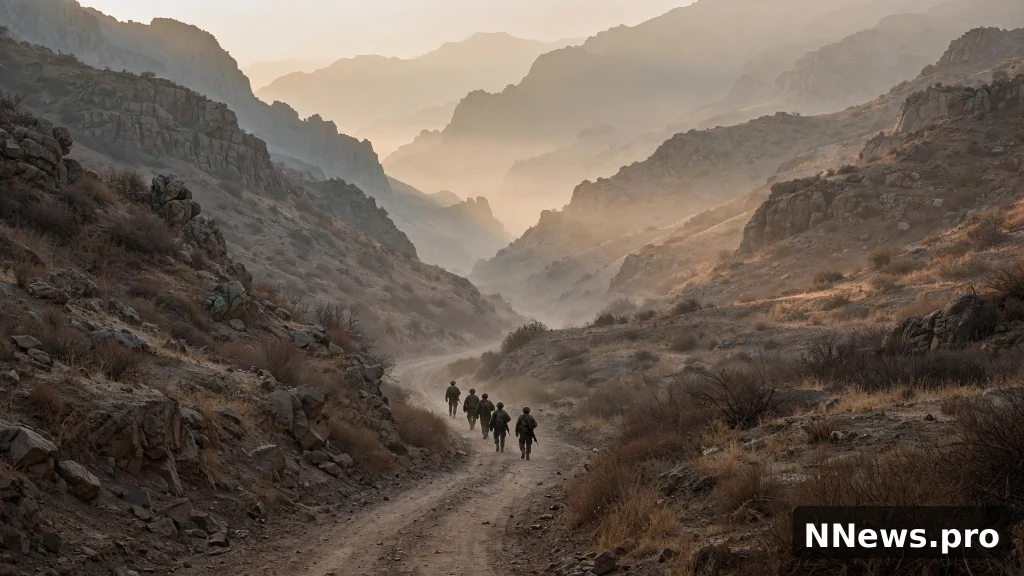
Pakistan’s military said Friday that security forces killed 74 militants in a series of intelligence-based raids in the country’s northwest and southwest, near the border with Afghanistan, over the past 10 days. The announcement, issued by the military’s media wing, the Inter-Services Public Relations (ISPR), covers operations in Khyber Pakhtunkhwa and Balochistan, the two provinces that have borne the brunt of Pakistan’s militant violence this year.
Raids in Khyber Pakhtunkhwa and Balochistan
According to the ISPR, 43 of the militants were killed in Khyber Pakhtunkhwa over the previous 48 hours. Thirty-five were killed in Mir Ali, in North Waziristan district, and eight in Orakzai district, the military said. Troops also seized weapons, ammunition and explosive devices during the raids.
Another 31 militants were killed in Balochistan, where security forces have been conducting a comprehensive intelligence-based area-clearance operation in the Kurram area of Quetta district since November 3. The ISPR said clearance operations were continuing in the affected areas to locate any remaining militants and dismantle their networks.
The military described the fighters as members of groups it calls Fitna al-Khawarij — the Pakistani Taliban, known as the TTP — and Fitna al-Hindustan, a label it applies to Baloch separatist groups. The ISPR described both as Indian-backed. The casualty figures and the groups’ affiliations have not been independently verified.
A Campaign Under Azm-e-Istehkam
The operations form part of Azm-e-Istehkam, the national counterterrorism campaign approved by Pakistan’s Federal Apex Committee under the National Action Plan. The military said the campaign would continue at full pace until what it described as foreign-backed terrorism is eliminated from the country.
The announcement follows a deadly week for Pakistan’s security forces. A TTP ambush in Kohat district earlier this week killed 10 police officers, including a senior officer, as a convoy returned from an operation against illegal gold mining along the River Indus. The TTP claimed responsibility for that attack, according to reporting by the Associated Press and Agence France-Presse.
Pakistan accuses the Afghan Taliban government in Kabul of sheltering TTP fighters, a charge Kabul denies. The border between the two countries has been largely shut since deadly clashes in October 2025, and cross-border militancy remains one of the region’s most persistent security problems.
Why This Matters
The scale of the reported toll — 74 militants in 10 days across two provinces — signals an intensification of Pakistan’s counterterrorism campaign after the Kohat ambush, one of the deadliest single attacks on police in Khyber Pakhtunkhwa this year. The operations also come at a moment of heightened regional tension, with Iran’s claim that its forces struck a U.S. radar station in Bahrain and a series of tanker explosions in the Strait of Hormuz drawing attention to security across the wider region.
Related Articles



For the United States, the campaign matters because Pakistan’s western borderlands remain a hub for militant groups with a history of targeting American and allied interests in Afghanistan, and because instability there complicates Washington’s engagement with both Islamabad and Kabul.
Data from the Centre for Research and Security Studies has identified Khyber Pakhtunkhwa and Balochistan as the country’s principal hotspots of violence. Figures from the Pakistan Institute for Conflict and Security Studies showed militant attacks fell 37 percent from September, when 226 were recorded, to October, when 143 were recorded — before November opened with the Kohat ambush and the new wave of army operations.
Latest Developments
The ISPR said clearance operations were still under way in both provinces on Friday, and that security forces would continue intelligence-based operations under Azm-e-Istehkam. No independent confirmation of the casualty figures has been published, and no details have been released about any security-force casualties in the raids.
What to watch next: whether independent reporting corroborates the military’s toll, any official reconciliation of the Kohat attack’s casualties, and whether the operations produce arrests or further engagements in the coming days.
Frequently Asked Questions
How many militants were killed, and where?
Pakistan’s military said 74 militants were killed in intelligence-based operations over the past 10 days: 43 in Khyber Pakhtunkhwa — 35 in Mir Ali and eight in Orakzai — and 31 in the Kurram area of Quetta district in Balochistan.
Who does Pakistan say the militants were?
The ISPR described them as members of Fitna al-Khawarij, the Pakistani Taliban, and Fitna al-Hindustan, a label for Baloch separatist groups. The military described both as Indian-backed. The casualty figures and affiliations have not been independently verified.
What is Azm-e-Istehkam?
Azm-e-Istehkam is Pakistan’s national counterterrorism campaign, approved by the Federal Apex Committee under the National Action Plan. The military says operations under the campaign will continue until militant networks in the border provinces are dismantled.
Pakistan’s military has reported one of its largest counterterrorism tolls of the year, but the figures remain the military’s own account. Independent verification, and the course of the continuing clearance operations, will determine how significant this week’s raids prove to be.
Sources: Associated Press; Dawn; News Pulse; NAM News.