Operation TorNado: 354 Arrested in Global Dark Web Drug Crackdown as $234 Million Seized
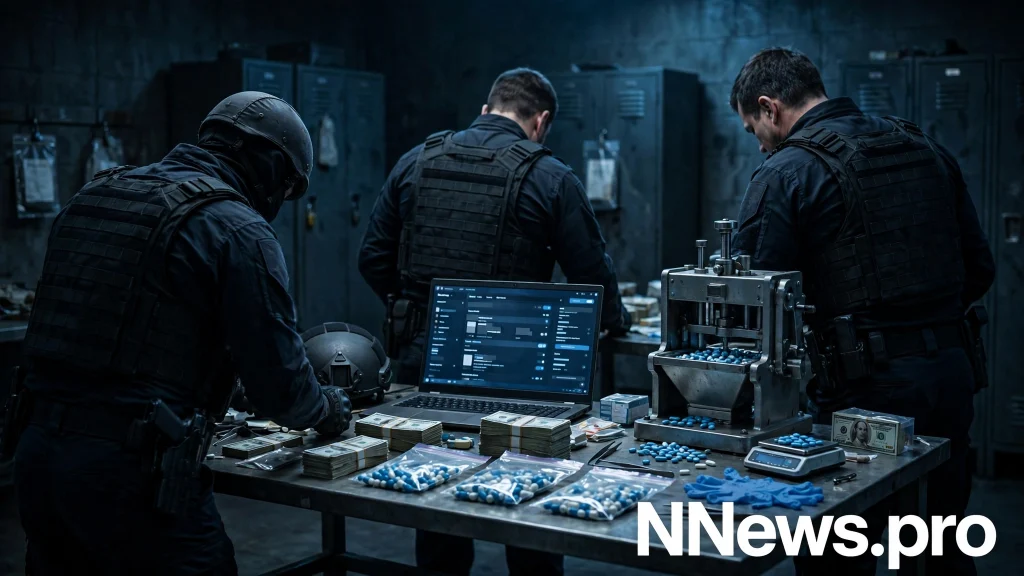
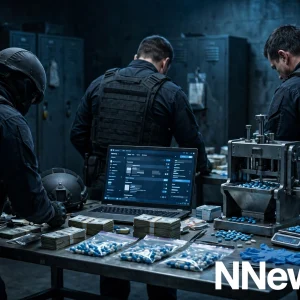
An international law enforcement operation targeting dark web drug traffickers has led to 354 arrests across 14 countries and the seizure of more than 5.7 metric tons of illicit drugs, more than $234 million in cryptocurrency and cash, and 209 firearms, the FBI and Europol announced on Thursday, November 12, 2026.
Operation TorNado, run from May 2025 through October 2026, is the largest takedown yet by the FBI’s Joint Criminal Opioid and Darknet Enforcement team, known as JCODE. It targeted vendors, buyers, and trafficking networks operating on dark web marketplaces, where synthetic opioids including fentanyl are sold anonymously and shipped through the mail.
“Operation TorNado confronted one of the most urgent public safety threats of our time — the trafficking of fentanyl and other deadly drugs through the dark web,” FBI Deputy Director Christopher Raia said at a press conference announcing the results. “For over a year, our teams, in conjunction with the Homeland Security Task Forces around the U.S., worked across jurisdictions, across borders, and across time zones to identify and dismantle criminal networks operating in the shadows of the internet.”
The seizures, country by country
The United States accounted for the largest share of the operation. American authorities made 132 arrests and seized about 4.8 metric tons of illicit drugs, more than $166 million in cryptocurrency and cash, 152 firearms, and 38 pill presses used to manufacture counterfeit tablets. More than 354 kilograms of the drugs seized consisted of fentanyl or fentanyl-laced pills.
The remaining arrests were spread across 13 partner countries: the United Kingdom with 59, Hungary with 45, Germany with 41, France with 23, the Netherlands with 12, New Zealand with 13, Slovenia with 11, Ireland with 5, Austria with 6, the Czech Republic with 4, Australia with 2, and Finland with 1.
Europol, headquartered in The Hague, coordinated the international effort alongside Eurojust, while the FBI led the American side with partner agencies including the Drug Enforcement Administration, Homeland Security Investigations, the U.S. Postal Inspection Service, IRS Criminal Investigation, and the Food and Drug Administration’s Office of Criminal Investigations.
Overdose deaths led investigators to the sellers
Behind the headline figures are individual investigations that show how online drug sales turn into real-world harm. In Ohio, authorities investigating two suspected overdose deaths earlier this year traced drug packages to a dark web vendor operating out of a North Carolina home. In June, the FBI and local partners arrested a suspect there and seized about 200 grams of methamphetamine and more than two kilograms of counterfeit pills containing fentanyl.
In Washington, D.C., the FBI, the Postal Inspection Service, and the DEA arrested two brothers and charged them in Florida with operating the dark web vendor account “BarbaraWhite,” which allegedly sold counterfeit oxycodone pills. Laboratory testing found the pills contained nitazenes, synthetic opioids that can be more potent than fentanyl.
In Pennsylvania, postal inspectors, the DEA, Homeland Security Investigations, and local partners identified a California-based vendor known as “SpeedyPharma” who allegedly shipped methamphetamine and other drugs nationwide. Investigators seized about 283 parcels believed to contain drugs.
A joint investigation with Australian authorities began after suspicious drug imports were detected in the United States. Authorities intercepted about 35,000 LSD tabs in the mail and later seized roughly 750,000 tabs, 60 grams of LSD crystal, other drugs, cash, and cryptocurrency. Two people were arrested and charged in Australia, where officials described the seizure as the largest of its kind in the state of Victoria’s history.
In Missouri, a Kansas City investigation targeted an Oregon-based trafficking organization accused of selling cocaine, MDMA, ketamine, and marijuana through a Telegram channel and distributing the drugs through the U.S. Postal Service.
How JCODE works
The Department of Justice established JCODE in 2018 as an FBI-led initiative to disrupt the sale of opioids and other illegal drugs through dark web markets. Operation TorNado is the sixth major international enforcement action by the team since its creation, building on earlier operations including SpecTor in 2023 and RapTor in 2025.
JCODE’s approach goes beyond arresting individual sellers. Agents and analysts identify the infrastructure behind dark web markets — administrators, vendors, buyers, and financial networks — and when a marketplace is taken down, they analyze its data to identify users, develop leads, and share intelligence with partners around the world.
“We analyze information associated with online transactions and the networks of individuals and entities involved,” said Christopher Lin, the FBI unit chief who oversees the JCODE team. “We put that together in a comprehensive packet that we can disseminate to the field. The field can then use it as the basis to open a full investigation.”
Related Articles


Investigators combine cyber expertise, digital evidence, and traditional law enforcement techniques, including undercover purchases and cryptocurrency tracing, to connect anonymous online accounts to real people.
Why this matters
Fentanyl remains the leading driver of drug overdose deaths in the United States, and the dark web has become one of its main distribution channels. Vendors sell counterfeit prescription pills that look legitimate but contain fentanyl or even more potent synthetic opioids such as nitazenes, often to buyers who do not know what they are taking.
The operation also shows how much of the trade now runs through cryptocurrency. Bitcoin fell below $70,000 this week as risk appetite faded, a reminder that the same crypto markets traffickers use to move money are closely watched by investors and investigators alike. The Justice Department seized $1.2 billion in cryptocurrency in a separate North Korea-linked Binance hack case, and TorNado’s $234 million haul underscores how digital assets have become central both to how traffickers are paid and to how investigators follow the money.
At the same time, officials cautioned that the arrests do not mean the problem is solved. Europol has said dark web marketplaces continue to adapt despite repeated takedowns, and the FBI said investigations remain underway in several countries to identify additional people operating behind anonymous accounts.
What happens next
The Justice Department has published court documents connected to the operation, and prosecutors are expected to bring charges in the cases opened during the 18-month investigation. The FBI said work continues to identify additional vendors and buyers, meaning further arrests are possible.
Raia closed the announcement with a warning to sellers still operating online. “If you want to use the dark web to sell fentanyl, synthetic opioids, and other dangerous drugs, let today’s announcement serve as a warning,” he said. “The anonymity you believe protects you is not a shield.”
Frequently Asked Questions
What was Operation TorNado?
Operation TorNado was an 18-month international law enforcement operation, running from May 2025 through October 2026, that targeted drug vendors, buyers, and trafficking networks on dark web marketplaces. It was coordinated by Europol and the FBI’s JCODE team with partners in 14 countries.
How many people were arrested in Operation TorNado?
A total of 354 people were arrested worldwide, including 132 in the United States, 59 in the United Kingdom, 45 in Hungary, and 41 in Germany. Authorities also seized more than 5.7 metric tons of illicit drugs, more than $234 million in cryptocurrency and cash, and 209 firearms.
What drugs were seized in the operation?
The seizures included fentanyl and fentanyl-laced counterfeit pills — more than 354 kilograms of them — along with methamphetamine, cocaine, heroin, MDMA, ketamine, marijuana, and LSD. In the United States alone, authorities seized about 4.8 metric tons of illicit drugs and 38 pill presses.
Is the dark web drug trade over after this crackdown?
No. Officials said investigations remain active in several countries, and Europol has noted that dark web marketplaces tend to adapt after takedowns. The operation disrupted a large number of vendors and buyers, but law enforcement expects new marketplaces and sellers to emerge.
Operation TorNado is the largest dark web drug takedown the FBI’s JCODE team has carried out since the unit was created in 2018, and officials say the cases it produced will continue to work their way through courts in the United States and abroad in the months ahead.
Sources
- FBI — “Operation TorNado Leads to More Than 350 Arrests Across 14 Countries” (November 12, 2026): https://www.fbi.gov/news/stories/operation-tornado-leads-to-more-than-350-arrests-across-14-countries
- U.S. Department of Justice / Europol announcement, via The American Quorum: https://www.theamericanquorum.com/us-arrests-132-global-online-drug-trafficking-crackdown/
- TradingKey / Cryptopolitan — “Operation TorNado nets $234 million in cash and crypto, 354 arrests in darknet drug sweep”: https://www.tradingkey.com/news/cryptocurrencies/262304112-cryptopolitan
- The Bit Gazette — “Operation TorNado hits darknet drug markets with 354 arrests, $234 million in seizures”: https://thebitgazette.com/operation-tornado-hits-darknet-drug-markets-with-354-arrests-234-million-in-seizures/