Trump Says Iran War Is “Effectively Over” After Qatar Talks
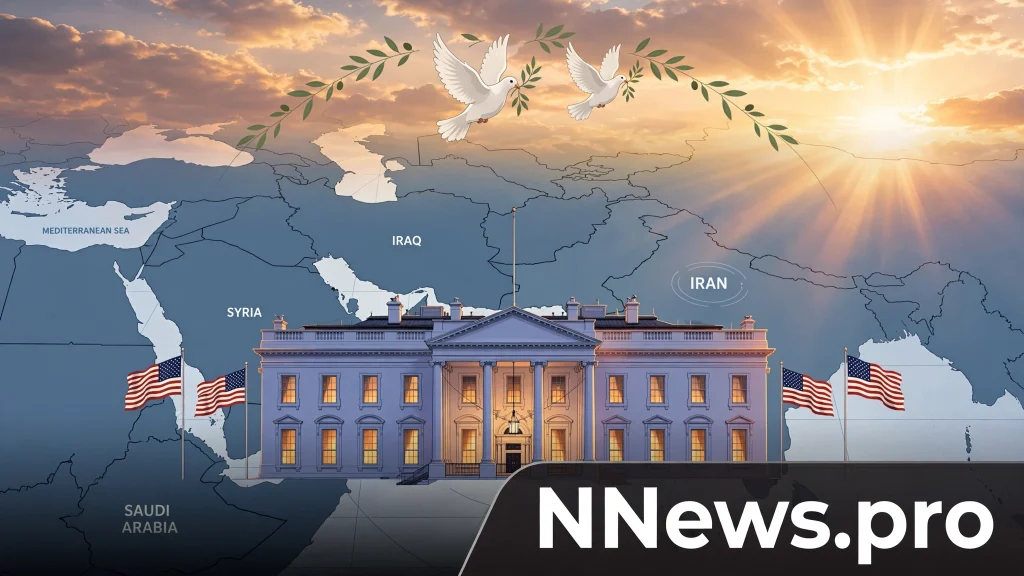
President Donald Trump said on Monday that the war with Iran is “militarily effectively over,” offering his clearest signal yet that the United States is not preparing to resume large-scale bombardment of the country, at least for now.
Trump made the remarks during a surprise visit to the White House briefing room, hours after meeting with Qatar’s prime minister, Sheikh Mohammed bin Abdulrahman Al Thani, whose government has been mediating between Washington and Tehran.
“Iran militarily is effectively over,” Trump told reporters. “We’re just keeping it the status quo.”
The president said Iran’s military leadership had been severely weakened and that further large-scale action did not appear necessary while diplomatic talks continued. He added that Iran has been “decapitated” but said he still wanted a long-term solution to ensure the Islamic Republic’s nuclear program is defanged.
No ceasefire, no guarantee
Trump stopped short of declaring the war formally over, announcing a ceasefire, or guaranteeing that American forces would not strike again.
“I don’t guarantee anything, but if we do have to go back in, we are locked and loaded,” he said, according to official White House clips of the briefing.
He said the United States had identified infrastructure targets, including 38 bridges, that it would strike if military action resumed. He also said the U.S. naval blockade on Iranian ports would remain in place, and thousands of American troops remain deployed across the region.
The remarks came more than eight months into a conflict that began on February 28, 2026, when the United States and Israel launched military operations against Iran. The war has devastated much of Iran’s military infrastructure and sent shockwaves through global energy markets, but it has not produced a formal settlement.
Trump said he was acting “at the behest of countries that are their neighbours,” naming Qatar, Saudi Arabia, the United Arab Emirates, Bahrain, Kuwait and others. In a telephone interview with Reuters the same day, he said Qatar and Saudi Arabia “would rather see a peaceful solution,” while adding that American forces were “ready to go anytime we want” with strikes.
Qatar’s mediation and “positive momentum”
The meeting with Sheikh Mohammed was Trump’s first with a foreign leader since his party’s losses in last week’s midterm elections, according to AFP. The Qatari prime minister visited Tehran last week as part of the mediation effort, and Trump described the diplomatic discussions as showing “positive momentum.”
The president’s tone on Monday was notably different from the warnings of recent weeks. On Sunday, in a telephone interview with CNN, he said that as long as the United States sees progress in negotiations with the Iranians and they sign a “strong agreement,” it is “highly unlikely it’s going to be necessary” to resume strikes.
His comments on Monday went further, framing the military phase of the conflict as essentially finished while leaving the door open to renewed force if talks collapse.
Limited strikes continued even as talks advanced
Despite Trump’s description of the war as effectively over, American forces have continued limited military operations. The United States carried out strikes on Iran, including against its air defenses, at least twice over the past week, according to AP reporting. On Saturday, U.S. forces fired on and disabled a commercial ship that the United States said was trying to breach its naval blockade on Iranian ports.
Iranian state media said U.S. forces struck Qeshm Island, in the Strait of Hormuz, overnight from November 8 to 9. Reuters also reported that attacks on tankers in the Gulf and the Strait of Hormuz continued in November, underscoring that the region remains volatile even as Washington signals restraint.
Those details matter because they show the gap between Trump’s characterization of the conflict and the situation on the ground: no formal ceasefire exists, the blockade continues, and both sides remain armed and positioned for renewed fighting.
Tehran sets out its conditions
Iran, meanwhile, rejected any suggestion that it is negotiating from a position of weakness. Mohsen Rezaei, a senior Iranian security official, called on Washington to accept Tehran’s seven conditions for ending the conflict.
Iran’s stated conditions include lifting the U.S. naval blockade, easing economic sanctions, compensation for war-related damage, and ending hostilities across the region.
Related Articles


Iranian President Masoud Pezeshkian has indicated that Tehran is open to further diplomatic discussions but will not accept demands imposed through pressure. Iran has long denied seeking a nuclear weapon, and Tehran’s account of the talks has not been independently confirmed.
Why this matters
Trump’s statement is the most significant shift in the administration’s public position on the war since the fighting began in February. For American consumers, the immediate consequence was visible in energy markets on Monday: oil prices fell sharply and U.S. stocks posted their best day since April, with the Dow Jones Industrial Average gaining more than 1,100 points, after Trump signaled that fresh strikes were unlikely.
For the wider region, the statement raises the stakes for the Qatar-led mediation. If talks produce an agreement that addresses Iran’s nuclear program and the blockade, the war could wind down without a formal peace deal. If they fail, Trump has made clear that the United States retains both the targets and the readiness to strike again.
The statement also comes at a delicate political moment at home. With Congress now divided after the midterms, the administration will face closer scrutiny of its war powers, its blockade, and any agreement it reaches with Tehran.
What to watch next
Several questions remain unresolved. It is not clear what form an agreement would take, whether Iran will accept the administration’s terms on its nuclear program, or how long the blockade will remain in place. The 38 bridges Trump mentioned have not been publicly identified, and it is unclear whether their listing was a negotiating signal or a genuine targeting plan.
What is clear is that the president has now publicly framed the military phase of the Iran war as finished, while keeping every option open. The next test will be whether the diplomacy he is counting on can produce the agreement he described on Sunday — and whether Tehran’s conditions and Washington’s demands can be reconciled before patience on either side runs out.
Frequently Asked Questions
Did Trump declare the Iran war officially over?
No. Trump said the war is “militarily effectively over” and that the United States is keeping “the status quo.” He did not announce a formal ceasefire, a peace agreement, or a withdrawal of American forces, and he explicitly refused to guarantee that strikes would not resume.
Why did Trump make the remarks now?
He spoke after meeting with Qatar’s prime minister, Sheikh Mohammed bin Abdulrahman Al Thani, whose government has been mediating between Washington and Tehran. Trump described the talks as showing “positive momentum” and said neighboring countries preferred a peaceful solution.
Is the U.S. blockade on Iran still in place?
Yes. Trump said the naval blockade on Iranian ports remains in effect, and U.S. forces fired on and disabled a commercial ship on Saturday that Washington said was trying to breach it. Iran has demanded the blockade be lifted as one of its conditions for ending the conflict.
What did Trump say about future strikes?
He said the United States has identified infrastructure targets, including 38 bridges, and that American forces are “locked and loaded” if military action becomes necessary again. He also said fresh strikes did not currently seem necessary while talks continue.
Sources
- Associated Press, via The Hindu Business Line: “Trump says Iran war is ‘effectively over’, signals shift away from renewed strikes”
- Associated Press, via AAP: “Iran war is ‘militarily effectively over’: Trump”
- Life News Agency (Reuters, AFP, Al Jazeera): “Trump Holds Off New Iran Strikes After Qatar Talks, Says War Is ‘Effectively Over’ Militarily”
- NNews: “Trump Says New Iran Strikes Are ‘Highly Unlikely’ — but Talks Have Stalled and the Risk Remains”
- NNews: “Dow Jumps 1,104 Points as Stocks Stage Best Day Since April on Plunging Oil”
- NNews: “Saudi Arabia’s East-West Oil Pipeline Attacked Again Near Medina”








[…] lost for several reasons, including that he was not on the ballot, that voters disliked the war with Iran, and that some Republican candidates were weak. He also acknowledged that his deportation policies […]
[…] President Donald Trump’s Board of Peace warned on Monday that severe flooding in Gaza has become an “immediate humanitarian emergency,” urging Israel to let winter supplies into the territory at once after days of heavy rain swamped tens of thousands of displacement tents and killed at least five people. […]
[…] report links most of the oil decline to the energy shock triggered by the war with Iran and the closure of the Strait of Hormuz, which pushed prices higher and constrained supplies. Petrol […]
[…] approach to international institutions. In recent weeks, the White House has declared the war with Iran effectively over after talks with Qatar, opened the first U.S.-brokered talks between Russia and […]