Tankers Still Burning in the Strait of Hormuz as Attacks Defy Iran De-escalation Hopes
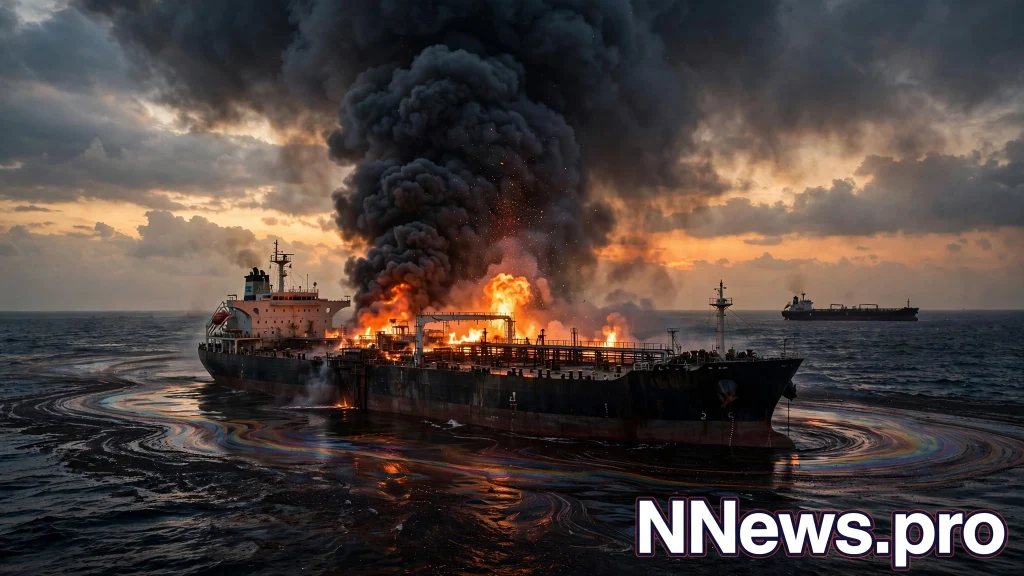
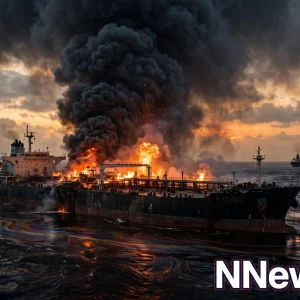
Tankers are still burning in the Strait of Hormuz. Despite market bets that the war with Iran is winding down, new evidence in recent days shows strikes on commercial shipping and energy infrastructure continuing across the Gulf, with fresh attacks reported as recently as Tuesday.
Videos posted on social media on Sunday and verified by Reuters showed a tanker managed by Navig8 on fire near the coast of Oman, while a satellite image from the European Union’s Copernicus Sentinel-2 system captured a large cloud of black smoke at the same location. The vessel was one of three tankers hit on Sunday for using what Iran calls “unauthorised routes” through the strait, according to Iranian state broadcaster IRIB, citing the Islamic Revolutionary Guard Corps Navy.
The attacks continued into this week. Another tanker was struck northeast of Oman’s Lima on Tuesday, the United Kingdom Maritime Trade Operations agency said, without saying who carried out the strike. Iran’s Revolutionary Guards Navy said in a separate statement on Tuesday that two tankers had caught fire after hitting naval mines on the “unauthorized route.”
A Record Month for Attacks on Shipping
The weekend strikes were not isolated. Thirty-seven ships were attacked in October, the highest monthly total since the war began, according to data from the Washington Institute for Near East Policy. The International Maritime Organization has confirmed 130 incidents, most of them attacks, in the region since the conflict began in late February, with at least 25 seafarers killed.
The campaign has also begun to leave a visible mark on the environment. Oil leaking from damaged tankers has reached the shores of Oman, a video shared on social media on Monday and verified by Reuters showed, while satellite imagery revealed oil spills off the coasts of Oman and the United Arab Emirates. The Omani government did not respond to a Reuters request for comment on the video on Tuesday.
The company behind the burning tanker has stayed silent. The vessel is managed by Navig8, which is majority owned by ADNOC Logistics & Services. Neither company replied to emailed requests for comment from Reuters.
Reuters initially identified the vessel in the Sunday video by name, but later corrected its report, saying it was not clear which Navig8 tanker was shown. That correction is a reminder of how hard it is to verify details in real time in a conflict zone where official information is scarce and claims from all sides arrive faster than independent confirmation.
A Second Vessel Hit, and a New Confirmation
ADNOC Logistics & Services confirmed on Tuesday that one of its vessels was damaged in an attack inside the United Arab Emirates’ territorial waters in the Arabian Gulf. The company said response operations were ongoing but did not identify the vessel, disclose the extent of the damage, or provide information about its crew.
Separately, the United Kingdom Maritime Trade Operations centre issued warning 201-26 on Tuesday, reporting that a tanker was struck by an unidentified projectile at 13:38 UTC, about 19 nautical miles northeast of Lima, Oman, near the Strait of Hormuz. UKMTO said the tanker’s crew was safe, with no environmental impact reported, and that the master would assess the damage at first light.
It has not been established whether the ADNOC vessel and the tanker in the UKMTO warning are the same ship. Neither authority identified an attacker, and no vessel name, cargo, or casualty details have been confirmed for the ADNOC incident.
UKMTO also logged strikes over the weekend near Khasab, Oman, with crews reported safe. The pattern — repeated hits across several days, in different parts of the strait and the surrounding waterways — suggests a sustained campaign rather than a single incident.
The US Blockade Continues
At the same time, American forces have continued to enforce a naval blockade of Iranian ports. In the latest incident, a US military aircraft fired on and disabled a St Kitts-flagged cargo vessel that tried to depart regional waters after visiting an Iranian port on Saturday, US Central Command said.
The blockade is central to Washington’s current strategy. Secretary of State Marco Rubio said on Tuesday in Paris, after two days of meetings of G7 foreign ministers, that US economic sanctions and the naval blockade are working well enough that President Donald Trump does not need major combat operations against Iran.
Trump said the war with Iran was “effectively over” on Monday, after meeting Qatar’s prime minister at the White House, and said he would hold off on new military strikes for now after appeals from countries in the region. The attacks on tankers since then tell a different story about what is happening on the water.
Energy Infrastructure Under Fire on Land Too
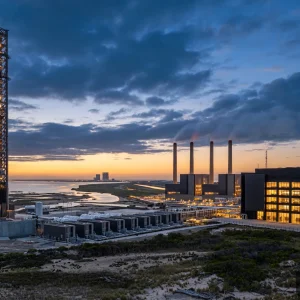
The strikes are not limited to shipping. Elsewhere in the region, energy infrastructure and civilian facilities have also come under attack. Iran and its regional allies have struck targets including the offices of Saudi Aramco, the world’s largest oil company. Video verified by Reuters showed damage to Aramco’s office building in Riyadh, following Houthi-claimed missile strikes on November 8.
The Saudi Energy Ministry said that a building belonging to Aramco in Riyadh had been targeted in an attempted attack, with debris causing limited damage to the building and no injuries or fatalities.
Related Articles

The attack on Aramco’s offices came weeks after Saudi Arabia’s East-West oil pipeline was attacked near Medina, an incident that disrupted one of the kingdom’s most important energy arteries. Together, the two strikes show that the campaign against energy targets extends well beyond the strait itself.
Why This Matters
The Strait of Hormuz is one of the most important shipping corridors in the world. Roughly a fifth of the world’s oil consumption normally passes through the narrow waterway between Iran and Oman. When tankers burn there, the consequences reach far beyond the Gulf: higher shipping insurance costs, rerouted cargoes, and pressure on the global oil supply that eventually shows up in fuel prices for American drivers.
For now, markets are betting that the worst is over. On Tuesday, crude prices hit two-month lows after US officials downplayed the need for additional military action against Iran, with analysts noting Trump’s more conciliatory tone since the Republicans’ defeat in the November 3 midterm elections. Oil prices plunged on Monday as investors welcomed the prospect of de-escalation.
But the attacks have not stopped, and on Wednesday oil prices rose again as the market swung between hopes for a truce and concern about the ongoing attacks on shipping. The gap between the market’s optimism and the reality on the water is the story of this week in the Gulf.
The human cost is also mounting. At least 25 seafarers have been killed since the conflict began, according to the International Maritime Organization, and the oil now washing up on Oman’s shores points to an environmental toll that will linger long after the fires are out.
Latest Developments
The situation remains fluid, and several questions are unresolved. It is not yet clear who struck the tanker near Lima on Tuesday, and UKMTO did not attribute the attack. The identities of the vessels hit on Sunday have not all been confirmed, and Iran’s claim that the tankers were targeted for using unauthorised routes has not been independently verified.
What is confirmed is the scale and the pace. October was the worst month of the war for shipping, and November has opened with more attacks, not fewer. The US blockade of Iranian ports continues, and Washington has shown it is willing to use force to enforce it. The diplomatic track, meanwhile, depends on whether the pause in American strikes holds and whether Tehran is willing to stop attacks on Gulf shipping in return.
For now, the tankers keep burning — and the gap between talk of de-escalation and the reality in the strait keeps widening.
Frequently Asked Questions
How many ships have been attacked in the Strait of Hormuz?
Thirty-seven ships were attacked in October 2026, the highest monthly total since the war began, according to data from the Washington Institute for Near East Policy. The International Maritime Organization has confirmed 130 incidents, most of them attacks, in the region since the conflict began in late February, with at least 25 seafarers killed.
Is the Strait of Hormuz still open to shipping?
Shipping continues through the strait, but attacks have not stopped. Tankers have been hit for using what Iran calls “unauthorised routes,” and the US naval blockade of Iranian ports remains in force. No full closure of the waterway has been reported.
Why are oil prices falling if tankers are being attacked?
Markets are betting on de-escalation. After President Trump said new strikes on Iran were unlikely and described the war as effectively over, crude prices fell to two-month lows on Tuesday. Prices rose again on Wednesday as the continuing attacks on shipping offset those truce hopes, showing how quickly sentiment can swing.
Sources
- Reuters, “Tankers continue to burn in the Middle East despite hopes for de-escalation” (Nov 10, 2026): https://wdsm710.com/2026/11/10/tankers-continue-to-burn-in-the-middle-east-despite-hopes-for-de-escalation/
- Reuters, “Oil rises from two-month low as Hormuz shipping attacks offset Iran truce hopes” (Nov 11, 2026): https://live.euronext.com/en/financial-news/oil-rises-two-month-low-hormuz-shipping-attacks-offset-iran-truce-hopes
- ShipUniverse, “ADNOC Ship Damaged in UAE Waters as Tanker Takes Direct Hit Near Strait of Hormuz” (Nov 10, 2026): https://www.shipuniverse.com/news/adnoc-ship-damaged-in-uae-waters-as-tanker-takes-direct-hit-near-strait-of-hormuz/
- US News Pulse, “Strait of Hormuz Tanker Attacks Leave Ships Burning Into a New Week of War” (Nov 11, 2026): https://usnewspulse.com/world/strait-of-hormuz-tanker-attacks-leave-ships-burning-into-a-new-week-of-war