US Becomes First Country to Fully Shun UN Human Rights Council Review
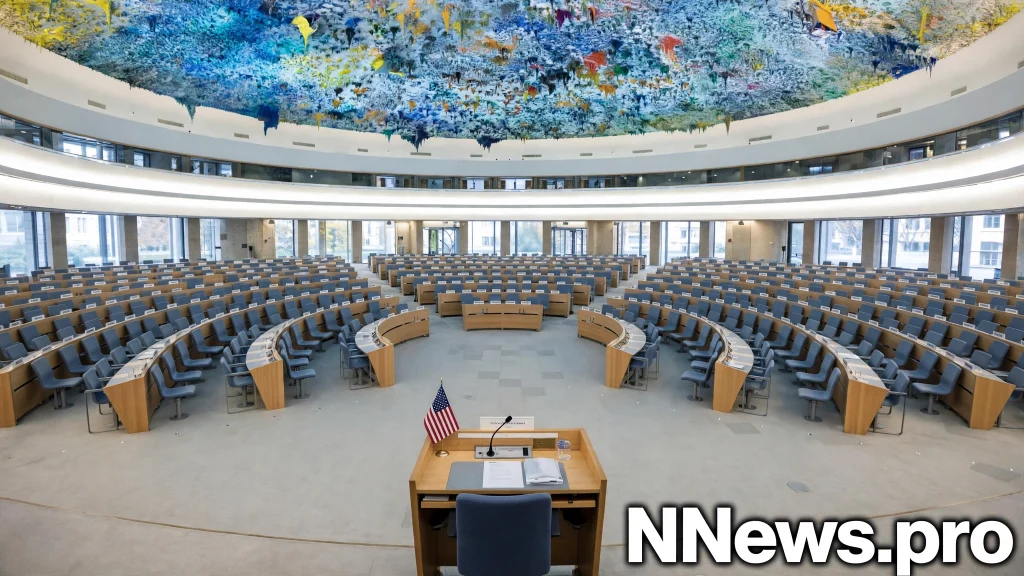
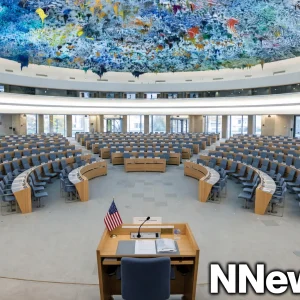
The United States on Tuesday became the first country in the nearly 20-year history of the United Nations Human Rights Council’s flagship review process to fully refuse to take part, skipping a scheduled examination of its human rights record in Geneva.
Washington sent no delegation to the session, which had been rescheduled from November 2025 in the hope that the U.S. government would change course. It did not. The review cannot proceed without the country under examination, and diplomats said the no-show would likely mean the event is postponed until January.
The absence marks a break with a process that every other member state — including governments accused of some of the world’s worst abuses — has taken part in since the review began in 2008.
What happened in Geneva
The U.S. review was scheduled for Tuesday, November 10, as part of the council’s Universal Periodic Review, known as the UPR. Under the process, all 193 U.N. member states submit a report on their human rights record every four to five years, present it before other governments, answer questions, and receive non-binding recommendations.
The United States submitted no national report, which had been due in August 2025, and sent no officials to Geneva. A State Department spokesperson said in an email to The Associated Press that the administration gives “no credibility to the agency.”
“This irredeemable body makes a mockery of human rights through consistent failures to uphold its own ‘values’ as it pushes anti-American rhetoric,” the spokesperson said, alleging the council’s “persistent failure to condemn the most egregious human rights violators.”
The Trump administration pulled the United States out of the 47-member Human Rights Council last year, accusing it of an anti-U.S. and anti-Israel bias and of failing to uphold the values it promotes. The withdrawal was formalized in an executive order in February 2025. Washington has also stopped attending other countries’ reviews.
According to U.N. documents cited by Reuters, other governments had planned to question the United States on issues including abortion and the death penalty. U.S. and international non-governmental organizations sent nearly 200 submissions to the review, covering topics from migration to racial discrimination.
Fourteen countries are due to take part in the review process in Geneva this month. In President Donald Trump’s first term, the United States submitted its UPR report and took part in the process.
Why the U.S. walked away
The administration’s position is that taking part in the review would imply endorsement of a body it considers illegitimate. A State Department spokesperson told Reuters that participation would imply endorsement of the council’s work.
The council itself has not directly criticized Washington’s rights record, but experts it appoints have raised concerns, including over migrant deportations. The administration has said deportations are carried out in accordance with U.S. immigration law.
Supporters of the review process argue that the U.S. absence undermines a mechanism built on the idea that no country is above scrutiny. Critics of the snub warn it could encourage other governments — many of which already bristle at intense monitoring — to follow Washington’s example.
Eric Tistounet, a visiting professor at the Geneva Graduate Institute who served as the council’s first secretary, said the walkout could damage the credibility of the review system.
“If the predominant global power — which has always claimed to adhere to the human rights norms — doesn’t show up and doesn’t even justify why, then you are in big trouble,” he said.
Reaction from rights groups
Human rights organizations in Geneva condemned the no-show on Tuesday, saying violations in the United States have surged to levels not seen in decades.
“We’ve seen attacks on fundamental human rights and civil liberties unprecedented in generations,” Jamil Dakwar, director of the American Civil Liberties Union’s human rights program, told reporters in Geneva. “Enough is enough.”
Dakwar said the administration is telling the world it does not care whether it is reviewed, and that the council should hold the United States accountable. The ACLU and allied groups have asked U.N. High Commissioner for Human Rights Volker Turk to present an update on rights in the United States early next year.
Amnesty International USA said the United States now has “the shameful distinction of becoming the first country to avoid participating in all stages of the UN’s Universal Periodic Review peer-review process.”
“No country — even those whose governments or leaders are accused of some of the most horrific atrocities imaginable — has ever completely absconded from the UPR,” said Amanda Klasing, Amnesty International USA’s national director for government relations, speaking from Geneva. “The Human Rights Council gave the US an extra year to participate, but the Trump administration still failed to show up.”
The International Service for Human Rights said the United States is the first state to fully ignore its obligations under the mechanism, and urged council members to schedule a dedicated discussion of the U.S. record at the council’s 64th session in March 2027.
Noor Abdalla, wife of pro-Palestinian student activist Mahmoud Khalil, who was held in immigration detention last year, was among campaigners pressing Turk to hold a briefing on the U.S. rights situation even in Washington’s absence.
“When the most powerful government in the world is not held accountable, they think that they can do whatever they want,” Abdalla told reporters. Diplomats, however, were skeptical that many states would want to confront Washington directly. “The view is to leave the door open and hope they come back in two years,” one diplomat said.
Related Articles


Background: a review every country has joined — until now
The Human Rights Council was created in 2006, and the Universal Periodic Review began in 2008. Since then, all 193 U.N. member states have gone through the process three times. Participation has been universal, though not always perfect: in 2008, Cape Verde did not submit a national report, citing internal constraints, but otherwise took part in its review.
Israel announced in 2012 that it would not take part in its review during the UPR’s second cycle, but it later returned to the process. No state has refused to participate in its review from beginning to end, as the United States is now doing.
The United States had been a dedicated participant from the start, despite its criticisms of the council. It took part in a UPR working group session on January 20, 2025 — the day of Trump’s inauguration — before the new administration announced it would no longer engage with the council.
The fourth cycle of the UPR ends in 2027. If the United States does not reverse its decision by then, it will be the first country not to have participated in the review since the process began.
Why this matters
The U.S. decision matters beyond Geneva. The Universal Periodic Review was designed as the one human rights mechanism that applies equally to every country, large and small. Its power has always rested on universality: because every government submits to the same questions, no government can claim it is being singled out.
Washington’s refusal breaks that principle from the top. If the world’s most powerful government can decline scrutiny without consequence, other governments under pressure over their own records may see less reason to cooperate. That is the precedent rights groups say they fear most.
The move also fits a broader pattern in the administration’s approach to international institutions. In recent weeks, the White House has declared the war with Iran effectively over after talks with Qatar, opened the first U.S.-brokered talks between Russia and Ukraine in nine months in Abu Dhabi, and pressed its Board of Peace to act on the flooding in Gaza — while at the same time pulling back from multilateral bodies it views as biased against American interests.
For Americans, the practical effect is limited in the short term: the review’s recommendations are non-binding, and no sanctions or enforcement follow from a missed session. But the symbolism is considerable. The United States, whose former First Lady Eleanor Roosevelt helped champion the Universal Declaration of Human Rights, is now the first country to walk away from the process entirely.
What happens next
The immediate question is what the council does with the empty session. According to a draft U.N. document and diplomats cited by Reuters, the U.S. review will likely be postponed until January. Civil society groups want the council to go further, scheduling a dedicated dialogue on the U.S. record at its March 2027 session and placing greater direct scrutiny on American policies in coming debates.
The ACLU’s request for an update from the U.N. human rights chief early next year would, if granted, put the U.S. record before the council even without American participation. Whether member states agree remains uncertain, given the reluctance of many governments to confront Washington.
For now, the seat reserved for the United States in Geneva stays empty — and the review process the U.S. once helped to build moves on without it.
Frequently Asked Questions
What is the Universal Periodic Review?
The Universal Periodic Review, or UPR, is the U.N. Human Rights Council’s peer-review process. Every four to five years, each of the 193 U.N. member states submits a report on its human rights record, presents it in Geneva, answers questions from other governments, and receives non-binding recommendations. It began in 2008 and is the only human rights mechanism that applies to every country.
Why did the United States refuse to take part?
The Trump administration withdrew the United States from the Human Rights Council in 2025, accusing it of anti-U.S. and anti-Israel bias. A State Department spokesperson called the council an “irredeemable body” and said participation would imply endorsement of its work. The U.S. skipped its review in November 2025, and the council rescheduled it for November 10, 2026, in hopes Washington would reconsider. It did not.
Has any other country ever refused the review?
No. Since the UPR began in 2008, every country has taken part in its review at least once. Israel announced in 2012 that it would skip its second-cycle review, but it later returned to the process. The United States is the first country to refuse to participate from beginning to end.
What happens now that the U.S. did not show up?
The review cannot proceed without the country’s delegation, so the session will likely be postponed until January, according to a draft U.N. document and diplomats. Rights groups are urging the council to schedule a dedicated discussion of the U.S. record at its March 2027 session, and the ACLU has asked the U.N. human rights chief to present an update on rights in the United States early next year.
Sources: Reuters (Emma Farge, Geneva, Nov 10, 2026); Associated Press (Jamey Keaten, Geneva, Nov 10, 2026); Amnesty International USA (Nov 10, 2026); International Service for Human Rights (Nov 10, 2026); American Journal of International Law (Cambridge).