Saudi Arabia’s East-West Oil Pipeline Attacked Again Near Medina
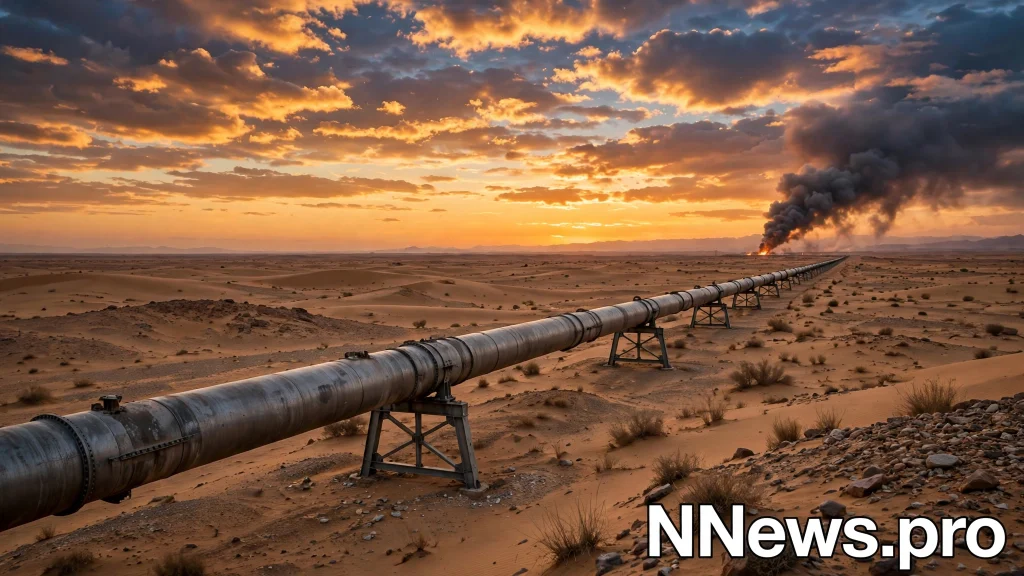
Saudi Arabia said on Monday that its East-West oil pipeline was attacked in the Medina region — the second strike on the kingdom’s most important energy artery in about a month. A limited fire broke out and was extinguished, the Energy Ministry said. No one was hurt, and operations continued without interruption.
The attack was reported by the state-run Saudi Press Agency, citing an Energy Ministry official. The statement did not identify who carried out the attack or say whether a drone or a missile was used, and no group had claimed responsibility.
The timing matters. The pipeline is Saudi Arabia’s main route for moving crude oil around the Strait of Hormuz, the narrow waterway at the center of the region’s wider war. With shipping through the strait still heavily restricted, the line has become the kingdom’s lifeline for getting oil to market.
What happened on Monday
The Energy Ministry official said the pipeline was targeted in the Medina region on Monday. Emergency teams were sent to the site immediately, and the fire was brought under control.
“No injuries or fatalities were reported, and pipeline operations were unaffected,” the ministry said in its statement, carried by the Saudi Press Agency.
The ministry gave no further details about the nature of the strike. It did not say whether a pumping station or the pipe itself was hit near Medina — a distinction that matters, because pumping stations take far longer to repair than a damaged section of pipe.
It came a day after explosions were reported in Riyadh, and four days after the Saudi-led coalition said its air defenses had intercepted a ballistic missile launched toward the Medina region.
A pipeline hit for the second time in a month
Monday’s incident was not the first. The pipeline was also targeted last month in an attack attributed to Yemen’s Houthi militants, who have repeatedly struck Saudi oil infrastructure and describe their operations as a response to Saudi airstrikes and the blockade of Yemen. Repair work followed the earlier attack.
It is important to be clear about what is not yet known. Saudi authorities have not blamed any group for Monday’s attack, and no claim of responsibility has been published. The Houthis’ past targeting of Saudi oil facilities makes them an obvious focus of speculation, but speculation is not evidence.
Why this pipeline matters
The East-West pipeline runs about 1,200 kilometers (745 miles) across the Arabian Peninsula, from Abqaiq in the Eastern Province to the Red Sea port of Yanbu. Saudi Aramco rates it at about seven million barrels per day.
Its strategic value has grown enormously during the current war. The pipeline lets the world’s largest crude exporter ship oil west to the Red Sea, bypassing the Strait of Hormuz. That route is now critical because the strait remains tightly constricted by the US-Israel war on Iran, and the line handled the bulk of the kingdom’s export growth in October.
That is also why the pipeline is a target. Disrupting it would threaten one of the few remaining reliable routes for Gulf oil to reach world markets, and a strike on a pumping station could take the line out for weeks.
For now, the market reaction has been muted. Oil prices fell sharply on Monday on hopes for diplomacy over Iran: Brent crude dropped 5.9 percent to $92.57 a barrel, while US West Texas Intermediate fell 4.4 percent to $86.85, according to AFP. President Donald Trump said on Monday that the United States was keeping the war with Iran at a “status quo” and that new American strikes were “highly unlikely,” easing immediate fears of escalation. Trump Says New Iran Strikes Are “Highly Unlikely” — but Talks Have Stalled and the Risk Remains
Why this matters for the United States
For American readers, the stakes are direct. The United States remains deeply exposed to global oil prices. A serious disruption to Gulf exports would push up gasoline prices and feed into inflation just as the October inflation report lands on Tuesday. October CPI Preview: Inflation Expected to Cool, but the Report Will Carry an Unusual Gap
The attack also tests the fragile diplomacy around the Iran war. Trump has said Washington is not currently looking to escalate, and Secretary of State Marco Rubio has played down hopes of an immediate breakthrough with Tehran. But each new strike on energy infrastructure raises the risk that the conflict widens again. A Reuters survey reported on Monday that OPEC crude production rose by 1.38 million barrels per day in October to 22.87 million barrels per day — about 90 percent of its pre-war rate. That recovery helps explain why traders were less alarmed: supply, for now, is holding up.
Related Articles



The attack also underscores how the war in Yemen, long treated as a separate conflict, has fused with the wider regional war. Saudi Arabia is now fighting on two fronts: the Houthi campaign from Yemen and the confrontation with Iran, which has already spilled into cyberspace. France Accuses Iran’s Revolutionary Guards of Cyberattack That Set Supermarket Fridges on Fire How Riyadh responds to this second attack will be watched closely in Washington, in Tehran, and in oil markets.
Latest developments
- Saudi Arabia’s Energy Ministry confirmed on Monday that the East-West pipeline was targeted in the Medina region, causing a limited fire that was extinguished, with no casualties and operations unaffected.
- The ministry did not identify those responsible or say whether a drone or a missile was used, and no group had claimed the attack.
- It follows an earlier attack on the same pipeline last month, attributed to Yemen’s Houthis, amid intensifying Saudi-Houthi strikes.
- Oil prices fell on Monday on hopes for US-Iran diplomacy, with Brent crude down 5.9 percent, while OPEC output recovered to about 90 percent of its pre-war level in October, according to a Reuters survey.
- President Trump said Monday the US is maintaining the “status quo” in the Iran war and new strikes are “highly unlikely,” while Secretary of State Marco Rubio said talks with Tehran are not close to a breakthrough.
Watch for three things in the coming days: whether any group claims the attack, whether Saudi Arabia discloses what was hit and how badly, and whether Riyadh responds with new strikes on Yemen.
Frequently asked questions
Where is Saudi Arabia’s East-West pipeline?
It runs about 1,200 kilometers (745 miles) from Abqaiq in the Eastern Province to the Red Sea port of Yanbu, letting Saudi Arabia export crude without using the Strait of Hormuz.
Who attacked the pipeline?
That has not been established. The Energy Ministry did not name anyone responsible, and no group had claimed the attack. The pipeline was also attacked last month in a strike attributed to Yemen’s Houthi militants, who have repeatedly targeted Saudi oil infrastructure.
Did the attack disrupt Saudi oil exports?
No. The Energy Ministry said operations were unaffected, no injuries or fatalities were reported, and the limited fire was extinguished by emergency teams.
Why does this pipeline matter for oil prices?
It is Saudi Arabia’s main bypass around the Strait of Hormuz, carrying crude to the Red Sea at about seven million barrels per day. A serious disruption could push global oil prices higher, but Monday’s attack did not stop flows.
What happens next
The attack is a reminder that the region’s energy infrastructure is now part of the battlefield. Saudi Arabia has absorbed a second strike on its most important export route in a month without losing oil flows — but the repeated targeting raises the odds that a future attack succeeds, with a sharp jump in oil prices. For now, markets are betting on diplomacy. The next few days will show whether that bet holds.
Sources
- Al Jazeera, “Saudi Arabia reports new attack on key East-West pipeline,” November 9, 2026: https://www.aljazeera.com/news/2026/11/9/saudi-arabia-reports-new-attack-on-key-east-west-pipeline
- Malay Mail (AFP), “Saudi Arabia says East-West pipeline targeted amid escalating Houthi strikes, operations unaffected,” November 10, 2026: https://www.malaymail.com/news/world/2026/11/10/saudi-arabia-says-east-west-pipeline-targeted-amid-escalating-houthi-strikes-operations-unaffected/242674
- NDTV Profit, “Saudi Arabia Says East-West Oil Pipeline Targeted In ‘Medina’, Month After Repair,” November 9, 2026: https://www.ndtvprofit.com/world/saudi-arabia-says-east-west-oil-pipeline-targeted-in-medina-month-after-repair-12305020
- The Business Standard, “Saudi East-West oil pipeline hit by new attack in Medina region,” November 10, 2026: https://www.tbsnews.net/worldbiz/middle-east/saudi-east-west-oil-pipeline-hit-new-attack-medina-region-1597946
- OilPrice.com, “Saudi Pipeline Attacked as OPEC Output Climbs to 90% of Pre-War Levels,” November 9, 2026: https://oilprice.com/Latest-Energy-News/World-News/Saudi-Pipeline-Attacked-as-OPEC-Output-Climbs-to-90-of-Pre-War-Levels.html








[…] from Russia, Ukraine and the United States opened two days of US-brokered peace talks in Abu Dhabi on Tuesday, November 10, their first three-way meeting since February, as Washington pushes for a […]
[…] Oil markets will also be watching. Brent crude fell 5.8 percent on Monday to about $92.57 a barrel after Trump said new strikes on Iran were “highly unlikely,” a reminder that geopolitics can move prices faster than any single deal. Venezuela’s return to world markets, if it happens, would add supply at a time when traders are already weighing the risk of further disruption in the Middle East, including the recent attack on Saudi Arabia’s East-West pipeline. […]
[…] exchange followed another attack a day earlier, when the East-West oil pipeline was hit again in the Medina region on Monday. An Energy Ministry official told the state news agency SPA that the […]