Senior US Army Soldier Arrested in UK on Suspicion of Spying for Russia
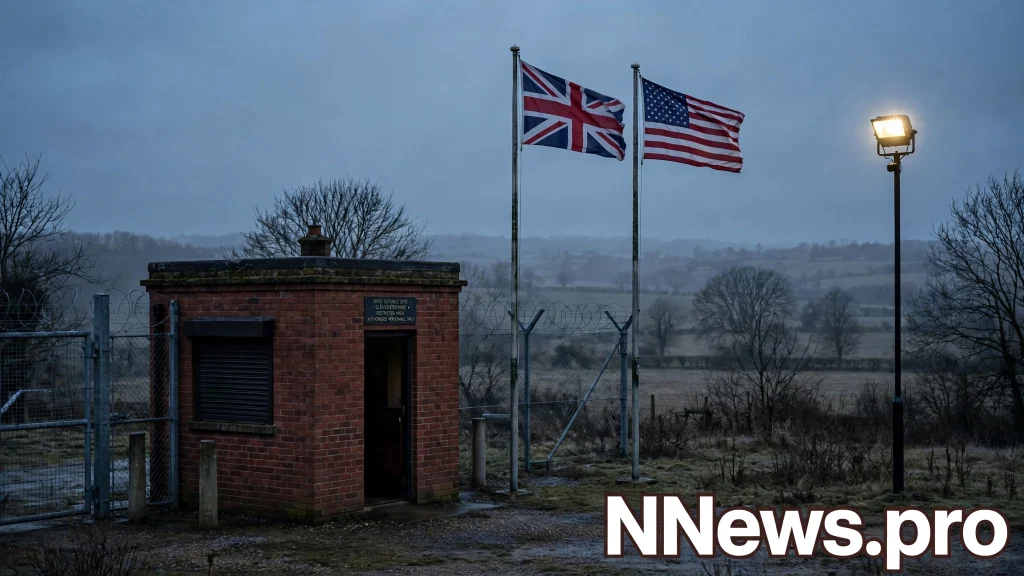
A senior US Army soldier has been arrested in England on suspicion of spying for Russia, British counter-terrorism police said on Tuesday, in a case that touches the headquarters of one of NATO’s most important rapid-reaction commands.
The 41-year-old man, who has not been named, was detained near Gloucester in western England on Tuesday, November 10. He was arrested on suspicion of offences under Sections 1 and 3 of the National Security Act 2023 — obtaining or disclosing protected information, and assisting a foreign intelligence service. Police said the country to which the allegations relate is Russia.
He remains in custody at a London police station. Officers are carrying out searches at two locations in Gloucestershire, and the investigation is being led by Counter Terrorism Policing London, working closely with US authorities, the US military and the FBI. He has not been charged with any offence, and no details of his rank, unit or role have been made public.
What the authorities have said
London’s Metropolitan Police announced the arrest in a statement on Tuesday afternoon, describing it as a significant arrest and the result of close collaboration between British and American agencies.
Deputy Assistant Commissioner Vicki Evans, the senior national coordinator for Counter Terrorism Policing, said: “This significant arrest and investigation is a result of close collaboration between UK and US authorities. The allegations are serious and our investigation is very much ongoing. This activity demonstrates the strength of our UK and US law enforcement and national security partnerships, and I commend the work of all the teams involved. We will work together to take robust action against those we suspect of any criminal activity that could undermine our national security.”
FBI Director Kash Patel said the arrest “involves allegations of espionage, which is of the utmost concern to the United States and our allies.” He added: “While this investigation is continuing, I want to send a clear message — this FBI has no tolerance for anyone who breaks their oath to the United States and whose actions endanger our national security and that of our partners. This includes 167 counterintelligence and espionage arrests from this FBI over the last 21 months — a 53% increase.”
Brigadier General Sean Stinchon, the commanding general of US Army Counterintelligence Command, said the case “demonstrates the strength of our partnerships and the resolve of the counterintelligence community.” He added: “The alleged conduct of a senior soldier, entrusted with sensitive information, is a sobering reminder that insider threats are real and persistent. I encourage anyone who thinks they’ve witnessed something suspicious to report it to their local counterintelligence office.”
Police stressed that the investigation is not linked to any other ongoing Counter Terrorism Policing investigation.
The base at the centre of the case
The BBC reported that it understands the soldier was based at Imjin Barracks in Innsworth, Gloucestershire, which serves as the headquarters of NATO’s Allied Rapid Reaction Corps. Police have not confirmed the posting, and no details of the soldier’s role have been released.
Imjin Barracks is one of the most sensitive military sites in Britain. The Allied Rapid Reaction Corps is a high-readiness NATO headquarters that can command multinational land forces on short notice, and its staff includes officers from across the alliance. A posting there would put a soldier in regular contact with allied planning, exercises and operational material — which is why the allegation, if proven, would be so serious.
Gloucester sits in the west of England, about 110 miles west of London. The two searches under way in Gloucestershire are continuing alongside the detention, police said.
The law behind the arrest
The National Security Act 2023 replaced much of Britain’s century-old Official Secrets Acts and gave police and prosecutors a modern set of espionage offences.
Section 1 of the Act covers obtaining, copying, recording or disclosing protected information for a foreign power. A person convicted under that section faces up to life imprisonment. Section 3 makes it an offence to materially assist a foreign intelligence service in carrying out UK-related activities, including by providing or providing access to information, goods, services or financial benefits. That offence carries a maximum sentence of 14 years in prison.
The Act also gives police extended powers to detain suspects. A person arrested under the Act can be held for up to 14 days without charge, far longer than the standard limits that apply to most criminal arrests in England and Wales.
The soldier is at the very start of that process. An arrest on suspicion is not a charge, and no evidence has been made public. Under British law he is presumed innocent unless and until he is charged and convicted.
Why this matters
Espionage cases involving serving soldiers are rare, and they are rarer still when the suspect is a senior member of an allied army stationed at a NATO headquarters. If the allegations are substantiated, the case would raise immediate questions about what information may have been passed on, to whom, and over what period — questions the authorities have not yet answered publicly.
Related Articles


It also lands at a moment of intense strain on Western security services. Russia’s intelligence services have been accused of running an aggressive campaign of sabotage, cyberattacks and recruitment across Europe since the full-scale invasion of Ukraine, and Britain has repeatedly warned that Moscow is targeting its allies as well as the UK itself. Patel’s claim of 167 counterintelligence and espionage arrests in 21 months, up 53 percent, underlines how busy that threat picture has become.
For the US Army, the case is a reminder of the insider-threat problem that senior officers have warned about for years. Soldiers with security clearances hold some of the most sensitive material in government, and the damage from a single trusted insider can far exceed that of an outside hacking attempt. Stinchon’s statement — that insider threats are “real and persistent” — was aimed squarely at that concern.
A tense day for American forces in Britain
The arrest came on the same day the United States removed aircraft from British military bases over a separate apparent threat from Iran, according to Reuters, and hours after the US Justice Department unsealed charges against three Iran-backed operatives accused of plotting an attack on RAF Fairford, a US-used air base in Gloucestershire.
Police have been explicit that the two matters are separate. The Fairford case involves an alleged Iran-backed network accused of nearly 20 attacks or attempted attacks across Europe and the United States, while the soldier’s arrest concerns alleged assistance to Russian intelligence. The Metropolitan Police said its investigation is not linked to any other ongoing counter-terrorism investigation.
The wider backdrop is a region still on edge. The war with Iran formally ended only on Monday, when President Donald Trump declared it “effectively over” after talks in Qatar, and Houthi missiles fired at Riyadh were intercepted early on Tuesday as the Saudi-Yemen conflict escalated. Against that background, an espionage arrest at a NATO headquarters is likely to draw close attention in Washington, London and Brussels alike.
What happens next
The immediate question is whether the soldier will be charged. Investigators will be examining material seized in the Gloucestershire searches, and prosecutors will decide whether there is enough evidence to bring a case. Under the National Security Act, police can hold him for up to 14 days without charge while that work continues.
If charges follow, the case would be heard in a British court, and the soldier’s name, rank and unit would ordinarily be made public at that stage. It is not yet clear whether any prosecution would take place in Britain, or whether the United States would seek to take jurisdiction over its own service member. No statement has been made on that point by either government.
The US Army has not yet issued its own statement beyond Stinchon’s remarks through the Metropolitan Police. Further details are expected as the investigation develops.
Frequently Asked Questions
Has the soldier been charged with spying?
No. He has been arrested on suspicion of offences under Sections 1 and 3 of the National Security Act 2023, but he has not been charged. His name, rank and unit have not been released, and he remains in custody at a London police station.
What is he accused of?
Police say he is suspected of obtaining or disclosing protected information and of assisting a foreign intelligence service, and that the country involved is Russia. No details of what information was allegedly involved, or of any contact with Russian intelligence, have been made public.
Where was the soldier based?
The BBC reported that it understands he was based at Imjin Barracks in Innsworth, Gloucestershire, the headquarters of NATO’s Allied Rapid Reaction Corps. Police have not confirmed that posting.
Is this arrest connected to the RAF Fairford plot?
No, according to police. The Metropolitan Police said the investigation is not linked to any other ongoing Counter Terrorism Policing investigation. The Fairford case, in which the US Justice Department charged three Iran-backed operatives on Tuesday, is a separate matter.
The arrest is a reminder that the most sensitive security threats do not always come from outside. A senior soldier, trusted with protected information at the heart of a NATO command, now faces allegations that could carry a life sentence if proven. Whether the case ends in charges or in release without charge, it will be watched closely on both sides of the Atlantic — and it will test the counterintelligence partnership that both governments were quick to praise on Tuesday.
Sources: Metropolitan Police; Reuters; Associated Press; BBC; legislation.gov.uk (National Security Act 2023).