DOJ Charges Three Iran-Backed Operatives in Plot to Attack US-Used RAF Fairford Base and Nearly 20 Terror Attacks
DOJ Charges Three Iran-Backed Operatives in Plot to Attack US-Used RAF Fairford Base and Nearly 20 Terror Attacks
The United States has charged three men with carrying out a campaign of nearly 20 terrorist attacks across Europe and the United States on behalf of an Iran-aligned network, including a September plot to attack RAF Fairford, the British airbase that houses American military aircraft and personnel.
The Justice Department unsealed an eight-count superseding indictment on Tuesday, November 10, in the Southern District of New York against Mohammad Baqer Saad Dawood al-Saadi, a 32-year-old dual Iranian-Iraqi national; Mohsen Mohajeri, a 48-year-old Iranian national; and Mohammed Ali al-Hassani, a 35-year-old Iraqi national. Prosecutors say the three worked for Kata’ib Hizballah and Iran’s Islamic Revolutionary Guard Corps, both designated foreign terrorist organizations by the United States.
The most striking allegation is that the plot against RAF Fairford was coordinated in part from inside a New York jail. Al-Saadi, in federal custody in Manhattan since May awaiting trial on earlier terrorism charges, allegedly passed coded messages to his co-defendants through phone calls with family members in the days leading up to the attack.
The RAF Fairford plot
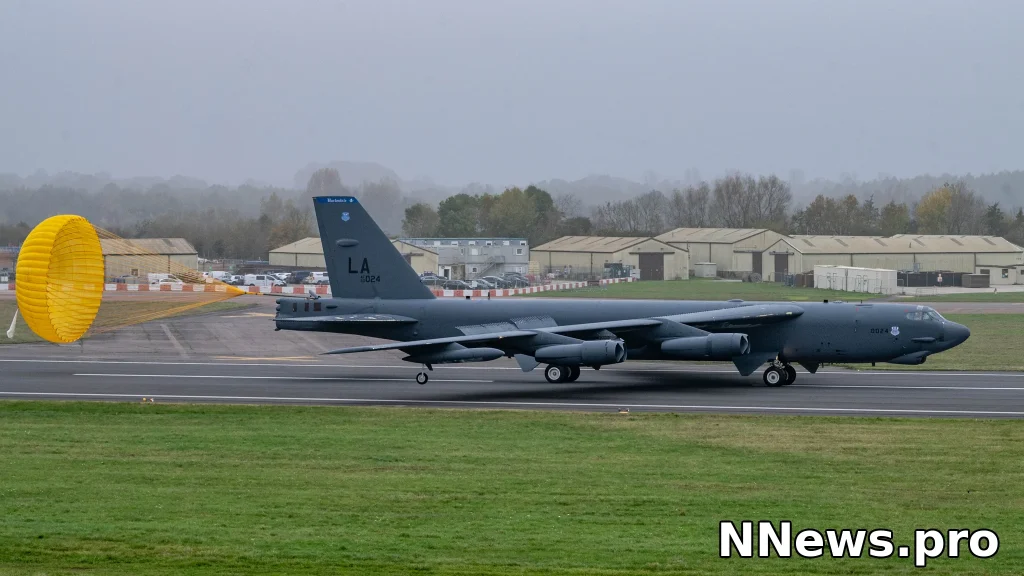
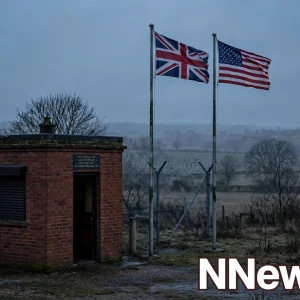
According to prosecutors, al-Hassani orchestrated the plot against RAF Fairford, a Royal Air Force station in Gloucestershire, England, about 80 miles west of London. The base is the U.S. Air Force’s only dedicated forward operating location for heavy bombers in Europe, and American B-52 and B-1 bombers flew missions against Iran from Fairford earlier this year.
The indictment lays out a month of preparation. On or about August 22, prosecutors say, al-Hassani paid an associate to carry out surveillance of the base’s perimeter and later received videos of the area. In September, he allegedly tasked and paid several people to prepare for the attack, including procuring vans and barrels of fuel, researching chemical accelerants, and buying metallic objects that could be used as shrapnel. The group fitted the vans with custom decals to make them look like vehicles belonging to a fuel delivery business and a swimming pool supply business.
On September 26, prosecutors say, al-Hassani directed three vans, some carrying barrels of fuel, toward the base. At least two of the vans encountered a security roadblock on the way to the perimeter and were turned back. In the early hours of September 27, British police recovered the three white vans, with the fuel-delivery logos still affixed, and arrested the occupants.
British authorities had already charged two London men in connection with the incident. Mohmed Abdulkarim, 24, and Nouman Essghir, 24, appeared at Westminster Magistrates’ Court in late October charged under the National Security Act 2023. Prosecutors said Abdulkarim acted as an intermediary for a handler known as “Ali,” believed to be working for Iran, and received about £70,000 in payments, while Essghir was charged over an alleged reconnaissance mission at the base on August 22. Both are due at the Old Bailey on November 20. Britain’s prime minister said on October 12 that the incident was “highly likely to have been coordinated in Iran, almost certainly directed by Iran’s Islamic Revolutionary Guard,” and announced sanctions on two Iranians. Iran’s ambassador in London rejected the accusation.
Coordinated from a jail cell
The indictment alleges that al-Saadi kept directing the network even after his arrest. He was taken into custody abroad on May 1 and transferred to the FBI on May 14. Prosecutors say that for about four months after his arrest, no further attacks were attributed to the three men. By August, however, the planning for Fairford was under way.
While in prison in New York awaiting trial, al-Saadi had phone calls with immediate family members in Iraq. Prosecutors say he used some of those calls to pass coded messages to Mohajeri and al-Hassani, referring to Mohajeri by aliases including “Abbas, Abu Daniel” and asking his family to pass along messages about “work,” a term prosecutors say al-Saadi regularly used to describe terrorist activity. On one call he asked his sister, “What are they doing about all our old work?” — whether it had been cancelled or put on pause. She replied, “It isn’t cancelled.”
On September 24, three days before the vans were found near Fairford, al-Saadi again called his family, asked how al-Hassani — whom he called “Ali” — was doing, and was told that “Ali” had been transferred to the “International Section.” Prosecutors say al-Saadi then instructed his family to “give him money so we can do it.”
“Even after one of their co-conspirators was arrested and placed in federal custody, the defendants allegedly continued coordinating terrorist activity through coded communications and a network of associates overseas,” U.S. Attorney Jamie McDonald said. “The threat presented by Iran and Iran-backed terrorist groups to America and our allies is not hypothetical — it is very real.” Attorney General Todd Blanche said anyone who plans a terrorist plot on a military base housing American service members “will be prosecuted by the United States government.”
A spring campaign of attacks across Europe
The Fairford plot was the latest chapter in a longer campaign, prosecutors say. Al-Saadi, described as a longtime operative of the IRGC and Kata’ib Hizballah, was first charged in the Southern District of New York on May 28 for his role in planning and promoting approximately 18 terrorist attacks in Europe in the spring of 2026, and for attempting to bomb a synagogue in New York between March and April 2026.
The European attacks were carried out in the name of a purportedly new terrorist group using the pseudonym Harakat Ashab al-Yamin al-Islamiya, or HAYI, which prosecutors say is a front for Kata’ib Hizballah and other terrorist organizations. Of the roughly 18 attacks in Europe that spring, about seven — the most in any European country — took place in the United Kingdom. The attacks involved arson and explosives, and in one instance a near-fatal stabbing in London of two Jewish men, including a dual U.S.-British citizen.
The indictment describes the planning in unusual detail. On or before April 6, prosecutors say, Mohajeri and al-Hassani planned attacks while together in a room in Iraq, with a map of London on a computer screen. In a video of that meeting, Mohajeri told al-Hassani, “We need to get focused on London.” HAYI then claimed responsibility for six terrorist attacks in and around London starting about a week later.
On April 17, the three men allegedly directed an attack in real time over FaceTime, projected onto a large screen with the HAYI logo in the background, with al-Hassani telling the perpetrator to take a lighter and “light one in your hand,” “light it,” and “throw the fourth one.” The next day, al-Hassani took part in another video call with a person attacking a synagogue in London, directing the person to “light it up like a Christmas tree” before the person lit an improvised explosive device and threw it at the building.
Plots inside the United States
The indictment also covers alleged plots on American soil. In March and April 2026, prosecutors say, al-Saadi attempted to coordinate and carry out terrorist attacks in the United States, including targeting a synagogue in Manhattan. In the original May complaint, prosecutors further alleged that al-Saadi tried to hire a purported member of a Mexican cartel to attack the New York synagogue and two Jewish centers in Los Angeles and Scottsdale, Arizona.
Related Articles


Al-Saadi has worked with the IRGC and Kata’ib Hizballah since at least 2017, according to prosecutors. After U.S. airstrikes killed some of the groups’ senior leaders, prosecutors say, he directed others to exact retribution by killing U.S. citizens and U.S. political and military leaders.
The eight charges
The superseding indictment, assigned to U.S. District Judge Colleen McMahon, contains eight counts:
- Conspiring to provide material support to Kata’ib Hizballah, a foreign terrorist organization — maximum 20 years in prison.
- Conspiring to provide material support to the IRGC, a foreign terrorist organization — maximum 20 years.
- Conspiring to provide material support for acts of terrorism — maximum 15 years.
- Providing material support for acts of terrorism — maximum 15 years.
- Attempted acts of terrorism transcending national boundaries — maximum life in prison (al-Saadi only).
- Conspiring to bomb a place of public use — maximum life in prison.
- Attempted destruction of property by means of fire or explosive — minimum five years, maximum 20 years (al-Saadi only).
- Financing terrorism — maximum 20 years.
The Justice Department stressed that the charges are merely accusations and that the defendants are presumed innocent unless and until proven guilty. Al-Saadi is in U.S. custody; Mohajeri and al-Hassani were in Iran at the time of the Fairford plot, according to prosecutors.
Background: Kata’ib Hizballah, the IRGC and the war with Iran
Kata’ib Hizballah is an Iraqi militia backed by Iran’s Quds Force, the external operations arm of the IRGC. The United States designated it a foreign terrorist organization in 2009. The IRGC itself was designated a foreign terrorist organization in 2019. Prosecutors present HAYI as a front the network used to claim responsibility for attacks while obscuring the involvement of Kata’ib Hizballah and the IRGC.
The plot unfolded during the war with Iran, which began on February 28, 2026, when the United States and Israel launched a military campaign against Iran. President Donald Trump said on Monday that the war is “effectively over,” while stressing that the naval blockade of Iran continues. The indictment landed on the same day Houthi missiles fired at Riyadh were intercepted by Saudi air defenses, and weeks after an attack on Saudi Arabia’s East-West oil pipeline near Medina — a reminder that Iran-aligned groups have kept striking at American and allied interests even as the main war has wound down.
Why this matters
The indictment is the first time U.S. prosecutors have publicly tied the Fairford plot to a named, Tehran-directed network and laid out how the operation was run. It shows a campaign that targeted Jewish communities in Europe and the United States, attempted to strike a base housing American service members, and — according to prosecutors — kept going even after its alleged ringleader was behind bars in New York. The attacks described did not take place in Iran or Iraq. They took place in London, in New York, and at a British airbase used by the U.S. Air Force.
Latest developments
The superseding indictment was unsealed on Tuesday, November 10. Al-Saadi remains in federal custody in New York awaiting trial. The case is being handled by the Southern District of New York’s National Security and International Narcotics Unit, with the FBI’s New York Joint Terrorism Task Force. In Britain, the two men charged over the Fairford incident are due at the Old Bailey on November 20, and five other men arrested during the investigation remain on police bail.
Frequently asked questions
Who are the three men charged in the indictment?
Mohammad Baqer Saad Dawood al-Saadi, 32, a dual Iranian-Iraqi national described as a longtime operative of Kata’ib Hizballah and the IRGC; Mohsen Mohajeri, 48, an Iranian national and IRGC operative; and Mohammed Ali al-Hassani, 35, an Iraqi national. Al-Saadi is in U.S. federal custody in New York. Prosecutors say Mohajeri and al-Hassani were in Iran at the time of the Fairford plot.
What is RAF Fairford and why was it targeted?
RAF Fairford is a Royal Air Force station in Gloucestershire, England, about 80 miles west of London. It is the U.S. Air Force’s only dedicated forward operating location for heavy bombers in Europe, and American B-52 and B-1 bombers flew missions against Iran from the base earlier in 2026.
What is HAYI?
Harakat Ashab al-Yamin al-Islamiya, or HAYI, is the name used to claim responsibility for about 18 attacks in Europe in the spring of 2026. Prosecutors say it is a front for Kata’ib Hizballah and other terrorist organizations, created to obscure who was really behind the attacks.
What happens next?
Al-Saadi awaits trial in the Southern District of New York, where the case is assigned to Judge Colleen McMahon. The two London men charged in Britain over the Fairford incident are due at the Old Bailey on November 20. The charges in the indictment are allegations, and the defendants are presumed innocent until proven guilty.
The indictment makes clear that prosecutors view the threat as ongoing. As U.S. Attorney Jamie McDonald put it, the danger posed by Iran and Iran-backed terrorist groups to America and its allies “is not hypothetical — it is very real.”
Sources:
- U.S. Department of Justice, Southern District of New York — “Three Iranian-Backed Operatives Indicted For Their Roles In Nearly 20 Terrorist Attacks And Attempted Attacks Across Europe And The United States” — https://www.justice.gov/usao-sdny/pr/three-iranian-backed-operatives-indicted-their-roles-nearly-20-terrorist-attacks-and-0
- U.S. Department of Justice — May 2026 indictment of Mohammad Baqer Saad Dawood al-Saadi — https://www.justice.gov/opa/pr/dual-iranian-iraqi-national-indicted-providing-material-support-terrorist-organizations
- CNN — “An Iranian operative helped direct a failed plot to attack a key UK air force base used by the US military from a New York jail, DOJ alleges” (Nov. 10, 2026)
- SOFX — “UK Charges Two in Alleged Iran-Linked Plot Targeting RAF Fairford Airbase” (Oct. 28, 2026) — https://www.sofx.com/uk-charges-two-in-alleged-iran-linked-plot-targeting-raf-fairford-airbase/
- BritBrief — “Men accused of RAF Fairford plot co-ordinated by Iran handler” (Oct. 28, 2026) — https://britbrief.co.uk/crime/courts/men-accused-of-raf-fairford-plot-co-ordinated-by-iran-handler.html







[…] Department unsealed charges against three Iran-backed operatives accused of plotting an attack on RAF Fairford, a US-used air base in […]