SpaceX Plans $74 Billion in AI Supercomputing Campuses in Texas and Arizona
SpaceX plans to invest more than $74 billion in two giant artificial intelligence supercomputing campuses, one at its Starbase site in South Texas and one in Cochise County, Arizona, the company said on Thursday, in one of the largest single commitments to AI computing infrastructure announced this year.
The Elon Musk-led company, which went public in June, said it expects to spend more than $24 billion at Starbase and roughly $50 billion in Arizona. The announcement, reported by Reuters and The Wall Street Journal from a company statement, marks a sharp acceleration of SpaceX’s move beyond rockets and satellite internet into the business of training frontier AI systems.
A 6-gigawatt campus in the Arizona desert
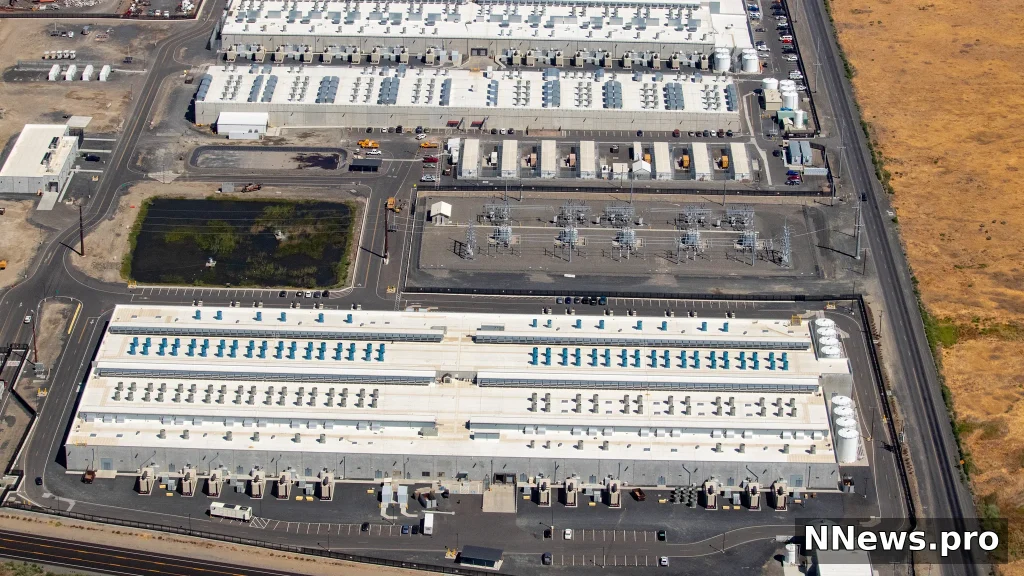
The Arizona project is the larger of the two. SpaceX plans a supercomputing campus near Willcox, in Cochise County, that would draw up to 6 gigawatts of power at full build-out, delivered in four phases of about 1.5 gigawatts each.
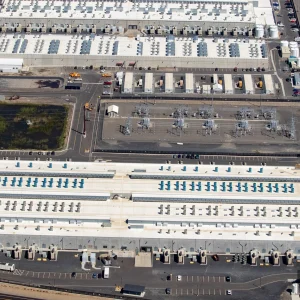
The site would cover 747 acres along U.S. Highway 191 near the Willcox Playa, with nine single-story compute buildings of about 493,000 square feet each, plus electrical buildings, an operations and security building, and outdoor yards for dry coolers, transformers and battery storage. The application was filed by Tombstone Resources LLC, a SpaceX affiliate, and SpaceX has acknowledged it is behind the proposal.
SpaceX said the campus would create about 5,500 construction jobs at peak and 1,000 permanent jobs. The company also said the site would use dry cooling, with no planned industrial groundwater use — a key point in a desert county where water is a sensitive issue. The application estimates a one-time water fill of 3 million to 5 million gallons and 2 million to 3 million gallons a year for sanitation, with no new well in the Willcox basin.
Power would come through local cooperatives: Sulphur Springs Valley Electric Cooperative as the retail provider and Arizona Electric Power Cooperative supplying wholesale power and transmission. The plan includes a 24 gigawatt-hour battery system, 90 megawatts of gas-fired backup generation and $3.6 billion of SpaceX investment in transmission. SpaceX said working with the cooperatives could cut members’ electricity bills by up to 20%.
Starbase will generate its own power
The Texas campus, at SpaceX’s Starbase site near Brownsville, would generate its own electricity from a gas-fired power plant rather than drawing from the Texas grid. The facility, on about 444 acres, is intended to train frontier AI systems for medical research, emergency response, advanced manufacturing and national security, while supporting development and testing of future space-based computing.
SpaceX said the Texas project has already generated more than 3,000 construction jobs and would support more than 500 permanent jobs once running.
Why AI now drives SpaceX
The scale of the spending reflects how far SpaceX’s business has shifted. Reuters reported that the company’s AI segment generated more than half of its revenue in the third quarter. Quarterly revenue, which includes the AI computing segment alongside rockets and Starlink, nearly doubled from $7.814 billion in the three months to June 30 to $14.575 billion in the quarter ended September 30, according to filings with the U.S. Securities and Exchange Commission.
SpaceX is also reported to have arranged roughly $40 billion in lease financing for Nvidia chips, offered to investors by Goldman Sachs and Apollo, and is designing a custom 72-GPU Nvidia Rubin rack called Kessel for ground and orbital data centers, according to SemiAnalysis. The two campuses are separate from Terafab, the $100 billion advanced-chip project SpaceX has proposed in Grimes County, Texas.
The announcement underlines how AI spending spreads beyond chips into power, land and cooling, with the biggest technology companies now competing as much over electricity and permits as over processors.
Both projects still face local votes
Neither campus is a done deal. Both face key local decisions on December 9. In Arizona, the Cochise County Planning and Zoning Commission is due to hold a public hearing in Bisbee on the special use permit the project needs, and a petition with about 2,400 signatures has asked officials to deny it. In Texas, the Starbase City Commission is due to consider a property tax abatement for the project the same day, and the Arizona power deal still has to clear the state regulator.
Related Articles



That makes the $74 billion figure a promise, not a completed investment. SpaceX earns from these halls only when the racks are powered and running its own models or a customer’s work — and in Arizona, that cannot happen until the county signs off.
Why this matters
For American readers, the announcement is a measure of how quickly AI infrastructure has become a race over physical resources. A single 6-gigawatt campus would consume roughly as much power as several million homes, which is why the Arizona plan leans so heavily on batteries, its own transmission investment and a pledge to cut local power bills.
For the two host communities, the stakes are jobs and leverage. Cochise County would gain 1,000 permanent positions in a rural area, but residents have already pushed back over water, power and the sheer scale of the build. Starbase, by contrast, is further along, with construction already under way and thousands of jobs created.
For the wider AI industry, SpaceX’s entry at this scale adds another deep-pocketed buyer to a market already straining chip supply, power grids and data center construction capacity — and another test of whether local planning systems can keep up with the pace of AI investment. The deal also highlights the growing market for data center cooling, as operators look for ways to keep massive AI halls from overheating.
Latest developments
- SpaceX announced the two-campus plan on Thursday, November 12, putting a price on both sites for the first time.
- The Arizona campus still needs approval from Cochise County, with a public hearing set for December 9.
- The Starbase City Commission will consider a property tax abatement for the Texas project on December 9.
- No accelerator suppliers, network architecture or commissioning schedules have been disclosed for either campus.
Frequently asked questions
How much is SpaceX investing in the two AI campuses?
More than $74 billion in total: more than $24 billion at Starbase in Texas and roughly $50 billion at a new campus in Cochise County, Arizona.
How big is the Arizona campus?
It would draw up to 6 gigawatts at full build-out across nine buildings of about 493,000 square feet each, on 747 acres near Willcox. SpaceX expects about 5,500 construction jobs and 1,000 permanent jobs.
When will the projects be decided?
Both face local decisions on December 9, 2026: a Cochise County zoning hearing in Arizona and a Starbase City Commission vote on a property tax abatement in Texas.
Why is SpaceX building AI data centers?
Its AI segment generated more than half of its revenue in the third quarter, according to Reuters. The campuses are intended to train frontier AI models and support future space-based computing, alongside the company’s rocket and Starlink businesses.
SpaceX has now put a number on its AI ambitions. Whether the $74 billion becomes real computing power will depend less on the announcement than on two local votes on December 9 — and on whether the power, water and permits can be secured at a scale few American counties have ever approved.
Sources
- Reuters, “SpaceX plans over $74 billion investment in Texas, Arizona AI campuses,” November 12, 2026
- MLQ.ai, “SpaceX plans more than $74 billion of AI supercomputing campuses in Texas and Arizona,” November 12, 2026
- Unite.ai, “SpaceX Unveils Two AI Supercomputing Campus Plans in Texas and Arizona,” November 12, 2026
- ABC Money, “SpaceX confirms $74bn data centre investment in Texas, Arizona,” November 12, 2026
- VoltGrid News, “SpaceX Plans Over $74B for Arizona and Texas Data Centers,” November 12, 2026