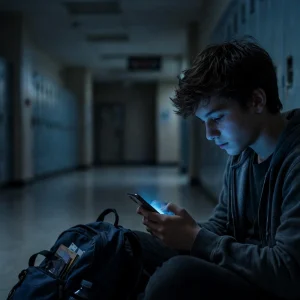
AI Has Made University Coursework “Close to Impossible” to Grade, England’s Regulator Warns
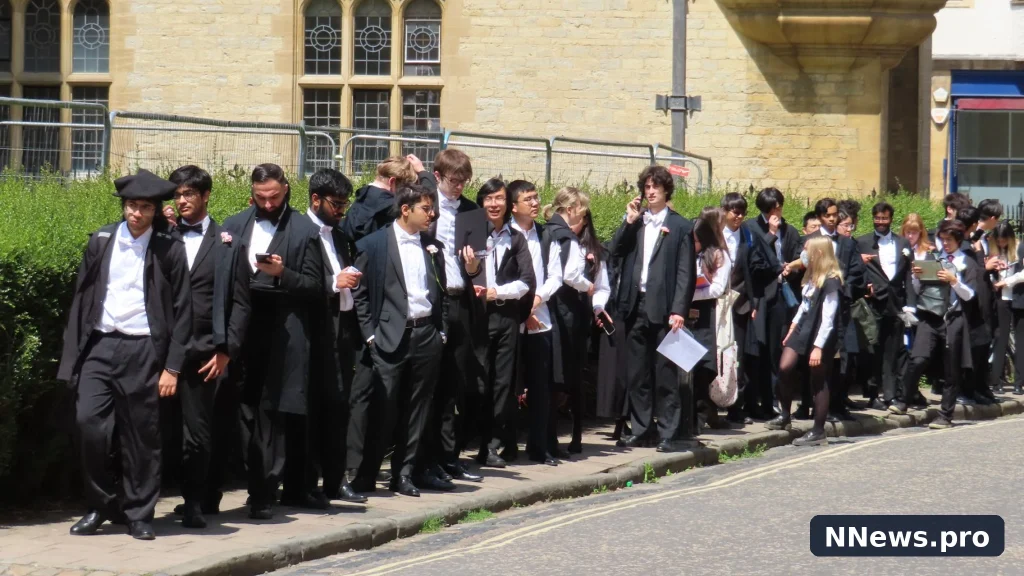
AI Has Made University Coursework “Close to Impossible” to Grade, England’s Regulator Warns
England’s higher education regulator has issued its bluntest warning yet about artificial intelligence on campus: AI has made it nearly impossible, in some subjects, to tell whether a student’s coursework is genuinely their own work — and universities should bring back the exam hall.
The Office for Students (OfS), which regulates universities and colleges in England, published the warning on Wednesday, November 11, in a joint report with Advance HE, a teaching charity. Its conclusion: unsupervised coursework can no longer reliably show what a student knows — and the credibility of degrees themselves is now at stake.
What the investigation found
Between June and September 2026, researchers spoke to more than 300 students and staff — 244 staff and 91 students — across at least 127 universities and colleges in England. What they heard was consistent: AI is woven into everyday student life, and assessment has not kept up.
“A significant proportion” of assessments still take place in unsupervised, uncontrolled formats where students can freely use AI, the report found. Many “can be completed to a high standard” with AI, sometimes in minutes, and it is “frequently possible” to use the tools “in ways that cannot be reliably detected.”
Students said their peers finished entire assessments with AI in minutes and got grades similar to classmates who had done the work themselves — and in some cases could not recall basic details of work they had just submitted. One academic staff member surveyed for the report put it starkly: “In our School, I think we’re realising that a number of our assessments may be unfit for purpose, and that pervasive use of AI may render our assessment of students close to impossible in some areas.”
The report also closes off the industry’s favorite escape hatch: “AI detection tools do not consistently and reliably identify AI use,” it says. Students are also often unclear about whether and how they may use AI in assessed work, and it is usually impossible to prove whether a student followed the rules.
The regulator’s answer: bring exams back into the room
The OfS is not banning AI. Instead, it backs a clear preference: assessment that AI cannot sit for a student. Under the regulator’s existing quality rules — condition B4, which requires effective assessment methods — the OfS now spells out what “secure” assessment means: in-person written examinations, presentations, oral examinations known as vivas, performance-based assessments, and practical tasks that require students to demonstrate their knowledge and skills.
The report goes further than a recommendation. “If it becomes possible to complete an assessment using AI without the knowledge and skills being tested, the assessment should be replaced,” it states. Universities that fail to design valid and reliable assessment could breach their conditions of registration and face sanctions; under proposals now out for consultation, they could be blocked from raising tuition fees or have student numbers capped. The Department for Education has backed enforcement.
Josh Fleming, the OfS director of strategy and delivery, framed the issue in generational terms. AI use in higher education “presents a generational risk to the system as it stands, threatening to undermine students’ learning and institutions’ ability to assess them,” he said, calling for “far greater efforts to tackle these risks, including far greater use of AI-free assessment.”
Many universities have already started redesigning assessment, with more in-person exams and vivas, tasks in which students critique AI output, and process-based grading at several checkpoints rather than on a final essay alone. Universities UK, which represents 147 institutions, said the work was under way but more progress was needed.
Why it matters beyond England
The warning lands in England, but the problem is global. A Higher Education Policy Institute survey found that 94 percent of undergraduates use generative AI for assessed work, and Swansea University research found 93 universities across the UK still use remote online exams.
In the United States, the response has so far been piecemeal. New York City banned student-facing generative AI through eighth grade in September, and Norway introduced similar restrictions in June. But safeguards are easy to bypass: a Common Sense Media report found the protections in OpenAI’s ChatGPT for Teens easy to work around, and that Google Search’s AI Mode completed “100 percent of the homework assignments” researchers tested, sometimes with incorrect information delivered confidently.
Related Articles
The report also flags a fairness problem: students who can afford expensive paid AI tools may get better grades than classmates on free versions, while others feel pressured to use AI even when they believe it harms their learning.
None of this means the regulator wants AI kept out of education. The report says AI helps students explain difficult concepts and revise, with particular benefits for neurodivergent students, those with a disability, or those whose first language is not English. But using AI to replace reading and problem-solving — “cognitive offloading” — can bypass the struggle needed to actually learn, and AI literacy training for students and staff remains uneven.
Higher education is already under strain: international students at U.S. colleges fell to 1.1 million in the latest Open Doors census, with new arrivals down 18 percent, and American universities are fighting a proposed $70,000 fee on Optional Practical Training that colleges say would cost them tens of millions. A crisis of confidence in what a degree certifies would be one more blow.
Latest developments
The OfS and Advance HE scheduled an online discussion of the findings for Monday, November 16, where sector leaders are expected to debate how quickly institutions should move. The report names no university and sets no deadline — but its message is that the current mix of take-home essays and open-book exams cannot continue unchanged.
The report is also candid about the trade-offs: closed-book exams “bear little resemblance to the activities students will complete in professional environments” and may “disproportionately disadvantage some student groups, such as disabled students.” The challenge, it argues, is assessment that is both secure and fair — and still teaches students to use AI well.
Frequently Asked Questions
What did the Office for Students report actually find?
The regulator found that a large share of assessments are unsupervised, can be completed to a high standard with AI in minutes, and often cannot be reliably detected — putting grades, and the credibility of degrees, at risk.
Is England banning AI in universities?
No. The regulator is not banning AI and says it has real benefits for learning. It wants universities to shift toward supervised formats — in-person exams, presentations, vivas and practical tasks — and to replace any assessment AI can complete without demonstrating the knowledge being tested.
What happens to universities that do not fix their assessments?
Failing to design valid and reliable assessment could breach the OfS’s conditions of registration and lead to sanctions. Proposals under consultation would let the regulator block fee increases or cap student numbers at institutions that fall short.
Does this affect American students?
The report covers England, but the same pressures exist in the United States, where 94 percent of undergraduates use generative AI for assessed work, according to a Higher Education Policy Institute survey. U.S. responses so far include New York City’s restrictions on student-facing AI — though researchers have found such safeguards easy to bypass.
What to watch next
The immediate test is whether universities move faster than the consultation process. Watch for the outcome of the OfS’s November 16 discussion, the consultation results, and whether U.S. accreditors and state regulators begin pressing the same questions. The deeper question — what a degree is worth when a machine can produce the coursework — is not going away.
Sources: Office for Students, “Making AI work for students: reflections on institutional practice” (Nov 11, 2026) | Gizmodo, “Universities Are Giving Up on Trying to Detect AI Cheating” (Nov 11, 2026) | University Herald, “UK Regulator Urges Universities to Bring Back Traditional Exams Amid AI Cheating Concerns” (Nov 12, 2026) | Education Times, “AI makes it nearly impossible to assess students’ work” (Nov 12, 2026)