College Students Say They Use AI to Learn — but Think Everyone Else Is Cheating, Dartmouth Survey Finds
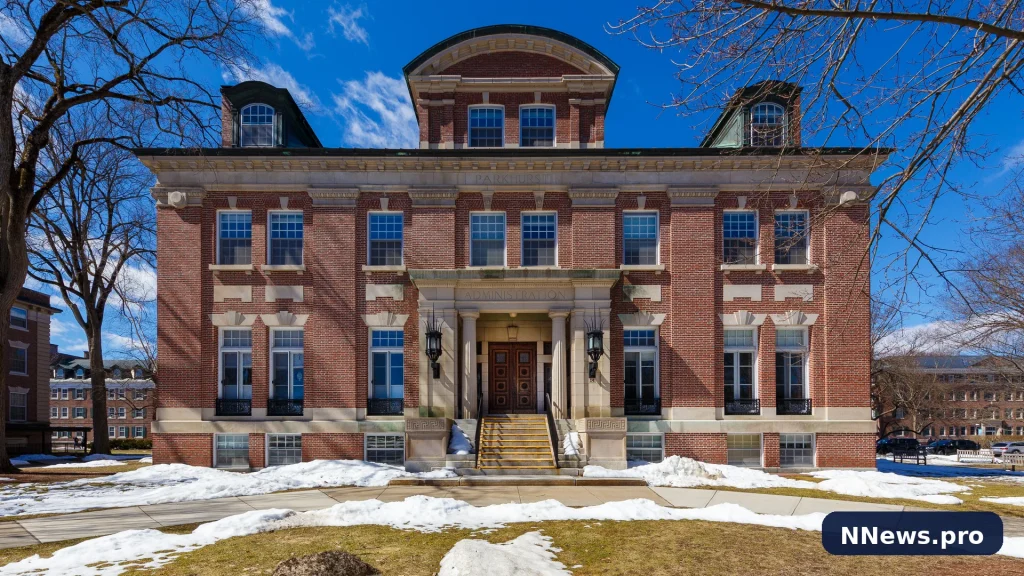
College students insist they mostly use artificial intelligence to learn, not to cut corners — but they are convinced their classmates are doing exactly that, according to the first Dartmouth AI Survey, announced on October 30. The gap between what students admit and what they believe their peers do is so wide that researchers say it is shaping how students feel about fairness, homework, and their own choices in class.
The multi-year survey polled more than 1,500 Dartmouth students and 1,000 college students across the United States between June and September 2026. It was led by economics professor Bruce Sacerdote with predoctoral researcher Mason Parris-Bacon, and presented at Dartmouth’s “AI at 70: What Must Remain Human?” conference, marking the 70th anniversary of the 1956 Dartmouth workshop that launched the field of artificial intelligence.
The perception gap: 11 percent admit it, 49 percent suspect it
The survey’s central finding is a striking mismatch between self-reported behavior and suspicion of others: nationally, only 11 percent of college students said they had used AI to find answers to problem sets, while 49 percent believed their peers were doing so. Only 8 percent said they had copied and pasted AI-generated text with little editing, while half believed their classmates engaged in that practice.
The pattern held at Dartmouth itself. About 17 percent of Dartmouth undergraduates said they used AI to draft essays, compared with 23 percent nationally, while they believed 63 percent of their peers did. The researchers note that the survey relies on self-reporting, so students may understate behavior they think others would disapprove of — but they found that substantial gaps remained even after doubling students’ self-reported rates.
“Students have told us they want to use AI to learn and prepare for their future careers, but at the same time, they assume the people around them are cutting corners,” Sacerdote said when the findings were announced. “This shapes how they feel about fairness and how they work to keep up.”
Take-home work feels unfair, and students feel pressured
That sense of unfairness is widespread: 70 percent of the college students surveyed said take-home work has become unfair because of AI, and 39 percent said they felt pressured to use AI because their peers were using it. Only 14 percent of incoming Dartmouth students reported feeling that pressure before arriving on campus, suggesting the dynamic intensifies once students are immersed in coursework.
Students were clear-eyed about both benefits and risks. Sixty-one percent of U.S. college students said they used AI to explain difficult concepts, and 52 percent said working back and forth with AI produced better work than either they or the system could produce alone. But 84 percent said using AI for writing could hurt writing-skill development, and among Dartmouth students that figure rose to 92 percent.
Most students are figuring AI out on their own: nationally, 79 percent said they had mostly taught themselves their AI skills, with little guidance from high school. And while 74 percent of Dartmouth students, compared with 55 percent nationally, said AI skills would be critical to their careers, they do not expect a job apocalypse: 84 percent of Dartmouth students said AI was changing the nature of jobs in their desired field rather than eliminating them.
Differences by field of study were twice as large as differences by class year: 70 percent of Dartmouth students in the sciences said AI deepened their understanding, compared with 67 percent in the social sciences and 48 percent in the arts and humanities.
Why this matters: trust is becoming the real casualty
The findings point to a problem beyond cheating itself. If students believe classmates are gaining an edge through undisclosed AI use, the damage spreads to motivation, trust, and the value of graded work — even if actual misuse is far lower than students imagine. That suspicion alone can push honest students toward using AI in ways they otherwise would not.
Related Articles
The trust gap is not limited to colleges: a national survey found schools aren’t ready for AI deepfakes targeting students and teachers, with a third of educators unsure whether their school or district even has a policy on the technology. The pattern starts earlier, too: 76% of high school students misuse technology every day, according to a national survey of current students and recent graduates. And on the teaching side, teacher preparation programs struggle to teach AI to new teachers, with many programs offering no stand-alone course on the technology.
For universities, the survey suggests the fix is not only better detection but clearer expectations. Dartmouth says it is responding with free premium AI tools for students through a partnership with Anthropic and Amazon Web Services, an appointed AI Fellow to lead a university-wide approach, and a forthcoming report on teaching and research recommendations from its Faculty Leadership Group on Artificial Intelligence. President Sian Leah Beilock said the college was working to provide “clear expectations and guidelines, opportunities to build with AI, and the critical thinking skills to use it well.”
Latest developments: Dartmouth’s own AI reckoning
The survey landed amid an AI controversy at Dartmouth itself. In a November 13 column in The Chronicle of Higher Education, Beilock wrote that “the norms we set for students should also apply to us” — a reference to the resignation of Provost Santiago Schnell on October 28.
A faculty-led committee convened by Beilock reported on October 27 that Schnell had used AI to “materially alter” his published writing without sufficiently disclosing it, violating at least two publishers’ policies. The cases included an August 9 Washington Post opinion essay about universities fighting AI cheating — submitted under a policy requiring writers to agree their work was not created or manipulated with AI — and a chemistry paper published September 16 in ChemSystemsChem that carried no AI disclosure, although the publisher had required one since at least 2023. The committee recommended no disciplinary action and did not run a formal research-misconduct process. Schnell, provost since July 2025, is leaving the university; history professor Matthew Delmont will serve as interim provost through June 2028.
Frequently Asked Questions
What did the Dartmouth AI Survey find?
The inaugural survey found a large gap between students’ own reported AI use and what they believe their peers do: nationally, 11 percent said they used AI to solve problem sets while 49 percent thought their peers did, and 8 percent said they copied AI text with little editing while 50 percent believed classmates did. Seventy percent said take-home work has become unfair because of AI.
How many students were surveyed?
More than 1,500 Dartmouth students and 1,000 college students across the United States were surveyed between June and September 2026; the working paper reports precise samples of 1,533 Dartmouth students and 1,003 U.S. college students. It is the first wave of a multi-year survey; the next is planned for August 2027.
What is Dartmouth doing about AI in teaching?
Dartmouth says it provides free premium AI tools to students through a partnership with Anthropic and Amazon Web Services, has appointed an AI Fellow to lead a university-wide approach, and expects a report on teaching and research recommendations from its Faculty Leadership Group on Artificial Intelligence. It is also surveying employers about how AI is changing entry-level jobs.
What to watch next
Dartmouth is now surveying employers about how AI is changing entry-level jobs; the next wave of the student survey comes in August 2027. The bigger question is whether colleges can close the trust gap the survey exposed — by making AI rules explicit, redesigning take-home assignments, and teaching students to use the tools openly rather than in secret.
Sources: Dartmouth College; Dartmouth AI Survey working paper by Bruce Sacerdote and Mason Parris-Bacon; The Chronicle of Higher Education; The Boston Globe.