Mamdani Disbands NYPD’s Controversial Strategic Response Group in Protest Policing Overhaul
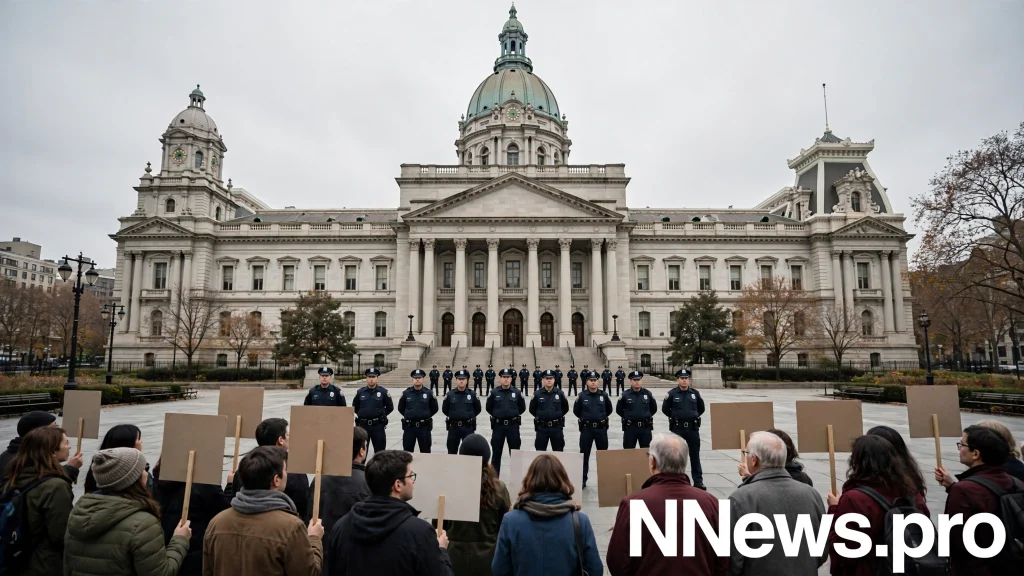
New York City Mayor Zohran Mamdani announced on Monday that he is disbanding the New York Police Department’s Strategic Response Group, the roughly 500-officer unit long criticized for heavy-handed tactics at protests, and replacing it with a civilian-led approach.
Mamdani made the announcement alongside NYPD Commissioner Jessica Tisch, fulfilling a central promise of his mayoral campaign. The move separates the department’s counterterrorism work from protest policing.
“New Yorkers exercising their constitutional right to protest should not be met with the same police response as a terrorism threat,” Mamdani said in a statement. Speaking to ABC’s Eyewitness News, he added: “What we’re doing today is announcing the disbanding of the Strategic Response Group and announcing a completely new approach to how we treat protest in our city.”
What the new system looks like
Under the plan, the Strategic Response Group will cease to exist as a standalone unit. Its roughly 500 officers will be reassigned within the department before next spring, according to Tisch, with many moving to the Counterterrorism Bureau. Headcount stays the same, and City Hall said the change costs nothing extra.
Three new structures take over the unit’s work:
- A civilian-led Community Dialogue and De-escalation Division inside the Mayor’s Office of Community Safety, staffed by unarmed members with no arrest powers, who will talk with protest organizers and lower tensions.
- A 30-officer First Amendment Support Team in the NYPD’s Community Affairs Bureau, trained in communication and de-escalation, to lead dialogue at protests.
- A new Patrol Support Division of vetted NYPD officers to handle protest arrests and crowd management.
Counterterrorism duties, including heavy-weapons deployments at critical infrastructure, move to the NYPD’s Intelligence and Counterterrorism Bureau.
New limits on tactics come with the change: no kettling, tear gas or long guns at First Amendment events, no pepper spray as a general crowd-management tool, and long-range acoustic devices capped at 90 decibels.
The exact timetable is unclear: ABC7 reported the unit will be dissolved in the spring, CBS reported the reforms begin in January, and City Hall has not announced a firm timetable, according to amNY.
A unit with a troubled record
Created in 2015 by then-Police Commissioner William Bratton as a rapid-deployment force for major emergencies, the unit focused on counterterrorism but also became the department’s go-to unit for large demonstrations, major crimes and fast-developing emergencies.
That dual role made it controversial. The unit faced legal challenges over its tactics at street protests, including pepper spray used by officers in riot gear and mass arrests, and the criticism peaked after the protests against police violence in the summer of 2020.
In 2023, the unit was rebuked in a legal settlement after New York Attorney General Letitia James, the New York Civil Liberties Union and other groups sued over excessive force against protesters, journalists and legal observers in 2020. The settlement already barred the unit from protests until a commander authorized a tier-three mobilization, according to the Associated Press.
The city’s Department of Investigation described the unit as having about 700 officers in 2020; Tisch put the current figure at about 500.
Mamdani promised during his campaign last year to disband the unit and has ordered the NYPD’s first use-of-force review in a decade. New York City Mayor Zohran Mamdani, a democratic socialist whose campaign was backed by the New York Democratic Socialists chapter, has made police reform a defining theme of his first year in office.
Why this matters
The decision changes who shows up when New Yorkers take to the streets. For years, protesters in the country’s largest city faced a unit trained and equipped for terrorism response; the new model puts unarmed civilians and dialogue officers first, with arrests handled by a separate police division.
It also matters beyond New York: the NYPD is one of the largest police forces in the world, on a budget of nearly $7 billion a year, and how it polices protests is watched by departments across the country.
The change does not alter the law itself: officers will still make protest arrests, and the charges, court tickets and sealing rules that follow come from state statutes the announcement leaves untouched.
Related Articles
Reaction: praise, caution and police union anger
Civil rights groups welcomed the announcement but warned the details will decide whether it amounts to real change. The New York Civil Liberties Union cautiously welcomed the move but warned the new Patrol Support Division might turn out to be a rebranding of the Strategic Response Group rather than a disbanding, and said it will be “monitoring this new unit closely, including for compliance with our 2023 settlement with the City.”
The Legal Aid Society, the city’s largest public defender’s office, commended the disbanding of “one of the NYPD’s most notorious units,” but said the new unit “will require vigilant oversight to ensure that the SRG’s tactics are not repeated.”
Police unions took the opposite view: the Police Benevolent Association, the city’s largest police union, said the move would endanger officers and the public. “The next time your life is disrupted by demonstrators who are blocking bridges and roadways or causing chaos on our streets, remember: Mayor Mamdani is on their side, not yours,” union President Patrick Hendry said in a statement.
Tisch pushed back on the suggestion that the change weakens public safety: “Nothing would change about the way that the NYPD responds to crowd control conditions,” she told ABC’s Eyewitness News in a joint interview with the mayor. Asked whether the decision was a compromise, she said: “No, I would never compromise on security for New Yorkers.”
What happens next
Questions remain: a spokesperson for the mayor did not respond to queries about how the new Patrol Support Division would differ from the Strategic Response Group, or whether it would be staffed by former SRG officers — a detail that matters to critics who fear the same officers, tactics and culture could continue under a new name.
The City Council may also write part of the change into law: Council Member Chi Ossé has introduced the CURB Act (Int. 0796-2026), which would bar the department from deploying Strategic Response Group officers at First Amendment events and restrict several controversial crowd-control methods. It had 25 Council sponsors as of November 13, one short of a majority, and Mamdani has endorsed it.
For now, the roughly 500 SRG officers remain in place while the transition is organized, with reassignment expected before next spring.
Frequently Asked Questions
Why is Mamdani disbanding the NYPD Strategic Response Group?
Mamdani promised during his mayoral campaign to disband the unit, which has faced years of criticism and legal challenges over excessive force at protests, including in the summer of 2020. He argues protesters should not face the same police response as a terrorism threat.
Will the SRG officers lose their jobs?
No. The roughly 500 officers will be reassigned within the NYPD, many to the Counterterrorism Bureau. Headcount stays the same, and City Hall said the change costs nothing extra.
What replaces the SRG at protests?
A civilian-led Community Dialogue and De-escalation Division, a 30-officer First Amendment Support Team in the NYPD’s Community Affairs Bureau, and a new Patrol Support Division to handle protest arrests. Kettling, tear gas and long guns are banned at First Amendment events.
When does the SRG disappear?
Reports differ: ABC7 said the unit will be dissolved in the spring, CBS reported the reforms begin in January, and City Hall has not announced a firm timetable. Tisch said the officers will be reassigned before next spring.
The disbanding closes a decade-long chapter for one of the NYPD’s most controversial units and tests whether a civilian-led model can keep protests peaceful without the tactics that drew lawsuits and national criticism. The next demonstration in New York will be the first measure of whether it works.
Related: New York City Mayor Zohran Mamdani strikes deal with Trump to delay new SNAP rules for 90 days (https://nnews.pro/mamdani-trump-snap-delay-bodegas-90-days/); New York Democratic Socialists urge Ocasio-Cortez to run for president in 2028 (https://nnews.pro/nyc-democratic-socialists-urge-ocasio-cortez-run-president-2028/)
Sources: Reuters; Associated Press; Demokratis; Case Analytica; We Got This Covered; Wikipedia.