Germany’s Military Stops Using Chinese-Made Drones Over Security Concerns
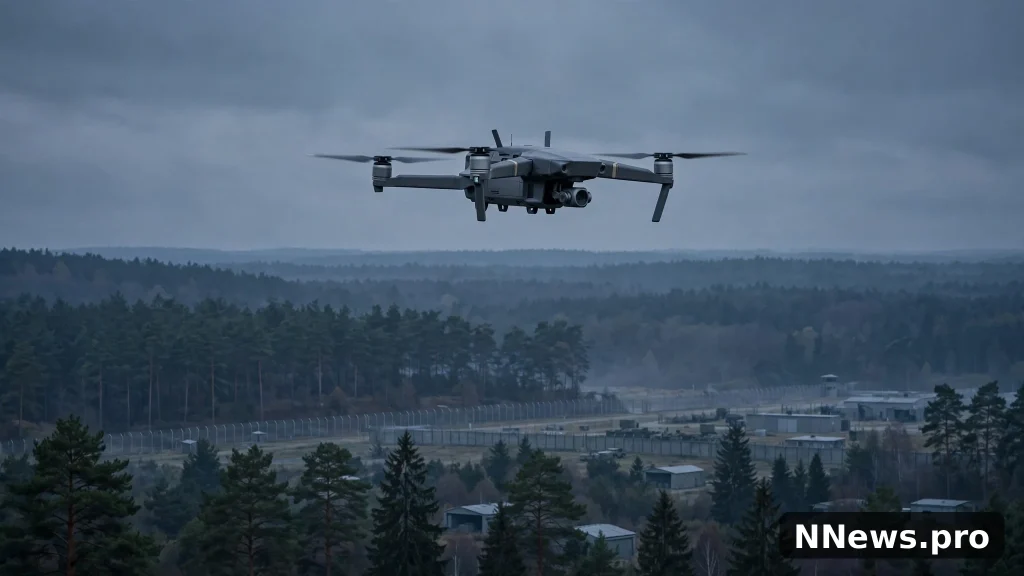
Germany’s armed forces will no longer use Chinese-made drones, the country’s Defense Ministry has confirmed, ending years of reliance on cheap commercial aircraft for training and target practice over fears that the devices could expose sensitive military data.
The decision, first reported by Der Spiegel on Tuesday, November 10, and confirmed by a ministry spokesperson, means the Bundeswehr will replace its Chinese models with German or European products. It also comes with tighter rules for sensor-equipped Chinese cars on military bases.
What the military decided
Chinese-made drones had previously been permitted as a cost-effective option for training and target practice, the Defense Ministry spokesperson said. They will now be phased out entirely.
“To strengthen the Bundeswehr’s self-sufficiency and technological sovereignty, Chinese-made models will no longer be used,” the spokesperson said in an emailed statement carried by Reuters.
The ministry stressed that there is no blanket ban on equipment from any specific country. Instead, decisions are made on individual risk assessments aimed at safeguarding military security, IT security and data security.
The same caution now applies to vehicles. Lists of models from Chinese makers such as BYD, Geely and NIO are circulating inside the force, according to Der Spiegel, and soldiers who own such cars reportedly have to park outside barracks and walk in. The ministry has said sensors in modern vehicles — cameras, radar, microphones and remotely controllable data links — are seen as potential security risks in special security areas.
A ban that was already on the books
The striking part is that the Bundeswehr had already banned Chinese drones once before. In November 2023, the then head of the armed forces’ support command, Martin Schelleis, issued Order 159b, barring drones from states with special security risks — a category that currently means China only.
The ban did not hold in practice. In June 2024, the military’s drone task force chief, Wolfgang Jordan, recommended that eight DJI models be released for Bundeswehr use, and they were. In November 2024, the force signed a framework contract with the supplier Droneparts GmbH for 500 DJI Matrice M30T aircraft. By mid-2025 the drones were restricted to training use only, but insiders cited by Der Spiegel estimate that several thousand were bought nationwide, largely by local commanders from discretionary budgets reported at about 60,000 euros a year.
The unconfirmed claim — and the real concern
Der Spiegel also reported that Germany’s military counterintelligence service, known as MAD, found signs of data being siphoned off in some of the drones it examined. That claim has not been independently confirmed by any other outlet, and the reporting does not say which drones were examined or where any data went. It should be treated as an allegation, not an established fact.
What is established is why defense officials are nervous. The drones store flight logs, location data, imagery and video in an internal black box, the supplier Droneparts confirmed to the investigative newsroom CORRECTIV, and an internal Bundeswehr assessment sketched how data could leak via a SIM card or during repairs — while stressing that no such attack has been proven.
Chinese law is the other half of the concern. China’s National Intelligence Law of 2017 requires organizations and citizens to cooperate with national intelligence work, and its Data Security and Cybersecurity Laws impose similar duties. Legal scholars dispute how far those duties reach in practice, and no published evidence shows that DJI or any carmaker has passed Bundeswehr data to Chinese authorities. The ministry’s concern is that the obligation exists and the data is there to be demanded.
Related Articles



Why this matters
Germany is not acting alone. Poland’s chief of the general staff banned Chinese-made cars from protected military facilities in February 2026, and the United States barred Chinese BYD vehicles from an air base in Okinawa, Japan, last month. The German move adds one of Europe’s largest militaries to a growing Western effort to limit dependence on Chinese connected technology in sensitive settings, amid trade tensions with China and wider technology controls. It also exposes a supply problem: insiders told CORRECTIV that German or European alternatives of comparable quality at a similar price are lacking — which is why commanders kept buying the Chinese models.
Latest developments
Replacements are coming, but slowly. In December 2025, the procurement agency BAAINBw and the German company Quantum Systems signed a contract for 147 Twister reconnaissance systems, with options for up to 600 more and delivery of at least 250 systems a year. Those are military reconnaissance systems, however, not substitutes for cheap commercial micro-drones used in training. In late February 2026, the Bundestag amended the Aviation Security Act to give the Bundeswehr added powers to counter drones.
Frequently Asked Questions
Why is Germany’s military dropping Chinese drones?
The Defense Ministry cited data-security risks and the goal of strengthening the Bundeswehr’s self-sufficiency and technological sovereignty. Chinese-made drones were previously used for training and target practice; they will be replaced with German or European products.
Is there proof that data from the drones reached China?
No. No published evidence shows Bundeswehr data reached Beijing, and a reported counterintelligence finding of data being siphoned off has not been independently confirmed. The ministry’s concern rests on the data the devices store and on Chinese laws requiring companies to cooperate with state intelligence work.
What about Chinese cars?
Sensor-equipped Chinese cars, including models from BYD, Geely and NIO, face access restrictions in special security areas of Bundeswehr facilities, and soldiers who own them reportedly must park outside barracks. There is no blanket ban on vehicles from any country.
Germany’s decision closes a contradiction that lasted for years: a military that banned Chinese drones on paper while buying hundreds of them in practice. Whether European suppliers can fill the gap at a price commanders can afford will decide how quickly the phase-out actually happens — and whether other Western militaries follow Berlin’s lead.
Sources: Reuters, “German military to stop using Chinese-made drones, citing security concerns,” November 10, 2026 — https://wixx.com/2026/11/10/german-military-bans-commercially-available-chinese-drones-spiegel-reports/ ; TechTimes, “German Military Retires Chinese Drones After Contracting 500 DJI Units Despite 2023 Ban,” November 11, 2026 — https://www.techtimes.com/articles/330445/20261111/german-military-retires-chinese-drones-after-contracting-500-dji-units-despite-2023-ban.htm ; Briefs.co, “Germany Bars Chinese Drones, Tightens Sensor Vehicle Rules,” November 11, 2026 — https://www.briefs.co/news/german-military-bars-chinese-training-drones-from-china-and/