China and US Hold First Trade Council Meeting on Tariffs and Farm Trade Ahead of Xi-Trump Talks
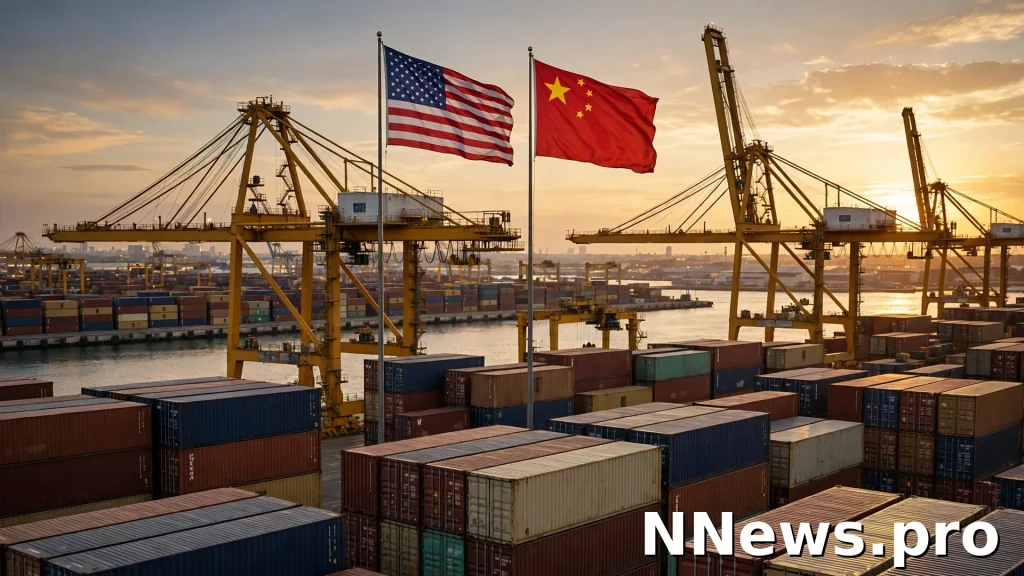
China and the United States held their first trade council meeting on Friday, discussing tariff cuts and agricultural trade just days before Presidents Donald Trump and Xi Jinping are due to meet in Shenzhen, China’s Commerce Ministry said on Saturday.
The meeting, held by video link under the two countries’ economic and trade consultation mechanism, focused on carrying out the results of earlier trade talks. Both sides described the exchanges as “candid, in-depth and constructive,” but neither government announced any new agreements.
The session comes at a delicate moment for the world’s two largest economies. A broader tariff-cut package agreed in principle after the September summit between Trump and Xi remains unfinished, and American farmers are watching closely: Chinese purchases of US farm goods other than soybeans are on track to fall to a seven-year low this year, according to a Reuters analysis of customs data.
What the two sides discussed
China’s Commerce Ministry said the talks covered tariffs, a reciprocal tariff-cut arrangement involving $30 billion worth of goods on each side, agricultural trade and other issues of mutual concern.
The ministry said both sides would continue using the council to address trade concerns, expand cooperation and reduce outstanding issues. It did not say whether any agreements were reached.
The Office of the US Trade Representative also confirmed the meeting, saying Washington intended to continue talks towards balanced trade.
The $30 billion figure refers to the value of goods covered by the proposed arrangement on each side, not the amount of tariffs that would be removed. The available accounts do not establish whether the $30 billion-per-side arrangement and a separate, larger tariff package proposed after the September summit have identical terms.
The unfinished $60 billion package
Following the September summit between Xi and Trump in Washington, the two sides proposed a $60 billion package of reciprocal tariff cuts, including roughly $17 billion worth of US farm goods that China imported in 2024. That plan has yet to be finalised.
Beijing has repeatedly urged Washington to implement the $60 billion tariff-reduction deal, calling it a prerequisite for increasing purchases of American farm goods.
The stakes for US agriculture are significant. China agreed to buy $17 billion of American farm goods annually through 2028, yet its purchases of US farm goods other than soybeans are on track to hit a seven-year low this year, the Reuters customs-data analysis found earlier this month.
That gap underscores the persistent uncertainty hanging over the deal, even as both governments continue to talk.
Why this matters
The trade council is a new channel created under the consultation mechanism the two leaders first agreed in Beijing in May and spelled out further at their Washington meeting in September. Its first session gives negotiators a standing forum to work through disputes before they reach the leaders’ level.
For American farmers, the talks matter directly. China is the largest export market for many US farm products, and a slowdown in Chinese buying has weighed on prices for crops such as corn, wheat and sorghum. A tariff deal that revives farm purchases would be felt quickly in rural America.
Related Articles



For American consumers and businesses, tariff cuts on $30 billion of goods on each side could lower costs on imported products, though no specific tariffs were identified for reduction in the ministry’s account.
The talks also come as China’s record trade surplus has kept trade tensions in focus, with Washington pressing Beijing to buy more American goods and open its markets further.
What happens next
The White House said Trump will meet Xi on Thursday on the sidelines of the Asia-Pacific Economic Cooperation forum in Shenzhen, where Trump, Xi and Putin are also set to hold a trilateral meeting.
That leaders’ meeting is now the next real test of whether the trade council’s groundwork can turn into concrete deals. If the two presidents endorse the tariff-cut package, negotiators would still need to settle the details — which goods are covered, how quickly tariffs fall and how compliance is verified.
If they do not, the council will keep working through the issues, but American farmers and exporters face another season of uncertainty over their largest market.
Frequently Asked Questions
What is the China-US trade council?
It is a new bilateral body set up under the China-US economic and trade consultation mechanism, first agreed by Trump and Xi in Beijing in May and further specified at their Washington meeting in September. It gives trade officials a standing forum to implement earlier agreements and resolve disputes.
What did the first meeting discuss?
Tariffs, a reciprocal tariff-cut arrangement covering $30 billion of goods on each side, agricultural trade and other issues of mutual concern. No agreements were announced.
How does this affect American farmers?
China agreed to buy $17 billion of US farm goods annually through 2028, but purchases of farm goods other than soybeans are on track to hit a seven-year low this year. A completed tariff deal could revive Chinese buying; without one, the uncertainty continues.
When do Trump and Xi meet next?
The White House said Trump will meet Xi on Thursday, November 19, on the sidelines of the APEC forum in Shenzhen. The two leaders are also expected to join Russian President Vladimir Putin for a trilateral meeting there.
The first trade council meeting produced no breakthrough, but it opened a channel both sides say they intend to keep using. Whether it leads to real tariff cuts will become clearer when Trump and Xi meet in Shenzhen on Thursday.
Sources: Reuters; China’s Commerce Ministry; Office of the US Trade Representative; White House.