Schools Aren’t Ready for AI Deepfakes Targeting Students and Teachers, Survey Finds
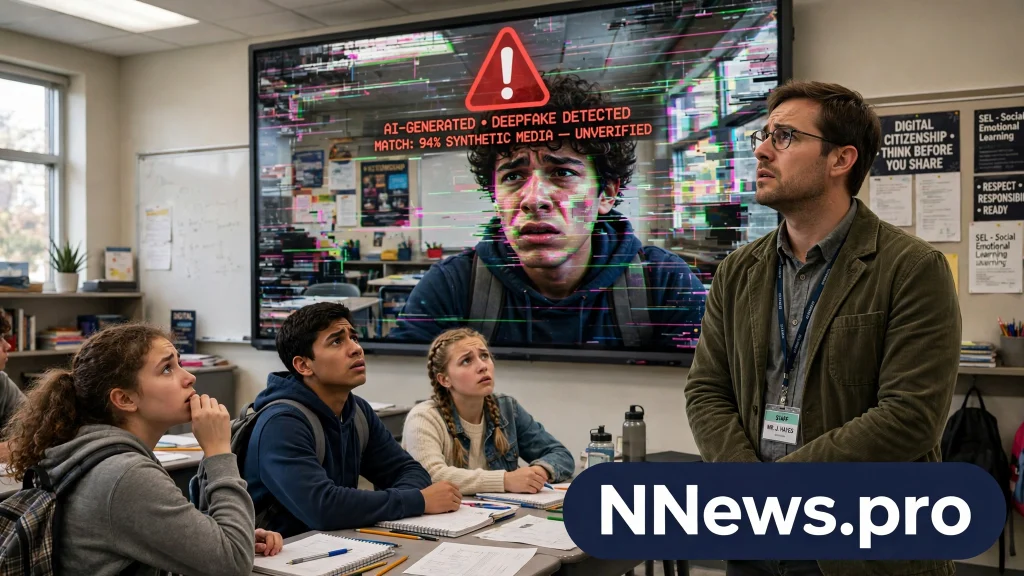
American schools are falling behind on one of the fastest-growing threats to student safety: AI-generated deepfakes. A nationwide survey of 852 educators, conducted by the EdWeek Research Center this summer and published November 4, found that one in three educators does not know whether their school or district even has a policy to deal with fake AI images and videos of students and teachers.
The findings land as American Education Week begins on November 16, putting a spotlight on the adults schools rely on to keep students safe — and on how little preparation most of them have received.
A policy gap in one out of three schools
About one-third of educators said they did not know whether their school or district had a policy addressing AI-generated manipulated media. Another 22 percent said their school or district had no such policy at all, and only 2 percent said one was being considered.
Even basic awareness is missing. Thirteen percent of educators told researchers they did not know what a deepfake is. And nine in ten said they had received no training on how to spot or respond to a deepfake in the past two years.
Deepfakes are AI-generated images, videos, or audio clips that falsely show a real person saying or doing something they never did. Free tools now let anyone create them in minutes. In schools, they are most often used to harass: fake sexual images of students, or fabricated videos of principals and teachers making racist or offensive remarks.
The harm is already widespread
Nationally, one in four K-12 students knows someone who has been depicted in a nonconsensual, sexually explicit deepfake, according to a 2024 student survey by the Center for Democracy and Technology. When a deepfake surfaces in a school, student victims often have to sit in class alongside the classmates who made or shared the image, while appealing directly to social media platforms to get it taken down. Experts say the harm to a victim is ultimately the same whether the image is real or fake.
What schools should do
Schools most often respond by informing parents: 56 percent of educators said that is their school’s likely first step. Nearly half said they would suspend the student responsible, a quarter said they would expel them, and a third said they would use restorative practices.
But experts say a deepfake case is not the same as ordinary cyberbullying. Publishing and distributing a nonconsensual, sexually explicit image of a minor is now a federal crime. Erin Mote, founder and chief executive of InnovateEDU, a national nonprofit that helps districts write safety guidelines for student AI use, said schools need a written incident response plan before an incident happens, not after — covering how to detect and report a deepfake safely, limit its spread, and support victims with trauma-informed care.
Teachers are usually the first adults to learn about a deepfake circulating among students, Mote said, which makes training essential. But training must also cover what not to do. “The last thing you want is for a teacher to say, ‘Hey, send me that deepfake intimate image to my personal cellphone so I can take it to the principal,'” Mote said. “Because now the educator has access to child sexual abuse material on their personal phone.”
Related Articles

Kristin Woelfel, policy counsel at the Center for Democracy and Technology, said districts do not necessarily need a brand-new policy — but they do need to add specific language to existing rules on fair technology use, harassment, and cyberbullying.
Why this matters
The training gap mirrors a wider problem across American education. A separate national survey found high school students misuse technology every day, with AI increasingly doing their homework, while teacher preparation programs struggle to teach AI to new teachers entering classrooms unprepared. The pressure on schools is growing from every direction, as K-12 students face losing Google Search if their districts do not adopt AI tools.
Deepfakes add a safety dimension schools cannot treat as a technology curiosity. Students need to know the consequences in plain language: some state measures and a federal law include jail time for creating or distributing nonconsensual intimate images. The survey’s findings have continued to draw attention since November 4, with coverage by Government Technology on November 5 and security firm Bitdefender on November 11, both warning that incidents are outpacing policies and training.
Frequently Asked Questions
What is a deepfake?
A deepfake is an AI-generated image, video, or audio clip that falsely depicts a real person saying or doing something they never said or did. Free tools make them easy to create from a single photo or short video clip.
Are deepfakes of students illegal?
Publishing or distributing a nonconsensual, sexually explicit image of a minor is now a federal crime, and many states have their own laws with penalties including jail time. Even when the image is fake, the harm — and the legal exposure — is real.
Schools have spent years debating how to teach with AI. The survey suggests they now need to answer a more urgent question first: what will they do the day a fake image of one of their students starts spreading — and will anyone on staff know how to respond?
Sources: Education Week; Government Technology; Bitdefender; TechEd Magazine.
- https://www.edweek.org/leadership/fake-ai-images-are-targeting-students-and-teachers-schools-arent-prepared/2026/11
- https://www.govtech.com/education/k-12/deepfake-cyber-bullying-outpaces-teacher-training-policies
- https://www.bitdefender.com/en-us/blog/hotforsecurity/ai-deepfakes-growing-risk-for-schools
- https://www.techedmagazine.com/deepfake-safety-schools-teacher-training-2026/