Anthropic Signs Binding AI Safety Pact With Teachers Unions, Barring Student Data From Model Training
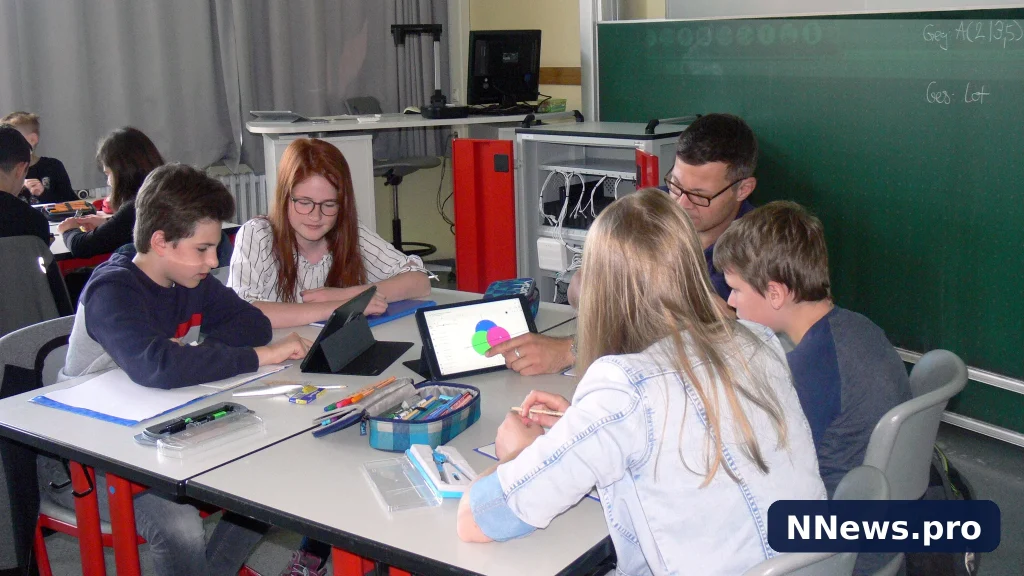
Anthropic has signed a legally binding agreement with the American Federation of Teachers and the United Federation of Teachers that bars the company from using student and teacher data to train its artificial intelligence models, the unions announced on Tuesday, November 10. The pact makes a national AI safety and privacy standard enforceable in thousands of K-12 schools across the United States, in a move the unions describe as a first step toward an industry-wide rulebook for AI in classrooms.
The agreement applies to Anthropic’s existing contracts with school districts and took effect the day it was announced. It covers Claude for Teachers, the company’s AI product for educators, which launched in July and is offered free to verified K-12 teachers in the United States.
What the agreement requires
The signed document, a 29-page memorandum of agreement with the National Academy for AI Instruction, sets out ten binding principles that Anthropic must follow across its education products.
The central rule is a ban on using student or educator data — including prompts, responses, uploaded files, behavioral signals and metadata — to train, fine-tune or otherwise improve any AI model, at any time and for any purpose. The ban applies even to de-identified or aggregated data, applies retroactively to data already collected, and survives the end of the agreement.
There is one narrow exception: data may be processed for safety and security purposes only, such as detecting self-harm risk, child sexual abuse material, grooming, threats of violence, bullying or security incidents. Even then, Anthropic may use only the minimum data necessary, and it must confirm in writing each year, in a statement signed by a senior officer, that no covered data was used for training outside that exception.
The agreement also requires Anthropic to use student and educator information only for authorized educational purposes. The data may never be sold or used for targeted advertising, and schools control how long data is kept and when it is deleted. When a school asks for deletion, Anthropic must permanently remove the data from its active systems within 180 days, and delete backup copies or render them commercially unrecoverable within the same period, except where the law requires retention.
AI products used in schools must include safeguards designed for education, and the agreement states that educators — not AI systems — remain responsible for instructional decisions and other consequential decisions about students. Anthropic must also tell schools and families what data its products collect, where the protections fall short, and what safeguards are in place.
Any district can ask for the same terms
The standard is not limited to the Academy. Any school district in the United States can ask Anthropic to apply the same protections to its own agreement, and the company must make them available within 90 days of the request. The agreement runs for two years and must be renewed in writing by both sides to continue.
Anthropic is the second major AI company to sign the unions’ standard. Microsoft signed the same agreement in September, and its terms went into effect on November 1. Any school district can add the standards to new or existing Microsoft contracts without renewing or renegotiating them.
American Federation of Teachers President Randi Weingarten said the agreement is “one step closer to an industry standard” now that Anthropic, a major player in the AI space, has joined. “We said repeatedly that the guardrails for AI are just as important as any training we were doing for AI,” Weingarten said, adding that the union hopes the standard will eventually be “embedded in law.”
“In the almost total absence of federal and state AI regulation, we want to make certain no teacher or parent ever has to choose between AI tools and the safety and privacy of their children,” Weingarten said.
Michael Mulgrew, president of the United Federation of Teachers, said, “Ideally, the federal government would step in, but since it hasn’t, teachers unions are working to hold AI companies accountable.”
Elizabeth Kelly, Anthropic’s head of beneficial deployments, said AI can only “protect and enhance” teachers’ work “if teachers, students and school systems trust us.” “These agreements provide a foundation for that trust,” she said.
Background: districts have been pushing back
The agreement comes after a year in which school systems have moved to limit AI in classrooms. In September, New York City announced what it called the nation’s most expansive AI moratorium for students: student-facing AI tools are barred for students from 2-K, a preschool program for 2-year-olds, through eighth grade during the 2026-27 school year. The one-year pause affects about 600,000 students, or two-thirds of New York City’s public school enrollment. It does not apply to teachers’ use of AI.
That same month, the Los Angeles Unified School District said it would restrict all students from using AI tools for the 2026-27 school year.
Related Articles
The unions’ agreement builds on their partnership with Anthropic through the National Academy for AI Instruction, a New York City-based training center where educators teach other educators how to use AI in classrooms. Anthropic is a founding partner of the academy alongside the AFT, the UFT, Microsoft and OpenAI.
The deal also lands as schools wrestle with AI on several fronts at once. Google has told schools they cannot have Search without its AI features, teacher preparation programs are struggling to add AI instruction, and 76% of high school students report misusing technology during school hours, according to a national survey released this month. The AFT has previously called for a ban on student-facing AI in elementary school, a screen ban for kindergarten through second grade, and a total ban on “social companion” chatbots for children under 16.
Why this matters
Until now, protections for student data in AI tools have largely depended on each company’s own policies and on individual district contracts. A legally binding, standard agreement changes that calculation: districts no longer have to negotiate the same safeguards from scratch, and a company that breaks the rules can be held to a contract rather than a promise.
For parents and teachers, the most concrete protections are the training ban and the 180-day deletion deadline. For districts, the agreement offers a template they can demand from every AI vendor, not just Anthropic — and the unions have made clear they intend to press other companies to sign.
What happens next
The agreement is now in effect, and districts can begin asking Anthropic to add the standard to their contracts. The unions are expected to keep pushing for the protections to be written into law, and for other AI companies to sign on. Whether the standard becomes the industry norm will depend on how many vendors follow Microsoft and Anthropic — and on whether regulators step in where the unions say Washington has not.
Frequently Asked Questions
What did Anthropic agree to?
Anthropic signed a legally binding agreement with the American Federation of Teachers and the United Federation of Teachers adopting the AI Safety and Privacy Standard for Schools. The company may not use student or teacher data to train AI models, may not sell the data or use it for advertising, and must delete it within 180 days when a school asks.
Which schools does the agreement cover?
The agreement applies to Anthropic’s existing agreements with school districts and covers Claude for Teachers, its AI product for educators. Any school district in the United States can also ask Anthropic to add the same protections to its own contract, and the company must make them available within 90 days.
Can Anthropic use student data to train its AI models?
No. The agreement bars Anthropic from using student or educator data — including prompts, responses, files and metadata — to train or improve any AI model, with only one narrow exception for safety and security purposes, such as detecting self-harm risk or threats of violence.
Has any other AI company signed the same standard?
Yes. Microsoft signed the unions’ AI safety and privacy standard in September, and its terms went into effect on November 1. School districts can add the standards to new or existing Microsoft contracts without renewing or renegotiating them.
Sources
- K-12 Dive: “Anthropic enters student AI privacy agreement with teachers unions” (Nov. 10, 2026) — https://www.k12dive.com/news/anthropic-enters-student-ai-privacy-agreement-with-teachers-unions/874193/
- American Federation of Teachers: AI Safety & Privacy Standard for Schools, Memorandum of Agreement (signed, Sept. 2026) — https://www.aft.org/sites/default/files/media/documents/2026/Final_Signed_Anthropic_Agreeemnt_102226.pdf
- NJ Today: “Teachers unions, Anthropic sign binding AI safety and privacy pact for schools” (Nov. 12, 2026) — https://njtoday.news/2026/11/12/teachers-unions-anthropic-sign-binding-ai-safety-and-privacy-pact-for-schools/
- Daily AI Brief: “Anthropic signs teachers unions’ binding student data and AI safety standard for schools” (Nov. 10, 2026) — https://dailyaibrief.com/news/anthropic-student-ai-privacy-agreement-teachers-unions-lUleQ8fe