76% of High School Students Misuse Technology Every Day — and AI Is Doing Their Homework
76% of High School Students Misuse Technology Every Day — and AI Is Doing Their Homework
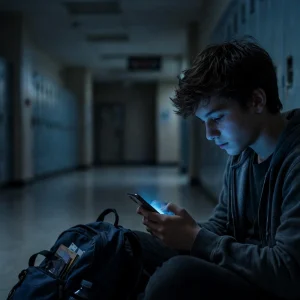
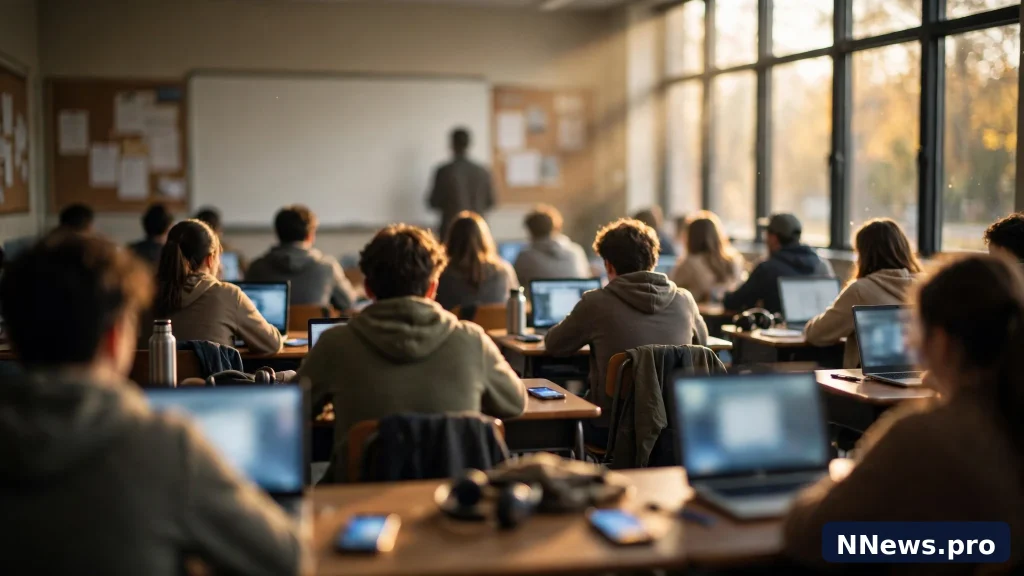
Three out of four American high school students admit to misusing technology during the school day, every single day — scrolling social media, messaging friends, watching videos, playing games, or using artificial intelligence without a teacher’s permission. And when students do turn to AI, they are often using it not to learn, but to get around learning altogether.
That is the headline finding of a nationally representative survey released this fall by the Thomas B. Fordham Institute. The report, “High Tech, Low Standards: High School in the Age of Distraction,” surveyed 1,011 current high school students and 1,013 recent graduates. The survey was fielded between February and March 2026 by Impact Research and UpONE Insights, and the analysis was led by Fordham’s national research manager, Brian Fitzpatrick.
The scale of daily distraction
The numbers are stark. Overall, 76 percent of respondents said they personally engaged in at least one form of illicit technology use daily during high school. Half said they scroll social media in class every day. Almost as many — 49 percent — message friends daily during school hours. One in three said they watch YouTube videos or play video games unrelated to their assignments every day, and 17 percent said they shop online during the school day. School-issued devices are a major part of the problem: 62 percent of students said they spend more than half of class time on one — about 900 minutes a week — and two-thirds said YouTube is accessible on school devices.
“Taken together, our results suggest that American high school students are caught up in — and often contribute to — a disturbing and interconnected set of problems: rampant distraction, widespread AI misuse, heavy dependence on screens, and grading practices that make it easier to earn high marks without mastering the material,” Fitzpatrick wrote in the report’s analysis.
AI is being used to bypass learning
The survey’s findings on artificial intelligence may be the most troubling for educators. About one in five students — 22 percent — said they use AI tools without teacher permission every day.
Among students who use AI, the most common uses are the ones that cut corners. Forty-eight percent said they use AI to solve math problems. Thirty-six percent said they use it to summarize books or other texts to avoid reading them. Twenty-nine percent said they use it to write the first draft of an essay or report. And 26 percent — more than one in four — admitted to using AI for help during quizzes or tests.
Students are aware of what is happening. Fifty-eight percent agreed that AI has made homework meaningless, and 57 percent said it lets students get good grades without doing any real work. Many students also reported legitimate uses — roughly half said they use AI to explain difficult concepts or brainstorm ideas — but the report’s authors say the pattern is clear: a large share of students are using the technology to evade the rigors of learning rather than to deepen it.
The findings arrive as schools are already struggling to set rules for AI. Google has told schools they cannot have Search without its AI features, leaving districts that pass strict AI bans facing the loss of the search tool itself. In September, Los Angeles Unified — the nation’s second-largest district — said it would restrict access to AI platforms for all students during the 2026–27 school year while it reviews instructional uses and safeguards. New York City also announced in September that it would pause AI use for elementary and middle school students.
Do phone bans work?
The Fordham report argues that stricter limits are overdue. Students used social media least when phones were fully banned — kept in a locked pouch or at the central office — and more when they could use phones in hallways, at lunch, or whenever class was not in session.
More than 30 states had restricted student phones during school hours as of July 2026, according to Fordham. But enforcement is a weak point. A Brookings Institution report published in September found that cellphone ban enforcement tends to wane over the school year: the share of teens reporting in-class phone use rose from 28 percent to 42 percent between the start and end of the year. Bell-to-bell bans — covering the whole school day, not just class time — appeared more effective and more durable.
Not everyone supports all-day bans. Some parents and students have pushed back on safety grounds, saying students cite school shootings and other emergencies as reasons to keep phones close. The Fordham report itself is careful on one point: it is not a causal study, and it cannot settle whether devices themselves cause the distraction or simply make an existing problem worse.
Related Articles

What Fordham says schools should do
The report closes with recommendations for schools and districts: reduce the amount of time students spend on devices; put greater emphasis on supervised, in-class, paper-and-pencil and oral exams; enforce stricter consequences for late work and rethink exam retakes; install firewalls on school-issued devices and add guardrails to prevent off-task use; and embrace stricter bans on cellphones and other personal devices.
Colleges are wrestling with the same questions. The University of Kentucky draft policy would ban ‘political activity’ on campus Wi-Fi, including personal social media posts, and the debate over that proposal has drawn national attention from free-speech advocates.
Why this matters
The survey puts hard numbers on a problem teachers have described anecdotally for years — and the numbers are getting worse as AI tools get more powerful and more widely available. If three-quarters of students are distracted daily and a quarter are using AI during tests, the grades schools hand out may say less about what students actually know than they used to. That has consequences beyond high school: college applications topped 10 million for the first time this fall, as top schools bring back test scores, and admissions offices are already judging applicants in an era when AI can do much of the work.
For parents, the findings are a prompt to ask what their children’s schools actually allow — and enforce — on the devices students carry all day. For districts, they are evidence that partial measures, like banning phones only during class, may not be enough.
Frequently asked questions
What did the Fordham survey find about AI cheating in high school?
Forty-eight percent of students use AI to solve math problems, 36 percent use it to summarize books or texts to avoid reading them, 29 percent use it to write first drafts of essays or reports, and 26 percent use it for help during quizzes or tests. About one in five said they use AI without teacher permission every day.
Do cellphone bans actually work in schools?
The evidence leans toward yes — if the bans are strict and enforced. Fordham found students used social media least when phones were fully banned, such as in locked pouches. But a Brookings study found enforcement fades over the school year, with in-class phone use rising from 28 percent to 42 percent; bell-to-bell bans held up better than class-only restrictions.
How many students took part in the Fordham survey?
The survey covered 2,024 people: 1,011 current high school students and 1,013 recent graduates. It was nationally representative and was fielded between February and March 2026 by Impact Research and UpONE Insights.
What does Fordham recommend schools do about technology misuse?
The report recommends reducing students’ time on devices, emphasizing supervised in-class paper-and-pencil and oral exams, enforcing stricter consequences for late work, rethinking exam retakes, adding firewalls and guardrails to school-issued devices, and embracing stricter bans on cellphones and other personal devices.
The survey’s central message is blunt: American high schools have handed students powerful devices and powerful AI tools, and most students are using them every day for something other than learning. Until schools decide what those tools are actually for — and enforce the answer — the distraction is likely to keep winning.
Sources: Fordham Institute report “High Tech, Low Standards: High School in the Age of Distraction” (https://fordhaminstitute.org/sites/default/files/publication/pdfs/high-tech-low-standardshigh-school-age-distraction-final_0.pdf); K-12 Dive, “Majority of students report misusing tech during school hours,” Nov. 11, 2026 (https://www.k12dive.com/news/majority-of-students-report-misusing-tech-during-school-hours/874322/); The 74, “Ditch School-Issued Laptops and Bring Back Computer Labs,” Nov. 9, 2026 (https://www.the74million.org/article/ditch-school-issued-laptops-and-bring-back-computer-labs/); Education Next, “Schools of Distraction,” Sept. 14, 2026 (https://www.educationnext.org/schools-of-distraction-high-schools-overrun-by-screens-and-ai-enabled-shortcuts/); Fordham Institute, “Do phone bans help students?,” Nov. 5, 2026 (https://fordhaminstitute.org/national/commentary/do-phone-bans-help-students)