College Applications Top 10 Million for the First Time as Top Schools Bring Back Test Scores
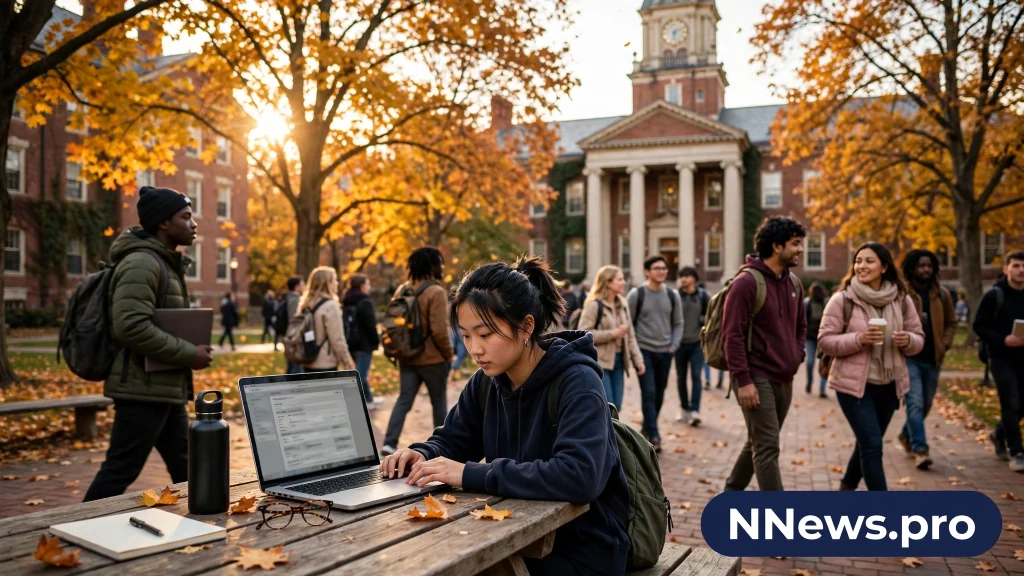
College applications in the United States crossed 10 million in a single admissions cycle for the first time, according to a new national report, even as the country’s most selective universities reverse course on test-optional admissions and the pool of high school graduates begins a long decline.
The 2026 State of College Admissions Report from K12 Academics, released November 5, found that roughly 1.5 million distinct first-year applicants submitted more than 10 million applications through the Common App in the 2024-25 cycle — an average of 6.8 applications per student, with the applicant count up 5 percent from the prior cycle.
The milestone arrives in the middle of a market that the report describes as splitting in two: elite schools are re-requiring test scores and turning away more qualified students than ever, while most other colleges compete harder for a shrinking pipeline of future graduates.
“Families are navigating the most volatile admissions market in a generation,” said Chris Glavin, founder of K12 Academics. “Applications are at record highs, the SAT is quietly coming back at the schools everyone watches, and a shrinking pool of graduates is about to change the math for nearly every college. Students who understand these three forces, and start their research early, have a real advantage.”
A record built on more applications per student
The growth is not coming from a surge of new students. It is coming from each student applying to more schools. The 1.5 million first-year applicants on the Common App each filed an average of 6.8 applications, and the total pushed past 10 million for the first time.
The volume is also shifting toward public universities, which now draw more Common App applications than private institutions, according to the report. Texas leads the states in application volume. Mid-selectivity schools are capturing the fastest growth, while the most selective colleges — those admitting fewer than 25 percent of applicants — saw their application totals grow by only about 2 to 4 percent, the slowest of any group. More applications do not mean more students, and colleges say the flood of files makes it harder to predict which admitted students will actually enroll.
The SAT is coming back at the top
No part of admissions has moved faster than test policy. The share of Common App member colleges requiring a test score collapsed from about 55 percent in 2019-20 to roughly 5 percent in 2024-25, as schools went test-optional during the pandemic and stayed that way.
That era is now splitting apart. Six of the eight Ivy League schools — along with MIT, Caltech, Stanford and Georgetown — now require test scores again for the 2026-27 cycle, making the current cycle the last in which applicants can reach some of these schools without a required score.
The report says the elite schools that reversed course cite internal research showing that scores predict college success better than transcripts in an era of grade inflation, and that scores can help surface talented applicants from low-income backgrounds who might otherwise be overlooked. Most other colleges, by contrast, are staying test-optional as they compete for students — producing a two-track system in which the rules depend on where a student applies.
The demographic cliff is here
The single biggest structural force in admissions, the report says, is demographic. According to projections from the Western Interstate Commission for Higher Education (WICHE), the number of U.S. high school graduates peaked at nearly 3.9 million in 2025 and is projected to fall about 13 percent by 2041 — roughly 576,000 fewer graduates each year — driven by declining births after the 2008 recession.
The decline will not hit evenly. Thirty-eight states face shrinking graduating classes, with the Northeast and Midwest hit hardest, while the South and Mountain West keep growing. Tuition-dependent colleges will feel the squeeze first; the most selective schools, flooded with applications, are unlikely to see their odds ease.
Who is applying — and who is paying
The applicant pool is also diversifying. After the Supreme Court’s 2023 decision ending race-conscious admissions, Latino applicants rose 15 percent and Black applicants 12 percent, while fee-waiver and low-income applicants grew nearly four times as fast as other groups, the report found.
Affordability remains the sharpest pressure on enrollment decisions. The average net price at a public university was about $2,300 against a sticker price of roughly $11,950, the report said, while private colleges now discount tuition at a record rate of about 57 percent, with roughly 90 percent of students receiving some form of aid. Total student debt stands at $1.84 trillion, and the recent overhaul of the federal student aid form added friction that reshaped application timelines for many families.
The funding picture is further complicated by the strain on federal aid. The Pell Grant program faces a $17 billion shortfall, a gap that Congress will have to address as it weighs college affordability in the coming year. For low-income students, the size of that gap could determine whether the record application numbers translate into actual enrollments.
Related Articles


International students remain a major part of the picture, though that pipeline is under pressure. International enrollment hit a record of about 1.18 million students, worth roughly $55 billion to the U.S. economy, but new international enrollment fell 17 percent as visa policy tightened — and, for the first time since 2019, domestic applicant growth outpaced international growth. The pattern matches the latest federal data: international students at U.S. colleges fell to 1.1 million, with new arrivals down 18 percent. The proposed $70,000 fee on Optional Practical Training has added to the uncertainty for international graduates hoping to work in the United States after their degrees.
AI, essays and the new front doors
Admissions offices are also rewriting their rules for the AI era. With capable AI writing tools in every applicant’s hands, colleges are revising essay guidance and disclosure rules — and the report warns that AI detection is unreliable, pushing schools to put more weight on context, interviews and verified work instead of the essay alone. Direct admissions programs now offer seats without a full application, and the report introduces a College Admissions Innovation Index, a five-pillar benchmark — admissions process, student experience, recruitment, financial transparency and digital presence — that judges schools on how they treat applicants rather than on prestige alone. Some students are skipping the traditional route entirely through degree apprenticeships, which let students earn a paycheck and a college degree at the same time.
Why this matters
For students applying now, the report’s message is that the old playbook no longer fits. Applying to more schools is no longer a strategy on its own — the average applicant already files nearly seven applications. What matters more is knowing which schools require test scores, which are competing hardest for students, and what the real price will be after aid.
For colleges, the stakes are existential for many. A shrinking pool of graduates means the competition for each student will intensify, and the schools that simplify their process, prove their value and show families a clear price are the ones the report expects to win.
What to watch next
The 2026-27 cycle now underway will be the first full test of the new test-required policies at the Ivy League and other elite schools, and the first in which the demographic decline is a present fact rather than a forecast. Early decision and early action results in December will offer the first read on whether the test reversal changes who applies — and who gets in. The next major data point comes with the Common App’s mid-cycle figures, which will show whether the record volume of 2024-25 was a peak or a new baseline.
Frequently asked questions
How many college applications were submitted in 2024-25?
More than 10 million applications were submitted through the Common App in the 2024-25 cycle, the first time the total crossed that mark. About 1.5 million distinct first-year applicants filed them, an average of 6.8 applications each.
Which top colleges require test scores again?
Six of the eight Ivy League schools now require SAT or ACT scores for the 2026-27 cycle, along with MIT, Caltech, Stanford and Georgetown. The 2026-27 cycle is the last in which applicants can reach some of these schools without a required score.
Why are college applications rising if the number of graduates is falling?
Each student is applying to more schools — an average of 6.8 applications — so total applications keep growing even though the pool of high school graduates peaked at about 3.9 million in 2025. The report projects that pool will shrink about 13 percent by 2041.
What is the College Admissions Innovation Index?
It is a new five-pillar benchmark introduced in the K12 Academics report that rates colleges on the applicant experience: admissions process, student experience, recruitment, financial transparency and digital presence, rather than on prestige or selectivity.
The bottom line
College admissions has entered a new phase: record application volume, a test-score reversal at the schools everyone watches, and a demographic decline that will reshape the market for the next two decades. For the class now applying, the schools that win will be the ones that make the process simpler, the price clearer and the value easier to see — and the students who win will be the ones who start early and understand the new rules before they apply.
Sources: K12 Academics, 2026 State of College Admissions Report (Nov 5, 2026); EINPresswire press release, “College Applications Top 10 Million for the First Time” (Nov 5, 2026); Common App application data (via the report); WICHE high-school graduate projections (via the report); IIE Open Doors 2026 (via NNews article ID 1445).