Hungary Recovers $19.5 Million in Cash Buried in Forests in Graft Probe of Orbán-Era Minister
Hungarian anti-corruption investigators have recovered about $19.5 million in cash — some of it dug out of forests — during a bribery investigation into a former minister who served under ex-Prime Minister Viktor Orbán, the country’s new anti-graft agency announced on Friday, November 13.
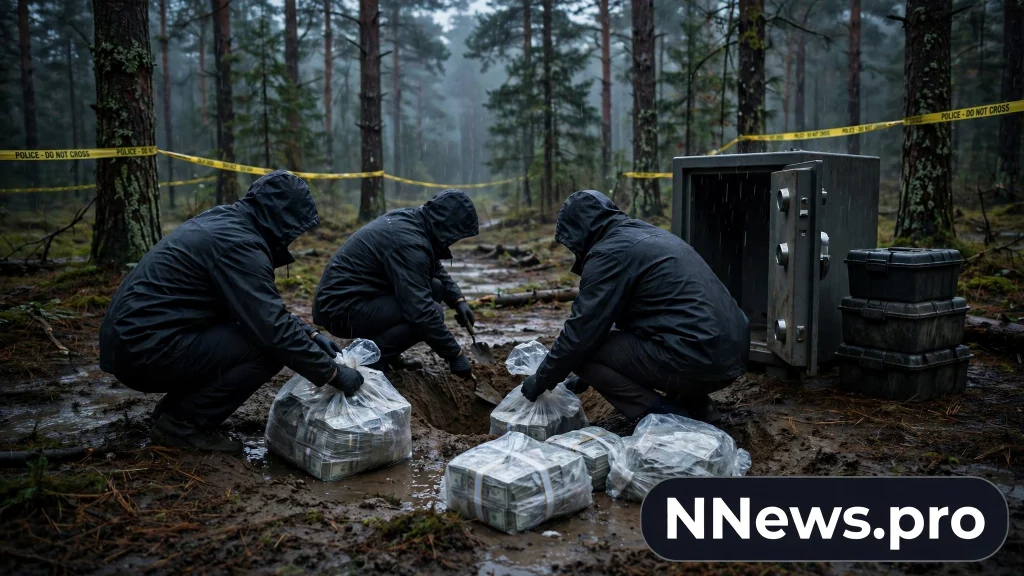
The National Asset Recovery and Protection Office, known by its Hungarian initials NVVH, said the money turned up during coordinated searches on November 12 and 13 in Budapest and in Pest, Békés and Nógrád counties. Investigators found bundles of banknotes buried in woodland, hidden in farm and warehouse buildings and residential properties, and stored in a high-value safe in a secluded location.
What investigators found
The agency put the total at 5,071,632,000 Hungarian forints, €2,658,350 and $1,257,100 — a combined value of about $19.5 million, or roughly £14.8 million. Hungarian news site Telex calculated the haul at about 6.45 billion forints, or around €17.6 million.
The cash has been deposited with the Hungarian State Treasury. Finance Minister András Kármán said on Facebook that 12 treasury employees spent eight hours counting the banknotes using five counting machines. Footage released by the recovery office showed investigators digging through forest ground and examining large piles of bundled currency.
The inquiry centers on Miklós Seszták, who served as minister of national development from 2014 to 2018, during Orbán’s 16-year rule. Prosecutors suspect him of taking more than $37 million in bribes and kickbacks tied to state bus contracts and government construction projects. Seszták was detained in September, and a court ordered 30 days of pre-trial detention. He has denied any wrongdoing, and his lawyer has told Hungarian media that the recovered cash is not his client’s.
The alleged bus scheme
At the heart of the case is the state bus operator Volánbusz. Investigators allege that secondhand buses were bought at inflated prices, with kickbacks flowing back to officials. Euronews reported that investigators link more than 11 billion forints — about $33 million — in illicit payments to the bus contracts alone between 2015 and 2018.
Seszták is a member of parliament from the Christian Democratic People’s Party (KDNP), the smaller partner of Orbán’s Fidesz party. He is not the only former senior official under scrutiny: the wider anti-corruption drive also covers separate graft allegations involving former central bank governor György Matolcsy, according to reports.
Operation Purgatory
The seizure is the most visible result so far of Prime Minister Péter Magyar’s anti-corruption drive, which he has branded “Operation Purgatory.” Magyar’s center-right Tisza party defeated Orbán’s Fidesz-led government in a landslide election in April 2026, ending Orbán’s 16 years in power, on a promise to investigate alleged corruption and abuse of public funds.
The NVVH was created specifically to pursue those cases. The agency holds investigative and prosecutorial powers to chase misused public funds and suspected corruption from the Orbán era. A survey by pollster Median, published on the news site HVG this week, found that 70 percent of respondents considered the drive “very important.”
For more on leaders under pressure abroad, see our report on how Chile’s President José Antonio Kast faces fuel protests and a 24% approval rating eight months into his term. Hungary was also among the countries named in a recent global dark web crackdown that led to 354 arrests and the seizure of more than $234 million.
Why this matters
The buried cash is a striking image, but its legal significance is still open. Investigators and multiple outlets have stressed that the discovery alone does not prove the money belonged to Seszták or that it represents proceeds from the alleged offences. Ownership of the recovered cash has not been conclusively established, and the courts must now determine the definitive connection between the buried assets and the specific bribery allegations.
Related Articles



That distinction matters for the credibility of the new government’s campaign. Magyar won power promising accountability, and Operation Purgatory’s supporters point to the seizure as proof the system is working. Critics, including Orbán’s allies, have framed the investigations as political payback — a charge the government rejects. Whether prosecutors can tie the cash to a specific crime will shape which version the public believes.
The case also lands at a sensitive moment in Brussels. Euronews has reported that the European Commission is set to approve almost all of Hungary’s €10 billion in post-pandemic recovery funds, which must be authorized by the end of November. For years, Brussels froze Hungarian funds over rule-of-law concerns; the new government’s anti-corruption drive is part of its case for unlocking them.
Latest developments
The investigation continues, and prosecutors have not announced charges tied specifically to the recovered cash. Seszták remains in detention while the case proceeds, and the NVVH has not said whether further searches are planned.
What happens next will be watched closely in Budapest and in Brussels: whether the courts link the money to Seszták, whether more seizures follow, and whether the European Commission releases the recovery funds on schedule.
Frequently Asked Questions
How much cash did Hungarian investigators find?
About $19.5 million in total: 5,071,632,000 Hungarian forints, €2,658,350 and $1,257,100. The money was found buried in forests, hidden in farm and warehouse buildings and homes, and stored in a high-value safe during searches on November 12 and 13, 2026.
Who is Miklós Seszták?
Seszták served as Hungary’s minister of national development from 2014 to 2018 under former Prime Minister Viktor Orbán. He was detained in September 2026 and is suspected of taking bribes and kickbacks linked to state bus contracts and construction projects. He denies wrongdoing.
Does finding the cash prove Seszták took bribes?
No. Investigators and reporting outlets have stressed that the discovery alone does not establish that the money belonged to Seszták or that it came from the alleged offences. His lawyer says the cash is not his client’s, and the courts must determine any connection.
What is Operation Purgatory?
It is the name Prime Minister Péter Magyar has given to his government’s anti-corruption drive against alleged misconduct during Orbán’s 16 years in power. A Median poll published this week found 70 percent of Hungarians surveyed consider the drive “very important.”
The $19.5 million now sits in the Hungarian State Treasury while prosecutors build their case. The buried banknotes have already become the defining image of Hungary’s post-Orbán reckoning — whether they become evidence of a crime is now a question for the courts.
Sources: BBC News report (via Wayne County Tribune) | The Guardian report (via Owasso Local News) | Reuters and Al Jazeera summary | Euronews and MTI (via The 420) | Hungarian Conservative | Political.org