Trump Says U.S. “Doesn’t Need a Deal” With Iran and Pulls Vance From the Talks
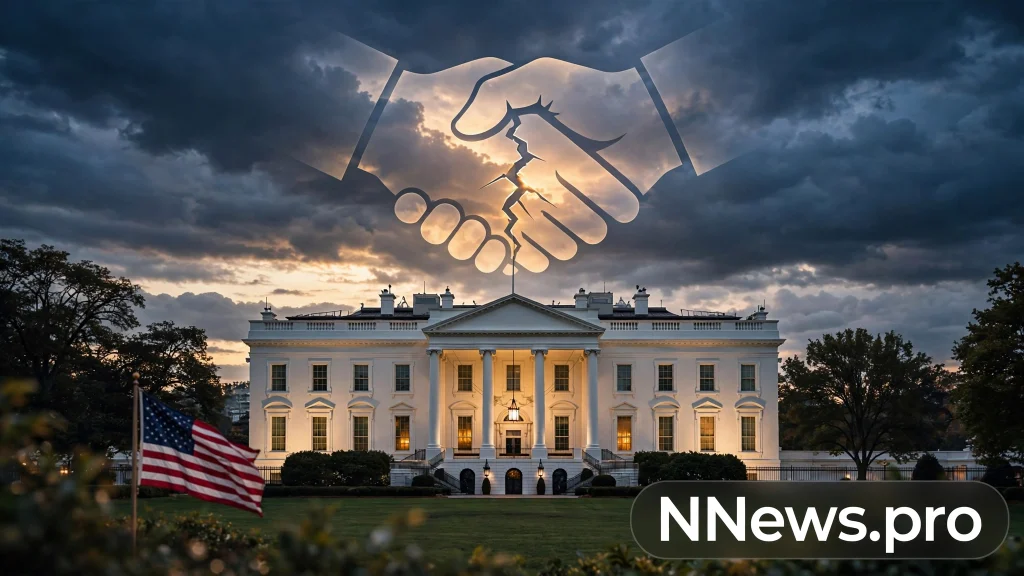
President Donald Trump said on Thursday that the United States “doesn’t need a deal” with Iran — and in the same message, he pulled Vice President JD Vance, his chief negotiator in the earlier Iran talks, off the file and ordered him to focus on domestic issues instead.
The abrupt shift has left the eight-month-old war in limbo: Trump has backed away from new strikes and from new talks alike, and mediators say they are unsure whether he is abandoning a negotiated settlement or posturing after last week’s midterm elections, in which Republicans lost control of Congress.
In a post on Truth Social on Thursday, Trump wrote: “We don’t need a deal with Iran. Those days have long since passed! We’ve got their money, Hundreds of Billions of Dollars, and we’ve got their Strait!” He directed Vance to “focus his complete and total attention” on the administration’s domestic anti-fraud campaign targeting cities and states governed by Democrats.
Vance Was Weighing a Return to Talks
The post came the morning after The Wall Street Journal reported that Vance was thinking about resuming talks with senior Iranian negotiators, according to the Associated Press.
Trump had been aware of Vance’s deliberations, a person familiar with the matter told the AP, and believed the Iranians were not acting in good faith. Vance had served as Washington’s chief negotiator in the earlier peace talks with Iran, and Tehran viewed him as one of the more pragmatic figures in the Trump administration since the United States and Israel launched their surprise war on Iran on February 28.
Vance was backed by Trump envoys Jared Kushner and Steve Witkoff when he negotiated the now-defunct memorandum of understanding with Iran in June, which briefly paused the war and resumed shipping through the Strait of Hormuz.
A Week of Contradictory Signals
Trump’s message capped a week of shifting statements about the war. The day after the midterms, he acknowledged that the war and the economic turmoil it caused were partly to blame for the Republicans’ losses, while maintaining that launching it was the right thing to do.
Earlier in the week, after meeting Qatar’s prime minister at the White House, Trump said the war was effectively over militarily and that new major strikes were highly unlikely. He also told advisers he might hold off on new strikes barring fresh provocations.
But by Thursday, he was again raising questions about whether he needed to rush to find an endgame — and warning Tehran at the same time. He told conservative broadcaster Hugh Hewitt that the U.S. military is “locked and loaded” and keeping an eye on Pickaxe Mountain, a facility linked to Iran’s nuclear program, for signs of activity. “If something does not work out, I would not hesitate” to act, he said.
Secretary of State Marco Rubio underlined the administration’s economic approach on Friday evening, telling the Federalist Society: “The economic pain that we are inflicting on that regime is so great that there’s no need for military action because we’ve weakened them so much.” Rubio added that Trump was not opposed to a deal in principle: “If there’s a deal to be done, the president will be the first one to be in favor of it.”
How Tehran Is Reading the Move
In Tehran, decision-makers are now weighing what Vance’s removal from the Iran file means, and analysts say it could increase the chances of conflict between the two sides.
Nasser Hadian, a professor of international relations at the University of Tehran, said the move was mainly a signal of confrontation with the Democrats after their midterm victories, and may also serve Israel, which is reportedly eager for new strikes.
“Another signal is to Iran, essentially saying reaching a deal now is not a priority, and that the person known to have a relatively softer stance on Iran was redirected to other issues,” Hadian told Al Jazeera.
Mediated contacts between the two sides are continuing, but no breakthrough is expected. Tehran is demanding seven conditions and a clear sequencing of concessions to end the war — terms that appear unacceptable to Washington — and Iran remains unwilling to engage in negotiations over its nuclear program until the U.S. agrees to several core conditions. Trump insists the nuclear question must be resolved as part of any deal meant to end the war.
Related Articles

Why This Matters
The stakes go well beyond one personnel change. The United States has maintained a months-long naval blockade that is curbing the flow of Iranian crude to the global market, and the Strait of Hormuz — the vital passageway for oil and natural gas from the Persian Gulf — remains treacherous. The United Nations reported that October had the highest number of incidents against commercial ships in the contested waters since February, and Iran said three tankers caught fire after striking mines in the strait on Saturday.
Qatar, the chief mediator, is still trying to negotiate an interim agreement to restore traffic through the strait. But two Middle East diplomats told the AP that Trump’s post has created a sense of limbo, and that the push for peace is now in a holding pattern.
Michael Singh, managing director at the Washington Institute for Near East Policy, said he expects the status quo to persist, with the U.S. and Iran locked in a stalemate over the strait and the blockade continuing.
Democrats accused Trump of walking away from a war he started. “President Trump is now acting like an arsonist who has set ablaze our foreign policy,” Democratic Senator Cory Booker of New Jersey said on Friday. “And now he just wants to walk away.”
Latest Developments
Iran’s deputy U.N. ambassador, Gholamhossein Darzi, told the United Nations Security Council on Friday that Iran “has never closed the door to diplomacy.” But he warned that should the U.S. or Israel return to bombing, his country would offer “an immediate and decisive response.”
The war is expected to loom large over Trump’s trip to Asia next week, when he visits the Philippines and attends the Asia-Pacific Economic Cooperation meetings in the Chinese tech hub of Shenzhen. While in Shenzhen, Trump will hold an unprecedented three-way summit with China’s Xi Jinping and Russia’s Vladimir Putin, and is expected to discuss Iran and the three powers’ nuclear stockpiles.
Frequently Asked Questions
Why did Trump pull JD Vance from the Iran talks?
Trump said on Truth Social on Thursday that the U.S. “doesn’t need a deal” with Iran and told Vance to “focus his complete and total attention” on the administration’s domestic anti-fraud campaign. The post came the morning after The Wall Street Journal reported Vance was weighing a resumption of talks, and Trump believed the Iranians were not acting in good faith, according to a person familiar with the matter cited by the AP.
Does this mean the U.S. will not negotiate with Iran at all?
Not necessarily. Secretary of State Marco Rubio said on Friday that “if there’s a deal to be done, the president will be the first one to be in favor of it.” Mediated contacts between the two sides are continuing, and Qatar is still trying to negotiate an interim agreement on the Strait of Hormuz.
What was Vance’s role in the Iran negotiations?
Vance served as Washington’s chief negotiator in the earlier peace talks with Iran. Working with Trump envoys Jared Kushner and Steve Witkoff, he negotiated the memorandum of understanding in June that briefly paused the war and resumed shipping through the Strait of Hormuz.
What happens next?
Trump travels to Asia next week for the APEC meetings in Shenzhen, where he will hold an unprecedented three-way summit with China’s Xi Jinping and Russia’s Vladimir Putin and is expected to discuss Iran. Mediators, including Qatar, are waiting for clarification from the White House on whether Trump is abandoning a negotiated settlement or posturing after the midterms.
Trump’s decision to sideline his own chief negotiator has not ended the war with Iran — it has frozen it in place. With no talks, no ceasefire and a naval blockade still in force, the United States and Iran are locked in a standoff over the Strait of Hormuz that diplomats on both sides warn could turn violent again at any moment.