Data-Centre Stocks Lose $4.2 Trillion as the AI Trade Unravels
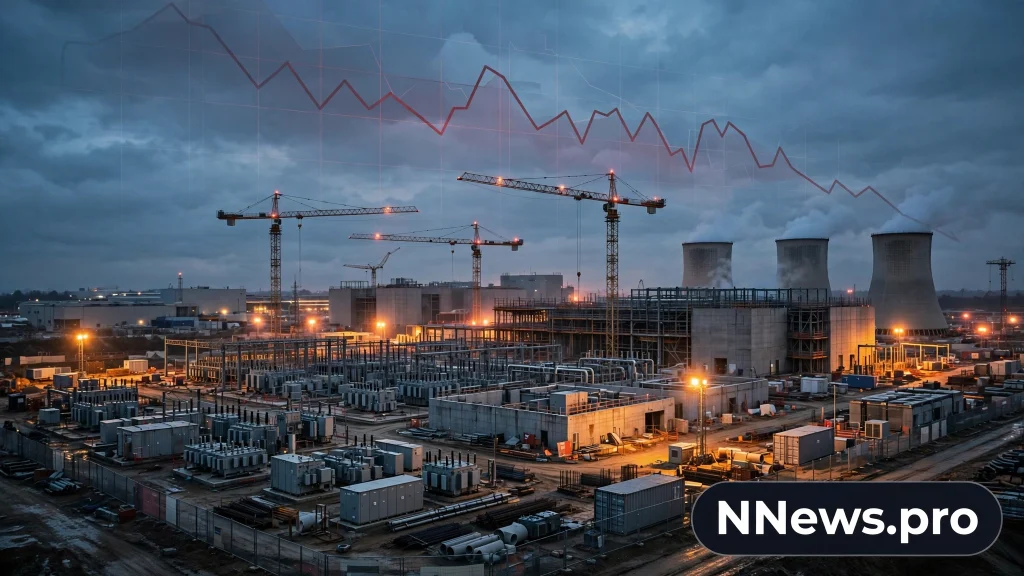
Shares in the companies building the backbone of the artificial-intelligence boom have suffered a dramatic reversal. An analysis by the Financial Times found that manufacturers, utilities and mining companies tied to data-centre construction have lost about $4.2 trillion in market value since June, erasing nearly half of the $9.4 trillion they added over the previous 12 months.
The sell-off has hit the so-called “picks and shovels” of the AI trade — the firms supplying the equipment, power systems and construction services behind the data-centre build-out — rather than the chipmakers at the centre of it. Investors who once rewarded any company linked to AI infrastructure are now asking harder questions about how much spending is justified, who is paying for it, and whether the eventual revenue from AI services will cover the cost.
Caterpillar leads the retreat
Caterpillar, the world’s largest maker of construction and mining equipment and a key supplier of gas generators to data centres, has been the most prominent casualty. The company has lost $214 billion in market capitalisation — 44 per cent — since its shares reached a record high on June 30, according to FactSet data cited by the Financial Times.
It is far from alone. Nuclear power company Oklo has fallen 49 per cent despite signing a contract with Meta in January, while Comfort Systems and fibre-optics maker Corning have each lost about half of their value over the same period. The industrial sector is now the second-worst performer in the S&P 500 since the summer, behind only technology, which is down 11 per cent since June 30 against a 9 per cent fall for industrials.
Venture capitalist Paul Kedrosky, a fellow at the MIT Institute, told the Financial Times that investors had been wrong to value traditional industrial companies like semiconductor stocks. Brett Ryan, senior US economist at Deutsche Bank, said institutional money had piled into the trade too aggressively, pushing valuations to overly enthusiastic levels as equity markets caught up with credit-market concerns over risky financing for data-centre construction.
What is driving the sell-off
Three worries are converging. The first is debt. The biggest technology companies are borrowing heavily to finance data-centre projects that take years to build, while the revenue expected to repay that borrowing depends on customers adopting AI services at sufficient scale and price. The second is politics: local opposition to power-hungry facilities and the prospect of tighter rules in parts of the United States have made project approvals and timetables less certain. Analysts generally view a nationwide construction ban as unlikely, but Citi researchers have warned that tighter regulation after this month’s midterm elections could increase volatility for the sector.
The third is capacity. AI cloud provider Nebius reduced its 2026 revenue forecast on November 12 after delays in third-party data-centre capacity pushed some expected openings into the first half of 2027. The company said demand remained strong, but the delay showed how infrastructure bottlenecks can affect revenue even when customers are seeking computing capacity. A Federal Reserve survey this week also flagged AI and data-centre debt as a top threat to the financial system.
The counterpoint: orders are still strong
The market verdict sits uneasily alongside the operating numbers. US spending on data-centre construction, excluding IT equipment and chips, reached $96 billion in the 12 months to September, according to the latest government data. Caterpillar reported third-quarter 2026 sales and revenue of $20.7 billion, up 17 per cent from a year earlier, with a record $78 billion backlog and 75 per cent year-on-year growth in power generation sales driven by data-centre demand.
Related Articles



Siemens said its data-centre orders doubled in its latest quarter, with a backlog including €7 billion in data-centre products, and raised its medium-term revenue outlook. Eaton reported third-quarter sales of $8.9 billion, up 28 per cent year over year, with orders doubling from a year earlier. Alex Cordovil of Dell’Oro Group said revenue and earnings prospects remain robust because demand still far exceeds supply.
Wall Street research firms have offered a more measured interpretation. Reuters reported on November 9 that several brokerages considered the sell-off excessive and expected some projects to move further into the future rather than be abandoned. Kedrosky cautioned, however, that backlogs and orders are trailing indicators and may reflect double or triple ordering by buyers trying to secure scarce capacity.
Why this matters
The $4.2 trillion figure is a loss in market value across a group of listed companies, not evidence that $4.2 trillion of data-centre projects have been cancelled or that demand for AI has vanished. Stock prices reflect expectations about future earnings, financing costs and risk, and those expectations can change much faster than construction activity.
But the reversal matters for American savers and workers all the same. Pension funds and retirement accounts hold many of these industrial names, and the companies employ hundreds of thousands of people across the United States. It also matters for the communities hosting the facilities, where the economics of power, jobs and local opposition will decide whether the next wave of projects gets built — and where.
Latest developments
The Financial Times analysis was published on November 14-15, covering price changes through November 13. Bitcoin has also slid to a three-month low below $64,000 as the wider tech sell-off deepens. Nvidia, whose earnings are due on Tuesday, November 17, will be the next major test of confidence in the AI trade. Investors will also watch whether the sell-off spreads further into the utilities and mining companies that supply the build-out, or whether the strong order books reported this quarter stabilise the sector.
Frequently Asked Questions
How much have data-centre stocks lost?
About $4.2 trillion in market value since June, according to a Financial Times analysis. That erases nearly half of the $9.4 trillion the same group of companies added over the previous 12 months.
Which companies have been hit hardest?
Caterpillar has lost $214 billion in market capitalisation, or 44 per cent, since June 30. Oklo is down 49 per cent, while Comfort Systems and Corning have each lost about half their value.
Has data-centre construction actually stopped?
No. US spending on data-centre construction reached $96 billion in the 12 months to September, and companies including Caterpillar, Siemens and Eaton report record backlogs. The sell-off reflects investor doubts about valuations and financing, not a halt in building.
What should investors watch next?
Nvidia’s earnings on Tuesday, November 17, any further signs of tighter regulation of data-centre construction, and whether hyperscalers slow their debt-funded capital spending.
The industry is moving from enthusiasm about the size of the AI opportunity to closer scrutiny of who can earn a reliable return from it. Companies with proven orders, strong balance sheets and access to power equipment may remain well positioned. Businesses that rely on expensive borrowing, uncertain customer commitments or delayed grid connections face a tougher test — and the market is now pricing that difference in.
Sources: Financial Times — “Data-centre construction stocks lose $4.2tn as boom in AI trade unravels”; TradersUnion; HeadlinesXtra; Times of Maldives; Reuters; Caterpillar third-quarter 2026 results.