US Floated Donbas-for-NATO Trade to Ukraine, Zelenskyy Says
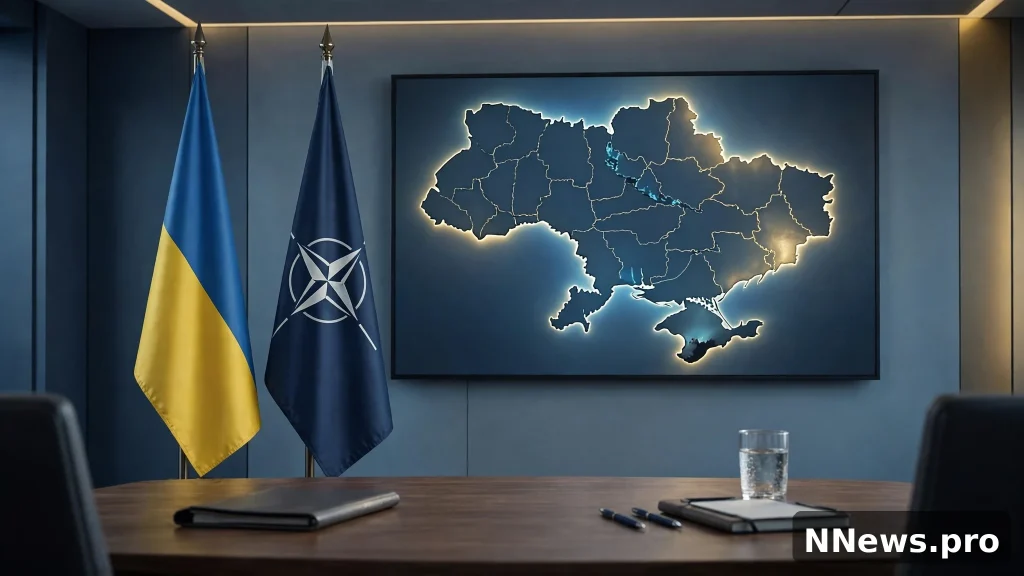
United States negotiators have asked Ukraine whether it would withdraw from the Donbas in exchange for NATO membership, President Volodymyr Zelenskyy said on Saturday, describing the first time Washington has linked the alliance to territorial concessions in the peace talks.
Zelenskyy said the question came from U.S. envoys Steve Witkoff and Jared Kushner, who raised it after meeting Russian President Vladimir Putin in Moscow and then briefing the Ukrainian leader in Dublin. The remarks, made to reporters on Friday, were released by Zelenskyy’s office on Saturday.
“The Americans raised a question: ‘What if Ukraine joins NATO? Would Ukraine withdraw from Donbas?’ This was the first time this had been raised,” Zelenskyy said.
A question never asked before
The Donbas, made up of the Donetsk and Luhansk regions in eastern Ukraine, has been the central focus of Moscow’s territorial demands since Russia launched its full-scale invasion in February 2022. Russia now occupies roughly a fifth of Ukrainian territory, including most of the Donbas, but has been unable to seize the whole of the Donetsk region despite more than four years of fighting.
Zelenskyy reiterated that Kyiv is not ready to give up its territory. But he left the door open to a democratic decision if the West delivers a package strong enough to make it worth considering.
He said that if Ukraine received a comprehensive package including security guarantees, the right to a strong and well-funded Ukrainian army, and funds to rebuild the country, he would put the question to a national referendum.
“I will ask our Ukrainian society what it thinks: do we accept it or not? I have no right to make that decision on my own,” Zelenskyy said.
The proposal marks a sharp shift in the American position. In February 2025, then-U.S. Defense Secretary Pete Hegseth called Ukrainian NATO membership an unrealistic outcome of a negotiated settlement. Zelenskyy said the new question made him believe that “NATO is back on the agenda.”
“But you have also heard Putin’s signals, and this is an extremely difficult conversation,” he added.
Moscow’s red line
Putin has long said Ukrainian membership of NATO is a red line for Moscow, citing the issue as one reason for launching the full-scale invasion in 2022. Russia’s position has not softened: at the U.S.-brokered talks in Abu Dhabi this week, Russian negotiators revived Moscow’s December 2021 draft treaties, which call for halting NATO enlargement and pulling the alliance’s forces back to their 1997 positions.
Zelenskyy also dismissed a Russian proposal for a local humanitarian ceasefire in Kostiantynivka, a hotly contested city in the Donetsk region, saying it reflected Moscow’s inability to take the city by force.
“Putin simply wants us to leave Kostiantynivka so that they can move in and occupy the entire city that way,” Zelenskyy said. He noted that civilians there have already had the opportunity to evacuate, and said Ukraine has given a list of seven or eight other frontline settlements where civilians, including children, are trapped for a potential humanitarian truce — but that Russia prefers to use them as military targets. Moscow denies deliberately targeting civilians.
The Ukrainian president also warned that Russia was “betting everything” on this winter’s campaign, and said the Kremlin’s demands to redraw Europe’s security architecture are “dangerous” and could lead to more wars.
Where the talks stand
The two days of U.S.-brokered talks in Abu Dhabi concluded on Wednesday. The talks ended without a breakthrough, though the sides agreed to a prisoner exchange that will involve more than 1,000 people, Zelenskyy said, with final numbers still under discussion.
Witkoff and Kushner had pledged to raise an energy ceasefire with Putin at their meeting in Moscow on Thursday, but there was no news of progress after their talks. “Putin personally does not support a ceasefire,” Zelenskyy said.
One point of agreement did emerge: all sides accepted that Europe should have a seat at the negotiating table in future talks. In Abu Dhabi, delegates from Europe — now Ukraine’s largest financial and military backer — held talks with U.S. and Ukrainian officials but did not sit at the table with Russia. At a summit in Dublin on Friday, EU leaders agreed that Europe’s five-country negotiating team would comprise Britain plus France, Germany, Italy and Poland, as well as EU officials.
Related Articles

Zelenskyy echoed the European leaders’ position in dismissing Russia’s call for a broad agreement on European security architecture to be reached before the specifics of ending the war in Ukraine are agreed.
“We cannot turn everything upside down and start by talking about changing the security framework in the world or across the continent overall, and only then talk about ending this war. This war must be ended first,” he said.
Why this matters
The Donbas-for-NATO idea is the most concrete trade Washington has put on the table since the peace process began, and it changes the shape of the negotiation. For Kyiv, NATO membership has long been the ultimate security guarantee — the protection of Article 5, under which allies assist a member that comes under attack. For Moscow, it is the outcome the war was partly launched to prevent.
Any deal would face formidable obstacles. Under Article 10 of the North Atlantic Treaty, an invitation to join NATO requires the consent of every member state. The White House, the U.S. embassy in Kyiv and NATO did not immediately respond to requests for comment on Zelenskyy’s account.
For Zelenskyy, the referendum promise is both a political safeguard and a signal: no Ukrainian leader can hand over territory by decree, and any concession of that scale would have to survive a public vote. For the Trump administration, the question tests whether the alliance card — long treated as off the table — can unlock a settlement that months of talks have not produced.
What happens next
No date has been set for the next round of talks, and Zelenskyy gave no date, wording or mechanism for a referendum, saying the specifics do not yet exist. The immediate question is whether Washington will formalize the proposal into a written offer with specific guarantees — and whether Moscow, which has rejected an energy ceasefire and insisted on its maximalist demands, will engage with it at all.
Europe’s role is also set to grow, with its negotiating team now named and all sides agreeing it should sit at the table. The coming weeks will show whether the NATO question opens a path to a deal or becomes another point of deadlock in a war now approaching its fifth year.
Frequently Asked Questions
What did the U.S. propose to Ukraine about the Donbas and NATO?
According to President Volodymyr Zelenskyy, U.S. negotiators asked: “What if Ukraine joins NATO? Would Ukraine withdraw from Donbas?” It was the first time Washington has linked NATO membership to a Ukrainian withdrawal from the eastern region in the peace talks.
Would Zelenskyy accept giving up the Donbas?
He said Kyiv is not ready to concede territory. But if Ukraine received a comprehensive package — security guarantees, a strong and well-funded army and reconstruction funds — he would put the question to a national referendum, saying he has “no right to make that decision on my own.”
Why is NATO membership such a sensitive issue?
For Ukraine, NATO membership would bring the protection of Article 5, under which allies assist a member under attack. For Russia, Ukrainian membership is a red line that Putin has cited as one reason for the 2022 invasion. An invitation also requires the consent of every NATO member under Article 10 of the treaty.
What else came out of the Abu Dhabi talks?
The two days of U.S.-brokered talks ended without a major breakthrough, but the sides agreed to a prisoner exchange involving more than 1,000 people, and all sides accepted that Europe should have a seat at the table in future talks. Russia rejected a proposed ceasefire on energy targets.
Sources: Reuters (via 1027 Super Hits); Financial Times (via Nexus Europa); BBC (via AmeriLedger); AAP; Rapporteur.