SpaceX–Tesla Merger Talks Advance as December Announcement Comes Into View
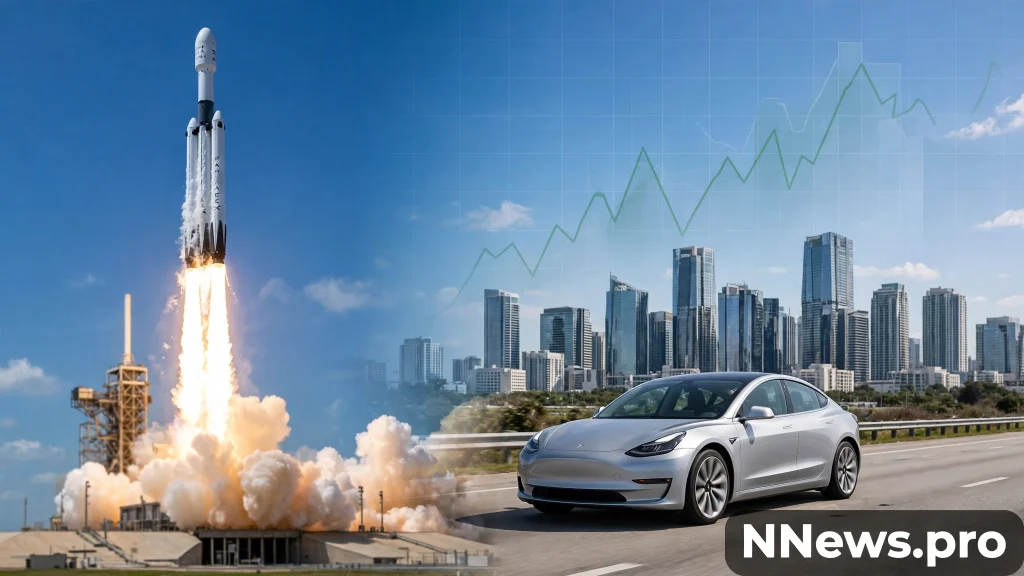
SpaceX and Tesla are moving closer to a possible merger, with an announcement potentially coming as early as December, Bloomberg News reported on Thursday, citing people familiar with the matter. If completed, the combination of the two Elon Musk-led companies would rank among the largest corporate deals ever attempted.
The report, carried by Reuters, said the companies’ boards and advisers are now working on deal terms and the governance structure of a combined company. No agreement has been reached, and the companies have also discussed a scenario in which an announcement slips into early 2027.
Neither company commented on the report. SpaceX and Tesla could not be immediately reached for comment, according to Reuters.
Talks have moved from idea to negotiation
The latest reporting marks a step forward from the discussion Musk acknowledged publicly last month. On SpaceX’s third-quarter earnings call in October, Musk said a merger with Tesla would be “a good idea” and confirmed that both companies had formed special committees of independent directors to discuss a union.
Bloomberg’s sources now describe the process as a negotiation over price and control, rather than a question of whether the idea is worth exploring. The boards and advisers on both sides are involved, and the December target is real — though the sources stressed that the timetable could still move.
SpaceX has also disclosed that its special committee has made no decision on any potential merger, and Musk has warned that treating a combination as certain would overstate the prospects. That caution matters: a deal of this size would need to clear boards, shareholders and regulators, and any of those steps could still stop it.
What the combined company would be worth
At their most recent closing prices, SpaceX was valued at about $1.90 trillion and Tesla at around $1.55 trillion, according to Reuters. A merger at those values would create a company worth roughly $3.45 trillion — larger than any merger ever completed.
The proposed combination would unify Musk’s ambitions in artificial intelligence, robotics, electric vehicles and aerospace under a single corporate roof. SpaceX builds rockets and operates the Starlink satellite network, while Tesla makes electric cars, energy storage and humanoid robots. The two companies already work together through Terafab, a chip manufacturing joint venture. Musk has said the venture should produce its first test chip around May or June of next year and aims to reach volume production by the third quarter of 2028.
Tesla shares rose as much as 1.9 percent on Thursday after the report, a modest reaction that suggested investors see the talks as a real possibility rather than a done deal.
The questions shareholders would face
The central question for Tesla investors is the exchange ratio: how many SpaceX shares each Tesla share would buy, and at what premium. No terms have been proposed publicly, but analysts have begun sketching the maths.
Bank of America analyst Alexander Perry expects SpaceX to acquire Tesla using stock rather than cash. Using October 20 prices, he estimated that a 20 percent premium would leave Tesla shareholders owning about 47 percent of the combined company. A larger premium would shrink the share held by SpaceX investors.
Barclays, which first flagged the December timetable in an October note, has said the most likely structure is SpaceX acquiring Tesla in an all-stock transaction, with Tesla shareholders receiving about 0.7 SpaceX shares for each Tesla share at October valuations. The bank also estimated that Musk would hold about 56 percent of the combined company’s voting power after a merger.
Gary Black, managing partner of The Future Fund, has warned Tesla investors not to count on the headline premium. In an all-stock deal, he argued, merger arbitrage traders would sell SpaceX shares after any announcement, whittling down the premium before the deal closed. He pointed to Marvell Technology’s all-stock offer for Lumentum, where a 24 percent premium on paper turned into a discount within days as Marvell’s shares fell.
Control is a central feature of the deal. Musk owns about 20 percent of Tesla but controlled roughly 85 percent of SpaceX’s voting power through super-voting shares, according to the company’s S-1 filing. Any merger would need approval from Tesla shareholders, and Tesla’s charter requires a majority of all outstanding shares — a higher bar than a simple majority of votes cast.
Regulatory hurdles loom large
Even if the boards agree, the deal would face steep regulatory scrutiny. SpaceX holds major United States defense contracts, including work for the Pentagon and intelligence agencies, while Tesla relies heavily on China, where it builds about half of its cars.
A JPMorgan analyst described SpaceX’s defense and government work and Tesla’s China footprint as “key dynamics that are at odds with each other” for regulators and shareholders. One open question is how the companies would ring-fence Tesla’s China business from SpaceX’s sensitive government contracts.
The timing adds another complication. Tesla holds its annual shareholder meeting on December 3, and the ballot is limited to re-electing Musk, chair Robyn Denholm and JB Straubel to terms running through 2029. No merger proposal is on the ballot, which means a deal announced in December would still need a separate shareholder vote later.
Related Articles

Ira Ehrenpreis, who chairs Tesla’s compensation and governance committees, has sat on SpaceX’s board since February — a link between the two boards that is likely to draw attention from governance watchers if a deal is put to shareholders.
Background: months of speculation
The idea of combining the two companies has circulated for months. Barclays told clients in October that a merger announcement could arrive before Tesla’s annual meeting, and Bloomberg reported in January that SpaceX had weighed a Tesla merger before instead buying Musk’s artificial intelligence startup, xAI.
SpaceX went public in June 2026, giving the rocket company a listed currency for the first time and making an all-stock acquisition of Tesla structurally possible. The talks also come as SpaceX presses ahead with plans for more than $74 billion in AI supercomputing campuses in Texas and Arizona.
The talks also land in a week of upheaval at the top of the AI chip industry, after Jensen Huang resigned as Nvidia’s chief executive on Thursday. And investor appetite for big AI-linked listings remains strong: Anthropic’s initial public offering drew about six times more orders than shares on offer, according to filings and reports this week.
Why this matters
A SpaceX–Tesla combination would be the most consequential corporate deal of the decade, merging the world’s most valuable rocket company with its most valuable carmaker into a single bet on AI, robotics and space. For investors, it would transform Tesla shares into a stake in a far larger enterprise dominated by Musk’s control. For regulators, it would test how far the United States is willing to let defense-linked space assets sit inside the same company as a carmaker deeply exposed to China.
For consumers, the practical effects would be slower to arrive. A merger would not change the price of a Tesla or the cost of a Starlink subscription overnight. But it would bind together the supply chains, chip ambitions and AI infrastructure of two companies that are already among the largest buyers of computing power in the world.
Latest developments
- Bloomberg reported on Thursday, November 12, that SpaceX–Tesla merger talks are progressing, with an announcement possible as early as December.
- The companies have also discussed a scenario in which the announcement slips into early 2027.
- SpaceX’s special committee has made no decision on a merger, and Musk has cautioned against treating a deal as certain.
- Tesla’s annual shareholder meeting is scheduled for December 3, with no merger proposal on the ballot.
- Tesla shares rose as much as 1.9 percent on Thursday after the report.
Frequently asked questions
Is the SpaceX–Tesla merger a done deal?
No. Talks are progressing and the boards and advisers are working on terms, but no agreement has been reached and no terms have been signed. Bloomberg’s sources said an announcement could come in December, but it could also slip into early 2027.
What would Tesla shareholders get in a merger?
That has not been decided. Analysts expect an all-stock deal in which Tesla shareholders receive SpaceX shares. Bank of America estimated that, at a 20 percent premium using October 20 prices, Tesla holders would own about 47 percent of the combined company. Barclays estimated about 0.7 SpaceX shares per Tesla share at October valuations.
Why would SpaceX and Tesla merge?
The deal would combine Musk’s AI, robotics, electric vehicle and aerospace businesses under one roof, allowing deeper integration of chips, data centers, robots and satellites. Barclays estimated Musk would hold about 56 percent of the combined company’s voting power, consolidating his control.
What could stop the deal?
Several things: the boards or special committees could fail to agree on price, Tesla shareholders would need to approve it by a majority of all outstanding shares, and regulators would scrutinise the combination of SpaceX’s US defense contracts with Tesla’s large China operations.
What to watch next
The next signal will be whether either company files anything with regulators or says anything on the record. Tesla’s December 3 annual meeting is the nearest milestone, though no merger vote is scheduled for it. If the December timetable holds, an announcement would need to come before the end of the year — and the terms, especially the exchange ratio and any premium for Tesla holders, will show whether the deal is built to pass shareholders and regulators, or whether it stalls like earlier versions of the idea.
Sources: Reuters (via KWSN syndication), Electrek, BeInCrypto.