Paraguay President Santiago Peña Impeached and Detained After Ueno Bank Collapse
Paraguay’s President Santiago Peña was impeached, removed from office, and detained within days of the collapse of Ueno Bank, a digital lender whose accounts held the savings of about 2.9 million customers — roughly 60 percent of the country’s adult population. Peña, who has pleaded not guilty, appeared before prosecutors on Saturday morning as the investigation continued.
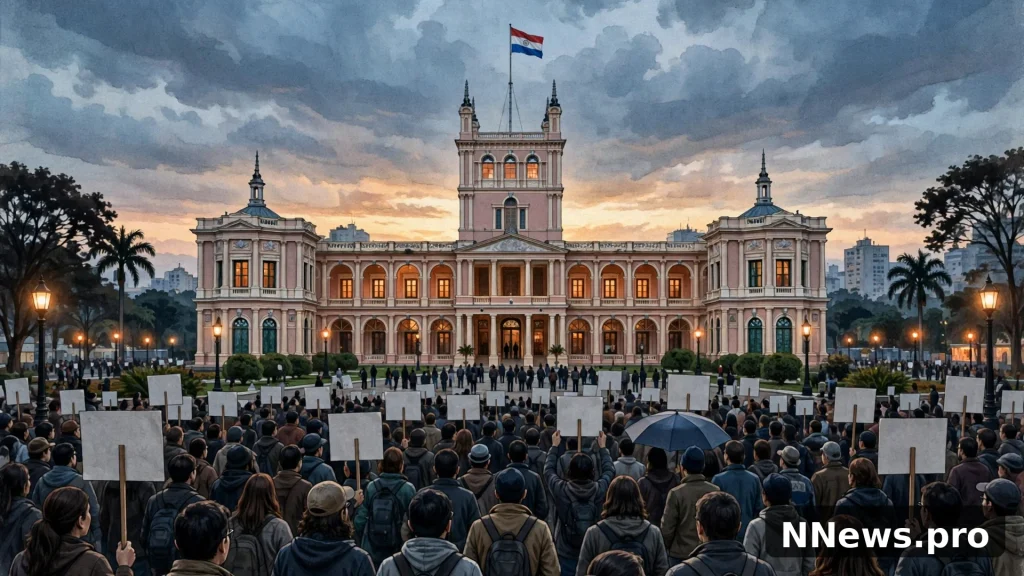
Ueno Bank’s services stopped working in the early hours of Tuesday, November 3. Paraguay’s Central Bank seized control of the bank the same day, saying its solvency ratio no longer met legal standards. Customers found debit cards declined, savings inaccessible, and salary and pension payments stranded. Protests erupted across Asunción, the capital, and crowds gathered outside Congress demanding accountability.
Peña offered his resignation on Thursday, November 5. Congress refused to accept it and moved ahead with impeachment instead. The lower house voted 78-0 to impeach, and the Senate removed him on Friday, November 6, after lawmakers unanimously found him guilty of malfeasance in office, according to the Senate’s website. The next day, prosecutors charged him with breach of trust and administration for personal gain. He was ordered held in pretrial detention at a military facility.
“I want to apologize to the Paraguayan people if I have failed you,” Peña said in a speech posted to social media after his removal.
A bank that grew too fast
Ueno launched as a financial technology company in 2021 and began operating as a bank in November 2023. Slick marketing, cashback deals, and accounts customers could open on their phones drew in millions, including more than a million people who opened a bank account for the first time. The Central Bank said the bank had approximately 1.8 million depositors.
But the bank’s lending raised serious questions. Many of its loans went to companies linked to its controlling owners, Grupo Vásquez, including $146 million in loans to just three companies. The bank also held substantial public money: Paraguay’s Social Security Institute, known as IPS, had around $355 million invested in Ueno, roughly 9 percent of its portfolio. By Saturday, almost 1.2 million customers had received an advance payment under the state’s deposit guarantee fund, but many were still waiting.
Why Peña’s own ties became the story
In an asset declaration submitted weeks after taking office in 2023, Peña listed shares in Ueno Holding valued at around $845,000, about 1.6 percent of the company’s paid-up capital. He sold the shares in March 2025. He also appointed Carlos Carvallo, who had led Ueno Bank, to head Paraguay’s Central Bank in 2023.
Prosecutors allege that, while president, Peña used his position to influence public agencies and state-owned entities to keep deposits with the bank despite his connections to its parent group. Carvallo was also arrested and charged with breach of trust, administration for personal gain, and producing false public documents. Eight Ueno executives, including 36-year-old chief executive Miguel Vásquez, were arrested and charged as well.
Related Articles



Horacio Cartes, the former president who handpicked Peña to lead his faction into the 2023 election, publicly distanced himself after the collapse and called for an investigation with “no impunity for anyone.” His faction backed the impeachment the next day.
Why this matters
Peña is one of Washington’s closest allies in the region, and the crisis has rattled confidence in Paraguay’s institutions. Peña had met Venezuela’s interim president Delcy Rodríguez in Caracas in September, weeks before Venezuelans took to the streets over blackouts that stretched to 16 hours a day. Now his own presidency has ended amid the same kind of street anger. “People don’t have any trust,” said Elizabeth González, a 28-year-old barista in downtown Asunción. “If Paraguayans themselves aren’t confident right now, foreign investors will be less so.”
The upheaval comes in a week when another government, in the Netherlands, faced its own weekend crisis talks after a tax-plan row. Paraguay’s crisis runs deeper: a president removed and charged, and millions still unable to reach their money.
Latest developments
Vice President Pedro Alliana was sworn in as president to serve out the rest of Peña’s term until August 2028. In a speech on Friday, he said he would take action to compensate people whose money was lost in the bank’s collapse. Peña is the first Paraguayan president ousted from office since Fernando Lugo in 2012.
Frequently asked questions
Why was President Santiago Peña impeached?
Peña was impeached over allegations linked to the Ueno Bank collapse, including conflicts of interest from his past shareholding in the bank’s holding company and his appointment of a former Ueno executive to lead the Central Bank. Prosecutors charged him with breach of trust and administration for personal gain. He denies wrongdoing.
How many people were affected by the Ueno Bank collapse?
Ueno said it had 2.9 million customers, around 60 percent of Paraguay’s adult population, and the Central Bank said it had about 1.8 million depositors. By Saturday, almost 1.2 million customers had received an advance payment under the state’s deposit guarantee fund, but many were still waiting.
Peña’s removal ends a presidency that lasted barely three years and leaves Paraguay with a new leader, a criminal investigation still unfolding, and millions of citizens waiting to learn when they will get their savings back.
Sources: AP/NPR — How a bank collapse left millions in limbo and toppled Paraguay’s president; AP/NPR — Ousted Paraguayan president appears before prosecutors; NewsRangers — Paraguay’s President Impeached, Arrested Over Alleged Role In Banking Scandal