Dutch Government Set for Weekend Crisis Talks to Avert Collapse After Tax-Plan Row
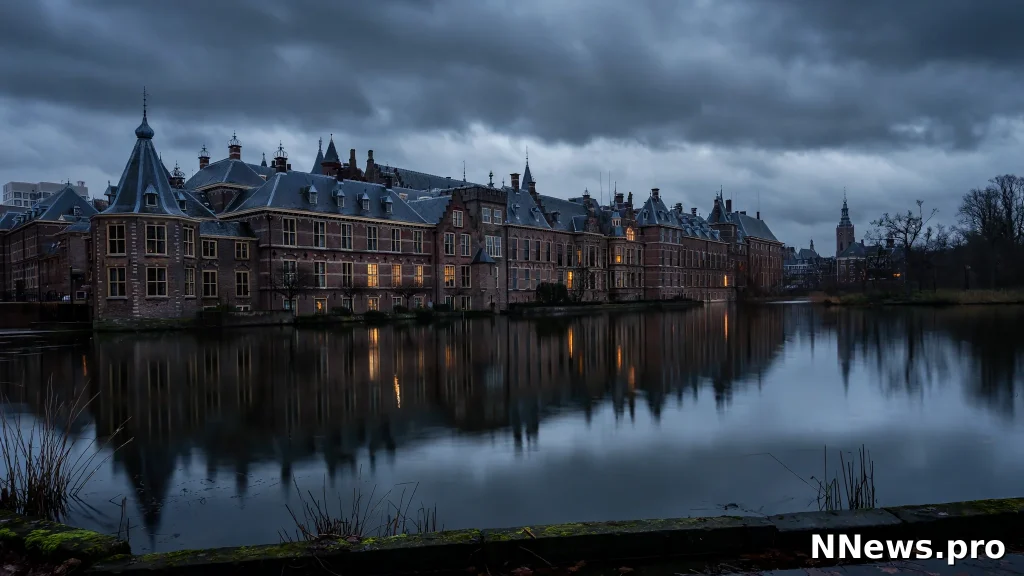
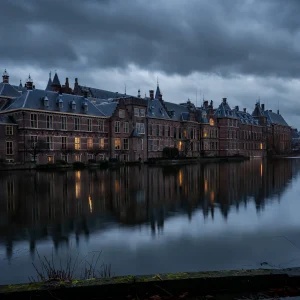
The Dutch government will continue crisis talks over the weekend in a last-ditch effort to stave off its collapse, Prime Minister Rob Jetten said on Friday, after a bitter row over wealth taxes split his three-party minority coalition.
Jetten spoke to reporters after seven hours of talks on Friday with the leaders of his coalition partners. “Our work is not done,” he said, adding that the leaders would hold “thorough” discussions over the weekend on how to improve their cooperation and win support for the government’s proposals.
The coalition has been on the brink of collapse since Thursday, when the lower house of parliament approved an amended 2027 tax plan in a tight vote after a daylong debate. Lawmakers from Jetten’s centrist D66 party and the centre-right Christian Democrats (CDA) backed amendments proposed by two centre-left opposition parties, PRO and Volt, to push the package through — leaving out their own coalition partner, the pro-business People’s Party for Freedom and Democracy (VVD).
A vote that split the coalition
The VVD ultimately voted against its own government’s tax plan on Thursday evening, only to see it approved by a narrow majority with the support of the opposition parties.
The amendment at the centre of the row shifts about €1 billion in the tax burden from labour to wealth. PRO leader Jesse Klaver repeatedly described part of the agreement as a “millionaire’s tax,” a label that enraged the VVD. The party’s parliamentary leader, Ruben Brekelmans, called the move “disconcerting” and said he would discuss the outcome with his party.
“I didn’t expect the CDA and D66 to take such a huge turn to the left,” Brekelmans told reporters. “Bad for our economy, bad for business in the Netherlands, bad for our country.”
The Dutch Finance Ministry had warned that the amendment could leave a budget deficit of more than €400 million. The tax plan still has to pass the Senate, the upper house of parliament, before it can take effect, and the details of its implementation still need to be worked out.
Jetten seeks a “fresh start”
Jetten, the Netherlands’ youngest prime minister, skipped a European leaders’ summit in Ireland to attend Thursday’s debate in parliament. He told lawmakers the coalition “must make a very serious fresh start, in order to function much better together.”
“No one is waiting for endless political squabbling in The Hague or for new elections, and we must do everything in our power to find a way forward together,” he said.
After the vote, Jetten called his two deputy prime ministers — one each from the CDA and the VVD — for a meeting on Friday morning as he sought to hold the government together.
But the VVD sounded far less optimistic after Friday’s talks. Its leader, Dilan Yeşilgöz, labelled the minority government “a failed experiment” at a separate press conference.
“We can’t continue like this,” Yeşilgöz said. “Hopefully we can find a way out, but if we not, all three parties will have to draw their conclusions.”
Background: a fragile minority government
Jetten’s coalition is less than nine months into a four-year term, and it lacks a majority in both houses of parliament, meaning it needs opposition support for all of its proposals. The vote on Thursday was the culmination of months of tense budget negotiations within the coalition.
The crisis is the latest in a splintered Dutch political landscape that has seen four general elections in a decade and eroded public trust in the country’s lawmakers. The Netherlands is traditionally led by government coalitions with a parliamentary majority, but securing one has become increasingly difficult as voter preferences shift in every cycle and centrist parties steadily lose support.
Related Articles

Jetten took office pledging to seek a new era of consensus among parties in the Dutch parliament, but he has so far struggled to rein in political infighting — among parties in the legislature and even inside his own coalition.
Why this matters
A collapse of the Dutch government would leave one of the European Union’s founding members without a functioning cabinet at a moment of heavy demands on European governments, from defence spending to energy policy and trade tensions. Europe is already coordinating closely on security: the EU Names Five-Country Team to Represent Europe at Ukraine Peace Talks as US-mediated negotiations continue. The Netherlands is also the EU’s fifth-largest economy and a major trading partner of the United States, so prolonged political instability in The Hague would be watched closely in Brussels and Washington.
The row also exposes a deeper tension inside European centre-right politics: the VVD’s fury at a wealth tax backed by its own coalition partners shows how hard it has become to hold together broad coalitions in a fragmented political landscape. Budget politics are straining governments across the continent — Germany Agrees 2027 Budget With Near-Record €210 Billion in New Borrowing after its own difficult negotiations.
For now, the government’s survival depends on whether the weekend talks can produce a workable agreement on how the three parties cooperate — and whether the VVD is willing to keep governing with partners it accuses of turning sharply to the left.
Latest developments
- Coalition leaders resumed crisis talks on Saturday in Hilversum, according to Dutch public broadcaster NOS.
- The amended 2027 tax plan still needs approval from the Senate before it can take effect.
- Jetten has said he wants to carry on with the current three parties and has ruled out continuing without the VVD ministers.
Frequently asked questions
Why is the Dutch government in crisis?
The three-party minority coalition split over the 2027 tax plan. D66 and the CDA backed opposition amendments that shift about €1 billion in taxes from labour to wealth, while the VVD voted against its own government’s plan, calling the deal harmful to the economy.
Who is Rob Jetten?
Rob Jetten is the Dutch prime minister and leader of the centrist D66 party. He is the Netherlands’ youngest premier and took office pledging a new era of consensus in Dutch politics.
What happens if the weekend talks fail?
If the three parties cannot agree on how to work together, the VVD has signalled all three would have to “draw their conclusions,” which could mean the collapse of the government and potentially new elections.
Does the tax plan take effect now?
No. The lower house approved the amended plan, but it still has to pass the Senate, and the implementation details and budget coverage still need to be worked out.
What to watch next
The outcome of the weekend talks will decide whether Jetten’s government survives. If the leaders find a way forward, the coalition will still face the Senate vote on the tax plan and months of further budget negotiations. If they do not, the Netherlands could be heading for its fifth general election in a decade.
Sources: Reuters · Associated Press · NL Now · DeVector · Reuters