U.S. Intelligence Estimates Iran Still Holds Up to 2,500 Missiles Despite Months of Strikes
U.S. Intelligence Estimates Iran Still Holds Up to 2,500 Missiles Despite Months of Strikes
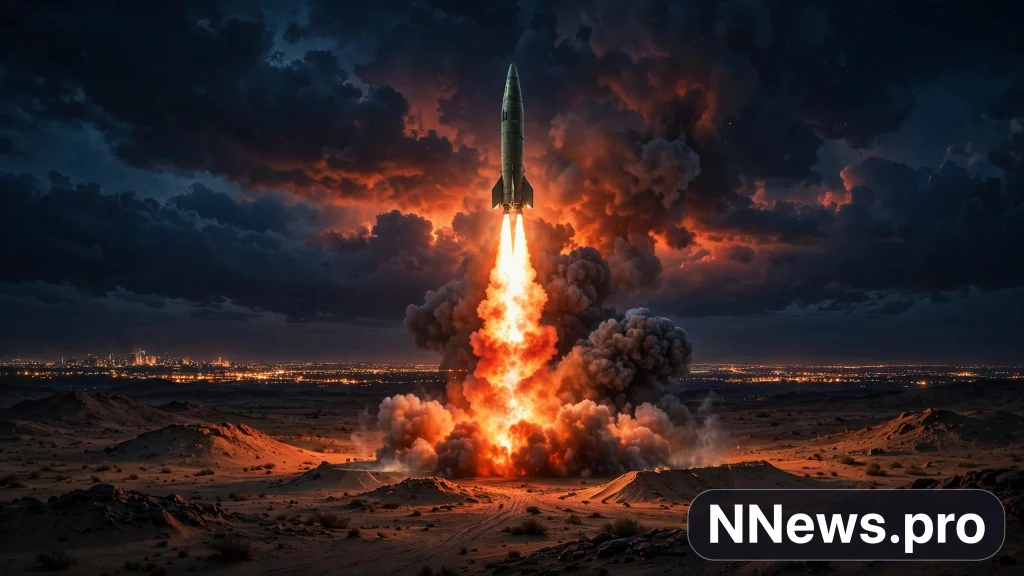
Iran still holds an estimated 1,500 to 2,500 missiles despite months of U.S. and Israeli strikes on its weapons infrastructure, according to a U.S. intelligence assessment cited by The Wall Street Journal on Sunday. The estimate, which officials described as low confidence, suggests Tehran retains significant capacity to strike American and allied targets if all-out war resumes.
The assessment cuts against repeated claims from the Trump administration that Iran’s military capabilities had been largely destroyed. It also points to a slower but continuing Iranian rebuilding effort, with production lines still turning out new missiles from stockpiled components even as the U.S. maritime blockade remains in force.
What the intelligence assessment says
U.S. officials told the Journal that the intelligence community assesses Iran’s remaining arsenal at between 1,500 and 2,500 missiles. The officials attached a low level of confidence to the estimate, largely because it is difficult to determine how many missiles are ready to launch and how many remain in storage.
A separate Western intelligence estimate cited by Bloomberg put the figure at no fewer than 1,700 ballistic missiles, with Iran still producing about 50 ballistic missiles a month — roughly half its estimated prewar rate. Israeli military officials have similarly assessed that Iran holds more than 1,500 ballistic missiles, although estimates vary across the region because of the difficulty of pinning down the exact size of the stockpile.
The range matters because it implies Tehran has rebuilt a large share of the arsenal it held before the war began. Israel estimated that Iran had about 2,500 ballistic missiles before fighting started on February 28. Simone Ledeen, who served as deputy assistant secretary of defense for the Middle East during President Donald Trump’s first term, told the Journal that even the lower estimate of 1,500 missiles would mean Iran had replenished more than half of its estimated prewar stockpile. She added that Iran had fully rebuilt its arsenal between the 12-day war in June 2025 and the start of the current conflict in February.
A contrast with official claims
The assessment sits uneasily with the administration’s public messaging. Defense Secretary Pete Hegseth told reporters on Tuesday that 80 percent of Iran’s industrial base had been destroyed, and he pointed to the destruction of more than 80 percent of the country’s nuclear-industrial base as evidence of success. Trump has said Iran’s military capabilities had been decimated, and Trump said the war with Iran was effectively over in remarks on November 9.
Yet the fighting has not stopped. U.S. forces shot down two Iranian drones headed for Bahrain this week, and Iran has continued to attack commercial shipping in the Strait of Hormuz. The maritime blockade of Iran remains in force, Bloomberg reported, keeping economic pressure on Tehran even as its missile program continues.
Trump said this week that additional attacks do not appear necessary for now, a position that reflects the administration’s effort to hold the current pause in the war. Trump said the United States no longer needs a deal with Iran on Thursday, and told Vice President JD Vance to step back from the negotiations and focus on the domestic anti-fraud campaign.
How Iran kept producing missiles
The key to Iran’s resilience, according to analysts, is a reserve of finished missile components stockpiled underground before the war. That reserve has allowed Iran to keep assembling weapons even after air strikes crippled large-scale production facilities.
Jim Lamson, a former CIA analyst and visiting researcher at King’s College London who specializes in the Iranian military, estimates that thousands of Shahed-type attack weapons are probably still available. Exact numbers for both ballistic missiles and Shahed drones remain uncertain, he said, because prewar stocks were never publicly confirmed and the scale of repairs is unclear.
Ankit Panda, a senior fellow at the Carnegie Endowment for International Peace, said public estimates of current stocks vary widely, but that Iran has probably reconstituted a significant number of drones and missiles.
The scale of what Iran has already fired underscores the size of the arsenal it started with. Since the conflict began on February 28, Iran has fired more than 4,900 propeller-driven Shahed cruise missiles and at least 2,200 ballistic missiles, according to Bloomberg Economics. In April, the director of the U.S. Defense Intelligence Agency, Lt. Gen. James Adams, told Congress that thousands of missiles and one-way attack drones remained in Iran’s hands.
Related Articles



A new underground “missile city”
The Islamic Revolutionary Guard Corps underscored the point on Tuesday by releasing videos of a new underground “missile city,” circulated through the semi-official Fars news agency. Gen. Ali Abdollahi, chief of the general staff, told personnel that surprises in a future war would be “revealed one after another,” according to Bloomberg.
The unveiling was a deliberate signal: even after months of bombardment, Tehran wants its adversaries to believe its missile program can survive, rebuild and keep threatening targets across the region.
Why this matters
The estimate changes the strategic picture for Washington in three ways. First, it means Iran retains a credible retaliatory threat, which raises the cost of any decision to resume large-scale strikes. Second, it suggests the blockade and bombing campaign have slowed but not ended Iran’s missile production, so time may be working in Tehran’s favor as it rebuilds from stockpiled parts. Third, it complicates the administration’s argument that the war is effectively finished, since a country holding up to 2,500 missiles and producing 50 more a month has not been disarmed.
For U.S. allies in the Gulf, the numbers are a reminder of their exposure. Iran’s missiles can reach American bases and allied cities across the region, and its drone attacks on shipping have already shown it is willing to use them. For American consumers, the stakes are indirect but real: any resumption of full-scale war would threaten oil shipments through the Strait of Hormuz and could push energy prices sharply higher.
Latest developments
The assessment arrives at a moment of uneasy calm. The war has paused but not ended, with no formal ceasefire in place and both sides still testing each other — Iran with drone and shipping attacks, the United States with a naval blockade and a military posture Trump has described as “locked and loaded.”
Western officials have also reported that Russia is supplying attack weapons to Iran, though the type and quantity remain unknown. The United States still holds large reserves of precision munitions, but analysts say heavy use of interceptors during the war has depleted stocks needed elsewhere.
Becca Wasser, defense lead at Bloomberg Economics, said it was never a direct fight between Iranian and American missile stockpiles. The United States outguns Iran, she said, but Iran’s strategy requires only enough capacity to disrupt, impose costs and endure.
Frequently Asked Questions
How many missiles does Iran still have?
U.S. intelligence estimates Iran retains between 1,500 and 2,500 missiles, according to The Wall Street Journal. A separate Western estimate cited by Bloomberg puts the figure at no fewer than 1,700 ballistic missiles. Both assessments carry significant uncertainty.
Why is the estimate described as low confidence?
U.S. officials said it is difficult to track how many missiles Iran has ready for launch versus how many sit in storage, and Tehran does not disclose its stockpile. The secrecy surrounding the program, the number of producers involved and the unknown scale of repairs all make precise counting impossible.
Is Iran still making new missiles?
Yes, according to the Western estimate cited by Bloomberg. Iran is still producing about 50 ballistic missiles a month, roughly half its prewar rate, by assembling weapons from finished components stockpiled underground before the war.
Does this mean the war with Iran is not over?
There is no formal ceasefire, and fighting has continued at a lower level, including Iranian drone attacks and attacks on shipping. Trump has said the war is effectively over and that additional strikes do not appear necessary for now, but the intelligence assessment shows Iran retains substantial military capacity.
What to watch next
The key question is whether the current pause holds. Watch for any new Iranian missile or drone attack on U.S. forces or Gulf shipping, any change in the blockade, and any fresh intelligence disclosure about Iran’s stockpile. With Trump heading to Manila on Tuesday and then to a three-way summit with China’s Xi Jinping and Russia’s Vladimir Putin in Shenzhen on Thursday, the Iran file will be part of a crowded diplomatic week — and the size of Tehran’s remaining arsenal will shape every conversation about it.
Sources: The Wall Street Journal (via corroborating reports); Bloomberg (via Clash Report); Israeli military officials via corroborating coverage; U.S. Defense Intelligence Agency testimony to Congress.