Kushner Says Europe Will Join Next Round of Russia-Ukraine Talks as US Works Toward Largest Prisoner Exchange of the War
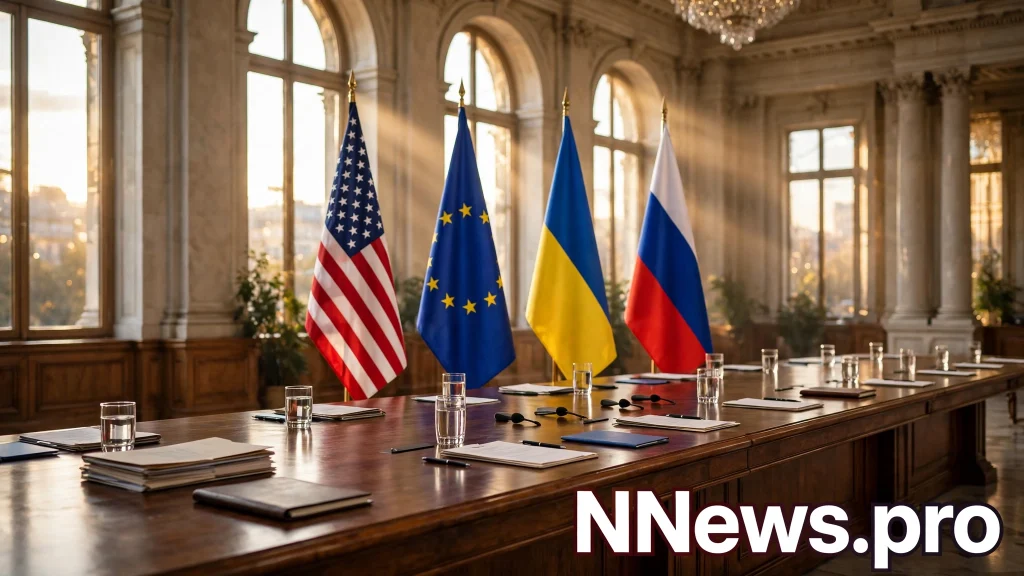
The United States is working toward what would be the largest prisoner exchange of the Russia-Ukraine war, President Donald Trump’s envoy Jared Kushner said on Thursday, as Russia and Ukraine agreed to bring European nations into the next round of US-brokered peace talks.
Kushner announced the twin developments after a week of shuttle diplomacy that took him and fellow envoy Steve Witkoff from Abu Dhabi to Moscow and then to Dublin, where they met Ukrainian President Volodymyr Zelenskyy. The moves mark the most significant diplomatic progress since direct talks between Russia and Ukraine resumed this week for the first time in nine months.
“We are also working toward what would be the largest prisoner exchange of the war, potentially reuniting thousands of people with their families,” Kushner wrote on X. He gave no numbers, no timetable and no details of how the exchange would be carried out.
Europe gets a seat at the table
The more immediate breakthrough is structural: European governments will join the next round of negotiations directly, rather than being briefed from the sidelines.
“Expansion of the next round of talks with European partners would allow the tackling of broader postwar European security arrangements alongside the territorial issues between Russia and Ukraine,” Kushner said.
Zelenskyy welcomed the decision after his meeting with the two envoys in Dublin, where he was attending a summit of the European Political Community. He said he hoped the agenda would include efforts toward ceasefires and steps to defuse the conflict, and stressed that the process had resumed after months of stalemate.
Witkoff said Russian President Vladimir Putin had agreed to let European representatives join the next round, though the Russian leader also urged Washington to work with its European allies to determine whether they wanted peace or war in Ukraine — a pointed remark that underlined how far apart the two sides remain on the substance.
Why this matters
Prisoner exchanges have been one of the few areas where Russia and Ukraine have consistently reached deals even as the fighting continued, and they carry enormous human weight for families on both sides. The largest exchange to date was a 1,000-for-1,000 swap in May 2025. An exchange described by Kushner as reuniting “thousands” of people would surpass that — but until a number is confirmed, the scale remains a US ambition rather than an agreed deal.
The European question matters just as much. European leaders have long argued that any settlement shaping the continent’s security cannot be negotiated over their heads, and Kyiv has pushed for its European partners to be present. Bringing Europe into the room could make a deal more durable — or make it harder to reach, since more parties must agree on territory, security guarantees and sanctions relief.
For Washington, the sequence is deliberate: the Abu Dhabi round restarted direct contact, the Moscow visit tested Putin’s position, and the Dublin meeting brought Zelenskyy and the Europeans into the frame. The next round will be the first real test of whether that structure can produce results.
What happened this week
The diplomatic push began in Abu Dhabi, where Russia, Ukraine and the United States ended a second day of US-brokered peace talks in Abu Dhabi on Wednesday, November 11, without agreeing to a ceasefire or any broader settlement. Prisoner swap talks were the one area where discussions continued.
Kushner and Witkoff then arrived in Moscow on Thursday to meet Russian President Vladimir Putin, carrying the unresolved questions from two days of talks in Abu Dhabi into the Kremlin itself. From there they flew to Dublin to meet Zelenskyy, who had been attending the European Political Community summit.
Related Articles


The backdrop remains violent. Even as the envoys traveled, Russia and Ukraine traded strikes on each other’s capitals, and Ukraine says its drones struck a Russian missile warship in the Gulf of Finland in what analysts describe as the first Ukrainian attack on a Russian warship at sea in the Baltic. Neither side has shown any sign of easing its military operations while talks continue.
Latest developments
No date or venue has been announced for the next round of talks, and no figure has been confirmed for the prisoner exchange. Kushner’s post on X offered no details, and neither Moscow nor Kyiv has published its own numbers.
The key questions now are whether the exchange materializes at the scale Kushner described, whether European participation smooths or complicates the negotiations, and whether the two sides can move from process — who sits at the table — to substance: territory, ceasefires and security guarantees.
Frequently Asked Questions
What did Jared Kushner announce?
Kushner said Russia and Ukraine agreed to include European nations in the next round of US-brokered peace talks, and that the United States is working toward what would be the largest prisoner exchange of the war, potentially reuniting thousands of people with their families.
How large would the prisoner exchange be?
No number has been confirmed. Kushner said it could reunite “thousands” of people, which would make it larger than the 1,000-for-1,000 exchange in May 2025, the biggest so far. Until officials release figures, the scale is an aim, not a done deal.
Why is Europe joining the talks now?
European governments have argued that any deal affecting the continent’s security should be negotiated with them present, and Ukraine has pushed for its partners to take part. Witkoff said Putin agreed to European participation, and Kushner said it would let the talks address broader postwar European security arrangements alongside territorial questions.
When is the next round of talks?
No date or location has been announced. The last round took place in Abu Dhabi this week, followed by the envoys’ visits to Moscow and Dublin.
What to watch next
Watch for a date and venue for the next round, any confirmed prisoner-exchange numbers from Washington, Moscow or Kyiv, and the reaction from European capitals now that they have a seat at the table. Any of those details will show whether this week’s diplomacy is building toward a deal — or simply toward another round of talks.
Sources
- Reuters (Kanishka Singh), “Kushner says US working toward ‘largest prisoner exchange’ of Russia’s war in Ukraine,” Nov 12, 2026 — https://kwsn.com/2026/11/12/kushner-says-us-working-toward-largest-prisoner-exchange-of-russias-war-in-ukraine/
- Demócrata, “Zelensky announces the reopening of dialogue with Russia and the largest prisoner exchange since the invasion,” Nov 13, 2026 — https://www.democrata.es/en/international/zelensky-announces-the-reopening-of-dialogue-with-russia-and-the-largest-prisoner-exchange-since-the-invasion/
- NNews, “Russia-Ukraine Talks End Second Day in Abu Dhabi Without Breakthrough as Prisoner Swap Talks Continue” — https://nnews.pro/russia-ukraine-abu-dhabi-talks-end-second-day-no-breakthrough/
- NNews, “US Envoys Land in Moscow for Putin Talks as Russia and Ukraine Trade Strikes on Capitals” — https://nnews.pro/us-envoys-moscow-putin-talks-capitals-strikes/
- NNews, “Ukraine Says Its Drones Hit Russian Warship in Gulf of Finland as Finland Confirms Strike Detected” — https://nnews.pro/ukraine-drones-hit-russian-warship-gulf-of-finland/