World Could Cross 1.5°C Warming Limit as Soon as 2029, Scientists Warn
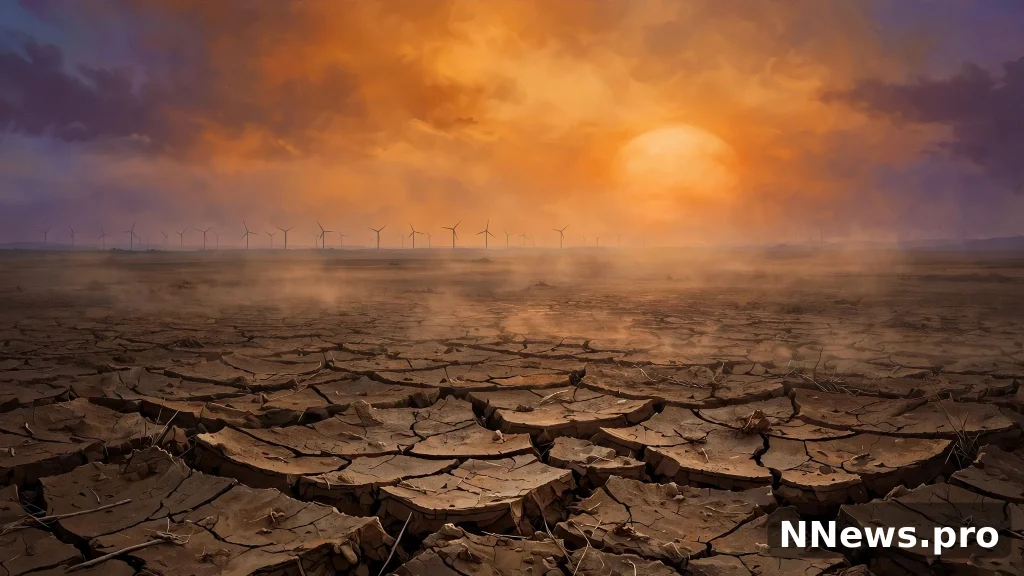
The world could cross the 1.5 degrees Celsius warming limit as soon as 2029, according to data from the European Union’s Copernicus Climate Change Service — 16 years sooner than scientists projected when the Paris Agreement was adopted in 2015. The warning, delivered as negotiators gather for the COP31 climate talks in Antalya, Turkey, underscores how quickly the window for holding warming to the pact’s most ambitious target is closing.
When the Paris Agreement was approved in December 2015, Copernicus projected that the long-term 1.5°C threshold would be reached around March 2045. Eleven years later, the service’s global temperature-trend monitor puts the crossing in early 2029. Two new reports presented at COP31 on Thursday added to the alarm: the Climate Action Tracker found the planet is still on track to warm by nearly 5 degrees Fahrenheit (about 2.8°C) by 2100, while Copernicus reported that global warming has accelerated significantly since the Paris pact was signed.
The date keeps moving closer
The 1.5°C limit is the most ambitious temperature goal of the 2015 Paris Agreement, which aims to hold global warming well below 2°C and pursue efforts to limit it to 1.5°C above pre-industrial levels. Crucially, the limit refers to a long-term average measured over about two decades — not a single hot year. That distinction matters: 2024 was already the first calendar year to average more than 1.5°C above pre-industrial levels, but scientists do not count that as breaching the Paris limit.
What has changed is the speed of the trend. Human-induced warming reached 1.37°C in 2025 and is rising by about 0.27°C per decade, according to an assessment published in June in the journal Earth System Science Data. At that pace, the 20-year average that defines the Paris threshold is on course to pass 1.5°C before the end of this decade. Copernicus, which tracks the trend using its ERA5 dataset, now projects the crossing for early 2029 — and notes that a very strong El Niño in the Pacific, which NOAA has declared, is amplifying record temperatures.
Warming is accelerating
A separate study from researchers at the Potsdam Institute for Climate Impact Research (PIK), published in the journal Geophysical Research Letters, found statistically significant evidence that the planet is heating faster than at any time since modern record-keeping began in 1880. Over the past decade, Earth warmed by about 0.35°C per decade, compared with just under 0.2°C per decade previously. The analysis drew on five global temperature datasets, including NASA, NOAA and ERA5, and confirmed that greenhouse gas emissions from human activity are the primary driver.
“Global warming has accelerated significantly since the 2015 Paris climate agreement,” Copernicus said in its bulletin this week — a finding that matches the PIK researchers’ conclusion that the acceleration is the fastest ever recorded.
Many regions are already past 1.5°C
A second study, published in the journal Nature Climate Change and reported this week by Eos, the news magazine of the American Geophysical Union, found that warming is far from evenly spread — and that many places have already blown past the global target. Using a new statistical method to fill gaps in regions without complete historical records, the researchers found that the current climate has already breached 1.5°C of warming in up to 94 percent of the world’s regions.
By 2025, the Russian Arctic had warmed by about 3.3°C, northeastern North America by 2.6°C, and western and central Europe by more than 2°C, the study found. Under a high-emissions scenario, the researchers projected that the global average would reach 1.5°C in 2029 and 2°C in 2042. The authors cautioned that their relatively small set of climate models may not capture the full range of possible responses, but said the findings make adaptation urgent.
Why this matters
Crossing 1.5°C does not mean climate disaster arrives overnight, but scientists warn the consequences build quickly beyond it. The Climate Action Tracker warned that warming of nearly 5 degrees Fahrenheit by 2100 would devastate coral reefs, disrupt agriculture and forests, and melt most of the world’s ice. Two United Nations reports published earlier this month warned that warming beyond 1.5°C could trigger irreversible damage to glaciers, sea ice and frozen landscapes, with effects lasting centuries.
Related Articles



The same UN reports outlined a grimmer scenario: if warming exceeds 2.8°C and those temperatures persist into the next century, sea levels could rise by as much as 5 centimeters per year by 2150. Returning below the threshold later would not undo the damage done during the overshoot, the reports’ authors warned.
For the United States, the stakes are concrete. Hotter summers, more intense storms, longer wildfire seasons and rising seas along American coastlines are among the risks scientists link to continued warming, and a very strong El Niño this winter is expected to push global temperatures higher still.
What is happening at COP31
The warnings landed in the middle of the COP31 climate summit in Antalya, Turkey, where negotiators are struggling to agree on the next steps. UN climate chief Simon Stiell urged delegates this week to “move swiftly to the hardest issues and to avoid tactical delays” as the talks entered their second and final week, with major fossil-fuel producers and consumers resisting firm new targets or language about moving away from oil, gas and coal.
Even the most optimistic scenario offers little comfort. Climate Action Tracker found that even if every existing policy and promise were fully implemented, the planet would still warm by 3.4 degrees Fahrenheit above pre-industrial levels by 2100 — more than double the Paris target. The summit, co-hosted by Turkey and Australia, is scheduled to close on Friday, November 20.
Latest developments
The COP31 presidency published a “summary of reflections” on the draft cover decision last Friday — a wish list on which nothing has yet been agreed — and text proposals are expected over the weekend, with a draft decision early next week. Meanwhile, global fossil-fuel emissions are projected to edge down in 2026, but total carbon dioxide output is still expected to hit a record high. With the 1.5°C crossing now projected for 2029, negotiators in Antalya have little time left to change the trajectory.
Frequently asked questions
What is the 1.5°C limit?
It is the most ambitious goal of the 2015 Paris Agreement: to keep the long-term average global temperature no more than 1.5 degrees Celsius (2.7 degrees Fahrenheit) above pre-industrial levels. It is measured as a 20-year average, so a single year above 1.5°C — as happened in 2024 — does not by itself breach the limit.
Does crossing 1.5°C in 2029 mean it is too late?
No. Scientists say every fraction of a degree of avoided warming reduces harm, and limiting warming to 2°C is still possible — but only with very rapid emissions cuts. The 2029 projection is a warning about the current trajectory, not a fixed fate.
Why has the projected date moved so much?
Because warming has accelerated. When the Paris Agreement was adopted in 2015, the trend pointed to a crossing around 2045. A decade of rising emissions and record-hot years — including the fastest warming rate since 1880 — has pulled that date forward to early 2029, according to Copernicus.
What is happening at COP31?
Negotiators from nearly 200 countries are meeting in Antalya, Turkey, through November 20 to agree on new climate targets and support for developing nations. Talks are divided over fossil fuels, electrification and finance, and no draft deal has yet been agreed.
The 1.5°C threshold was once treated as a distant guardrail. According to the latest science, it is now less than three years away — and what negotiators in Antalya decide in the coming days will help determine how far past it the world goes.
Sources: Inside Climate News (via Ars Technica); Copernicus Climate Change Service / ECMWF; Eos / American Geophysical Union; Potsdam Institute for Climate Impact Research.