US Existing-Home Sales Fall to 16-Year Low in October as Mortgage Rates Keep Buyers Sidelined
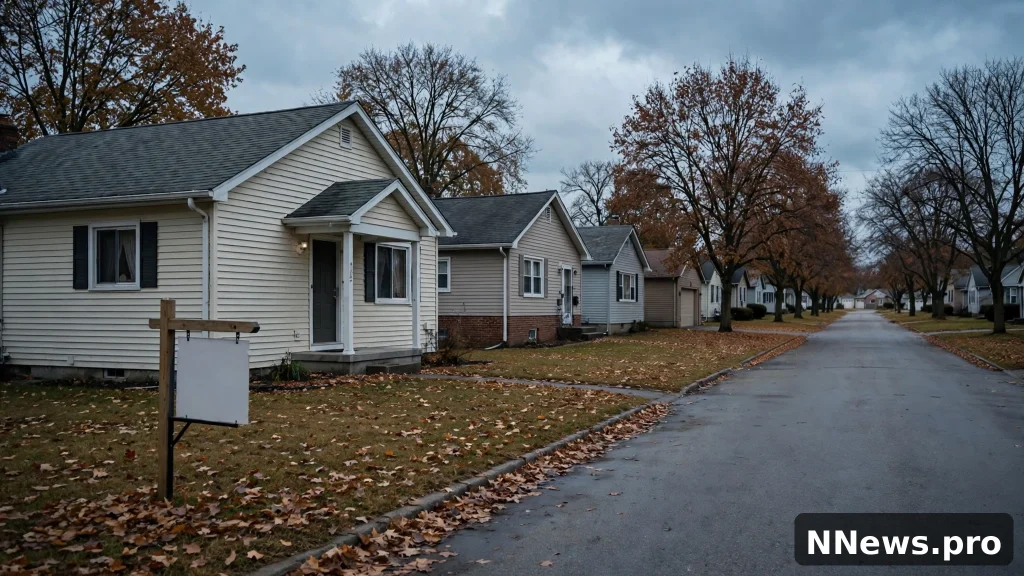
Sales of previously owned homes in the United States fell sharply in October to their lowest level in more than 16 years, as mortgage rates near their highest levels since 2000 and still-elevated prices pushed would-be buyers to the sidelines, the National Association of Realtors (NAR) reported on Thursday.
Existing-home sales dropped 5.5% last month to a seasonally adjusted annual rate of 3.75 million units, NAR said. That was the weakest pace since August 2010, when sales were still falling after the end of a federal homebuyer tax credit. Compared with a year earlier, sales were down 8.8%.
The result came in well below expectations. Economists polled by Reuters had forecast sales falling to a 3.85 million-unit annual rate. September’s pace was revised down slightly, to 3.97 million from 3.99 million originally reported.
Mortgage rates did the damage
The main culprit was the cost of borrowing. The 30-year fixed mortgage rate jumped above 7% in late August and climbed to 7.40% by mid-September, according to data from mortgage finance agency Freddie Mac — a rise of 142 basis points since late February. It averaged 7.33% across October, the highest level since 2000 apart from a single month in 2023.
“Home buying is difficult when mortgage rates have climbed to their highest levels since 2000, aside from a single month in 2023,” said Lawrence Yun, NAR’s chief economist.
Because existing-home sales are counted at closing, October’s figures largely reflect contracts signed in August and September — the two months when mortgage rates were at their worst. There is a small sign of relief: Freddie Mac’s weekly survey, released the same morning as the NAR report, showed the 30-year fixed rate averaging 7.11%, down from 7.18% the week before. That was the fourth consecutive weekly decline and the lowest level in seven weeks.
Sales fell in the South, Midwest and West in October, while the Northeast was unchanged.
Prices keep rising even as sales stall
Even with transactions at a 16-year low, prices have not fallen. The median existing-home price rose 0.4% from a year earlier to $416,700, the 40th consecutive month of year-over-year price increases. The median single-family home price was $421,900, also up 0.4% from last year.
Single-family sales fell 5.8% from September to a 3.41 million annual rate, down 8.6% from October 2025.
Inventory is slowly building. The number of existing homes for sale rose 1.3% in October to 1.59 million units, up 4.6% from a year ago. At the current sales pace, that supply would last 5.1 months — the most since November 2015, and up from 4.7 months in September and 4.4 months a year earlier.
Homes are also taking longer to sell. The median property spent 35 days on the market, up from 33 days in September and 34 days a year ago. Distressed sales, including foreclosures, were unchanged at 2% of transactions.
First-time buyers are the hardest hit
First-time buyers accounted for just 29% of sales in October, down from 31% in September and 32% a year ago. NAR says a 40% share in this category is needed for a robust housing market — a level the market has not approached in years.
Cash buyers, by contrast, are gaining ground. All-cash transactions made up 29% of sales, up from 27% in September, while individual investors or second-home buyers accounted for 20% of transactions, up from 16% a year ago. In a market where borrowing is expensive, buyers who do not need a mortgage have a clear advantage.
Why this matters
The housing market is one of the most interest-rate-sensitive parts of the American economy, and October’s report shows just how frozen it has become. Sales are at a level not seen since the aftermath of the financial crisis, yet prices keep edging higher because owners locked into cheap pandemic-era mortgages are reluctant to sell — and the limited supply that does reach the market still finds buyers, often paying cash.
For ordinary households, the combination is punishing: a median-priced home now costs far more per month than it did two years ago, even though the sticker price has barely moved. For the broader economy, weak home sales ripple outward — fewer moves mean less spending on furniture, appliances, renovations and moving services.
Related Articles



The report also feeds directly into the Federal Reserve’s dilemma. Hot October inflation data has already pushed traders to price in a possible December rate hike, which would keep mortgage rates elevated. At the same time, a housing market this weak is exactly the kind of slowdown that argues against tighter policy.
Latest developments
The next clues arrive quickly. October pending home sales — a forward-looking measure based on contracts signed rather than closings — are due on Wednesday, November 18, and will show whether the recent dip in mortgage rates is starting to bring buyers back. October producer price inflation data is due Friday morning, November 13, and the Federal Reserve’s next policy meeting is scheduled for December 8–9.
If mortgage rates keep drifting down from their September peak, November sales could stabilize. But with rates still above 7% and prices at record October levels, a quick recovery looks unlikely.
Frequently asked questions
What are existing-home sales?
Existing-home sales measure completed transactions for previously owned single-family homes, townhomes, condominiums and co-ops, based on closings recorded through multiple listing services. They are reported as a seasonally adjusted annual rate — the pace sales would reach over a full year if October’s rate continued — not the number of homes sold in the month itself.
Why did US home sales fall to a 16-year low?
Mortgage rates are the main reason. The 30-year fixed rate averaged 7.33% in October and peaked near 7.40% in mid-September, its highest since 2000 apart from one month in 2023. Combined with a median price of $416,700, monthly payments have become unaffordable for many buyers, especially first-time purchasers.
How low are US existing-home sales now?
Sales ran at a 3.75 million annual rate in October 2026, down 5.5% from September and 8.8% from a year earlier — the lowest since August 2010.
Are home prices falling?
No. The median existing-home price rose 0.4% from a year ago to $416,700, the 40th straight month of year-over-year gains. Low inventory and owners reluctant to give up cheap pandemic-era mortgages are keeping prices up even as sales volumes collapse.
Sales of existing homes have now fallen to a level the United States has not seen since the aftermath of the financial crisis — and until mortgage rates come down meaningfully, or prices adjust, the market is likely to stay frozen.
Sources
- National Association of Realtors, Existing-Home Sales report, November 12, 2026 (via GlobeNewswire): https://www.globenewswire.com/news-release/2026/11/12/3401799/0/en/existing-home-sales-decreased-5-5-in-october-according-to-nar-report.html
- Reuters, “US existing home sales slump to more than 16-year low in October” (via BusinessDay): https://www.businessday.co.za/world/americas/2026-11-12-us-home-sales-hit-the-lowest-in-16-years/
- dpa-AFX, “U.S. Existing Home Sales Plunge To Sixteen-Year Low In October” (via TradingView): https://www.tradingview.com/news/dpa_afx:375b850e57c8c:0-u-s-existing-home-sales-plunge-to-sixteen-year-low-in-october/
- WAMC/NPR, “‘Punch in the gut’: Homes sales fall to their lowest in 16 years”: https://www.wamc.org/2026-11-12/punch-in-the-gut-homes-sales-fall-to-their-lowest-in-16-years