Dollar Hits 19-Month High as Fed December Rate Hike Bets Surge After Hot Inflation
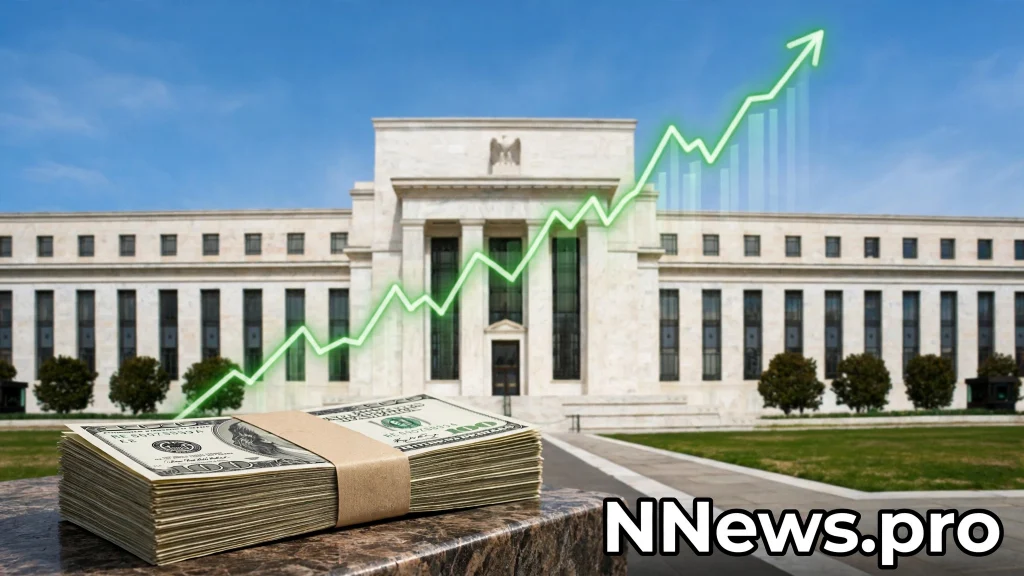
The US dollar climbed to its strongest level in 19 months on Thursday as traders ramped up bets that the Federal Reserve will raise interest rates in December, after hotter-than-expected October inflation and a series of hawkish signals from central bank officials.
The dollar index, which measures the greenback against a basket of six major currencies, rose to 103.02 in Asian trading, its highest since April 2025, according to Reuters. The index briefly touched an intraday high of 103.08, extending a rally that began after Tuesday’s inflation report.
Hot inflation changed the rate outlook
The rally was set off by data released on Tuesday showing that US consumer prices rose 0.4% in October, above the 0.3% economists had forecast. Core inflation, which strips out food and energy, rose 0.3%, also beating the 0.2% forecast. It was the third consecutive month in which inflation came in hotter than expected.
The figures turned the market’s rate expectations upside down. Only weeks ago, traders were debating when the Fed might cut rates. Now they are pricing in a December increase, with some betting the move could be larger than the usual quarter point.
Waller’s warning moved markets
Federal Reserve Governor Christopher Waller gave the rally its sharpest push. Speaking at a conference in London, Waller said he would support a 25-basis-point increase at the Fed’s December 9 meeting, but added that a 50-basis-point move should be considered if core inflation came in at 0.3% or higher in October. It did exactly that.
The two-year Treasury yield, which closely tracks rate expectations, jumped nearly 19 basis points on Tuesday to 4.73%, its biggest one-day move since April 2025.
According to the CME FedWatch Tool, traders now put the probability of a 25-basis-point December hike at around 87% to 91%, with the rest assigned to a larger 50-basis-point move. Dallas Fed President Lorie Logan has also discussed two more quarter-point hikes, in December and January.
Banks now expect more than one hike
Some of Wall Street’s biggest banks have rewritten their forecasts. Goldman Sachs now expects the Fed to raise rates in December and again early next year, while Deutsche Bank anticipates hikes in December, January, and March.
New York Fed President John Williams is due to appear on a panel late Thursday, and traders will be watching closely for any sign that he shares his colleagues’ hawkish turn.
Related Articles

Why this matters
A stronger dollar and higher US rates ripple far beyond currency markets. They raise borrowing costs for American households and businesses, make US exports more expensive, and squeeze countries and companies that borrow in dollars.
The yen has been among the hardest hit, sliding toward the key 160-per-dollar level. Many analysts in a Reuters poll expect the Bank of Japan to raise its own rates as soon as next month in response.
Bitcoin has also felt the pressure from the stronger dollar and rising yields, slipping below $74,000 on Thursday as US spot Bitcoin ETFs logged a fifth straight day of outflows.
For American consumers, the immediate effect is mixed: a strong dollar makes imports and overseas travel cheaper, but the higher interest rates behind it push up the cost of mortgages, car loans, and credit cards.
What to watch next
The Fed’s December 9 meeting is now the key date. Between now and then, traders will parse every speech from Fed officials and every piece of economic data for clues about the size of the move.
The November inflation report, due in December, could prove decisive. Another hot reading would strengthen the case for the larger half-point increase that Waller put on the table. A cooler one could let the Fed move more gradually.
Frequently Asked Questions
Why is the dollar at a 19-month high?
The dollar index rose to around 103.02 on Thursday, its highest since April 2025, after October inflation came in hotter than expected and Fed officials signaled they are ready to raise rates in December.
How likely is a Fed rate hike in December?
Traders now fully price in a December hike. The CME FedWatch Tool puts the chance of a 25-basis-point increase at roughly 87% to 91%, with the remainder assigned to a 50-basis-point move.
What did Fed Governor Christopher Waller say?
Waller said he supports a 25-basis-point hike in December, but that a 50-basis-point increase should be considered if core inflation rose 0.3% or more in October. Core CPI did rise 0.3%.
How does a strong dollar affect ordinary Americans?
It makes imports and foreign travel cheaper, but the higher interest rates driving it push up borrowing costs on mortgages, auto loans, and credit cards.
Sources: Reuters (via Devdiscourse); Morningstar / Dow Jones; FXStreet; TradingKey.