Leaked Russian Data Show 11,335 Foreigners Died Fighting for Moscow in Ukraine, Bloomberg Reports
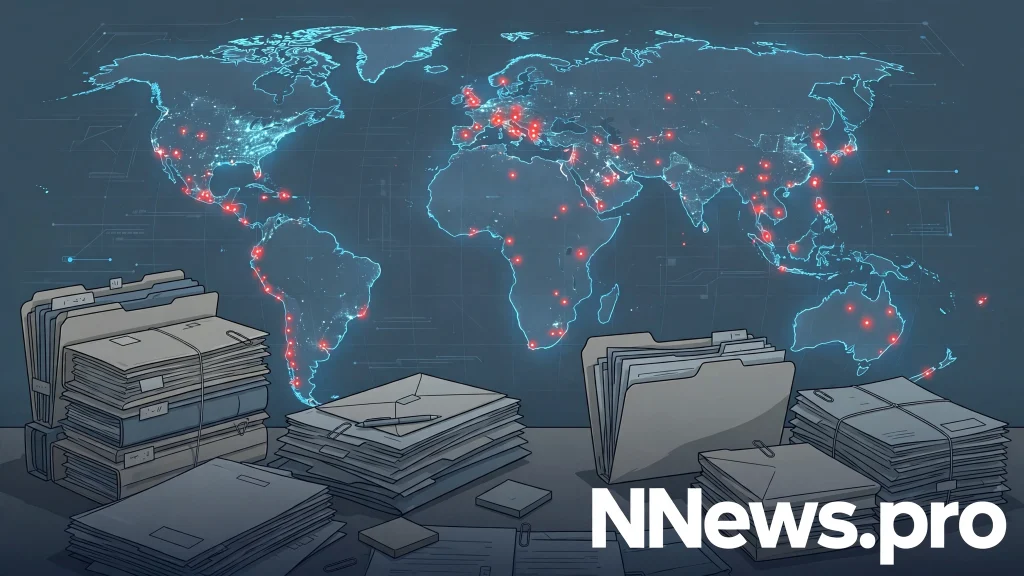
Russian authorities have registered the deaths of more than 11,000 foreign nationals who died in the war in Ukraine, according to confidential statistics from Russia’s state statistics agency, Rosstat, reviewed by Bloomberg. The records, obtained by hackers and shared with the news agency, offer the first detailed look at how heavily Moscow has relied on recruits from nearly 100 countries to sustain its war effort.
The data show 11,335 deaths of people born outside Russia or holding foreign citizenship between February 24, 2022 — the start of Russia’s full-scale invasion — and late August 2026. The deaths were explicitly linked to the war through official classification codes or wording in the records referring to a “military operation,” shelling, or drones.
What the leaked records show
Bloomberg examined a cache of more than 11 million death certificates obtained by the Belarusian opposition hacking group Cyber Partisans and the Ukrainian group Silent Crow, who said on November 1 they had breached Rosstat’s systems and extracted some 23 terabytes of data.
The foreign death toll rose sharply as the war dragged on. The records show about 630 foreign war-related deaths in 2022, rising to more than 5,500 in 2025 — an increase of more than eightfold that roughly tracked the growth of Russia’s overall war dead.
The same leaked database underpins an earlier Bloomberg finding that Russia has registered about 400,000 war-related deaths in total since the invasion. The hackers themselves put the figure at more than 390,000 Russians killed as of late August.
Nearly a quarter of the foreign dead — about 3,700 people — were Ukrainian citizens or were born in Ukraine after it gained independence in 1991. Among the records that included an address, most of those people lived in Russian-occupied areas of eastern and southern Ukraine.
About 80 percent of the remaining foreign dead were born in other former Soviet states. Just over 6,000 of the foreign-born dead held Russian citizenship at the time they died, having been naturalized before their deaths.
Recruitment waves across Asia, Africa and Latin America
The records suggest Russia’s recruitment moved in waves: Nepali citizens in 2023 and 2024, Sri Lankan and Chinese citizens in 2024 and 2025, and Colombian, Kenyan and Nigerian citizens from late 2025 onward.
Roughly 340 of the dead came from Africa, mostly from 2025 onward, with the largest contingents from Egypt, Cameroon, Nigeria, Kenya and Ghana. The Kremlin has denied using deceptive methods to recruit abroad, but several countries — including Kyrgyzstan, Kazakhstan, Kenya and Ghana — have raised concerns after their citizens died on the front lines, in some cases after being lured to Russia with promises of citizenship, money or jobs.
Peru’s foreign minister, Carlos Espa, traveled to Moscow last week seeking answers about at least 430 Peruvians recruited into Russian forces — 25 have died and more than 180 are missing, according to Peru’s government — and asked Moscow to help repatriate the dead.
Almost every foreign military death in the records — 99 percent — was a man. Of the 159 women who died, 154 were from occupied areas of Ukraine.
Notably, no North Korean fatalities appear in the dataset as war-related, even though North Korea has deployed thousands of troops to help Russia. That suggests Russia did not issue death certificates for North Korean deaths, possibly because they served in foreign units rather than as individuals who joined the Russian forces.
The data come with important caveats
The figures should be treated as a window into the war’s toll, not a final count. Rosstat said it detected targeted cyberattacks on its systems between October 29 and November 1, but said it found no evidence that its databases were compromised or that confidential information leaked. The agency did not respond to Bloomberg’s request for comment on the contents of the documents.
Meduza and Mediazona, an independent Russian news organization, said they gained access to the hackers’ data and are still verifying it, including trying to rule out deliberate tampering. They cautioned that medical certificates do not always list the true cause of death, and that the data exclude people reported missing, who are declared dead only after a long delay.
The hacked data were also incomplete and inconsistent in places, especially for 2026, because it sometimes takes months or even years to register a death in combat. Some people will have been reported missing, some bodies unidentified, and others may have died months later from war-related injuries not explicitly set out in the records. For those reasons, the dataset almost certainly understates the true number of foreign fighters killed.
Related Articles


Why this matters
Moscow does not release data on how many foreign nationals it has recruited, and President Vladimir Putin has avoided acknowledging the scale of fatalities from the war. The leaked records show how the Kremlin sustained its war effort as its own losses mounted: as more Russians died, Moscow drew more heavily on foreign recruits.
Ukrainian officials estimate Russia has recruited between 28,000 and 46,000 foreign fighters from at least 59 countries. Dmytro Usov of Ukraine’s prisoner-of-war coordination headquarters said Russia had recruited about 46,000 foreign nationals as of October and planned to recruit 18,500 more this year. Ukraine says it has captured enemy combatants from 59 countries.
The disclosures come as Ukraine’s forces face new strains, including limits on the Starshield satellite system used to help guide drone interceptors, and as diplomacy continues: U.S. envoys Steve Witkoff and Jared Kushner met President Vladimir Putin in Moscow on Thursday after two days of talks in Abu Dhabi between Russian, Ukrainian and American delegations.
Latest developments
The Abu Dhabi talks, the first direct U.S.-mediated negotiations between Russian and Ukrainian delegations in nine months, ended Wednesday with an agreement in principle on a large-scale prisoner exchange but no breakthrough on ending the war. The final number of people involved and the timing still need to be settled. The Moscow meeting produced no announced compromise, with the Kremlin describing the discussions as useful while significant disagreements remain, particularly over territory. The envoys were due to travel on to Dublin to brief Ukrainian President Volodymyr Zelenskyy.
Frequently asked questions
How many foreigners have died fighting for Russia in Ukraine?
According to confidential Rosstat records reviewed by Bloomberg, 11,335 foreign nationals — people born outside Russia or holding foreign citizenship — died in war-linked circumstances between February 24, 2022 and late August 2026. The figures are based on leaked death certificates and are likely an undercount.
Which countries did the foreign fighters come from?
The dead came from nearly 100 countries. About 3,700 were Ukrainian citizens or born in post-independence Ukraine, and about 80 percent of the rest were born in former Soviet states. Recruitment waves also drew on Nepal, Sri Lanka, China, Colombia, Kenya and Nigeria.
How did Bloomberg obtain the data?
The records came from a cache of more than 11 million death certificates obtained by the Belarusian hacking group Cyber Partisans and the Ukrainian group Silent Crow, who said they breached Rosstat’s systems. Bloomberg and a small group of other outlets received the material. Rosstat says it found no evidence of a leak.
Is the death toll verified?
Not fully. Meduza and Mediazona are still verifying the data and ruling out tampering, and Rosstat denies a leak. The dataset is incomplete for 2026 and excludes missing soldiers and North Korean troops, so the true toll is believed to be higher.
The leaked records do not end the debate over the war’s human cost, but they provide the most detailed evidence yet of its international reach — a war fought not only by Russians, but by recruits from nearly 100 countries, many of whom died far from home.
Sources
- Bloomberg, “Over 11,000 foreign military deaths recorded by Russia in war on Ukraine,” reported November 11, 2026 — https://www.europesays.com/russia/88418/
- Meduza, “At least 11,000 foreign-born fighters have died fighting for Russia in Ukraine, leaked government data shows, Bloomberg reports,” November 12, 2026 — https://nsaqxpzbzfqqdedt.gjr7l8elrntr.lat/en/news/2026/11/12/at-least-11-000-foreign-born-fighters-have-died-fighting-for-russia-in-ukraine-leaked-government-data-shows-bloomberg-reports
- Ukrainian outlet report on Bloomberg’s findings, November 11, 2026 — https://newkurs.llell.dev.mezhbank.kiev.ua/en/novost/1488029-bloomberg-rozkriv-masshtab-zagibeli-inozemnih-biiciv-u-rosiiskii-armiyi