Judge Lets Trump’s $10 Billion BBC Defamation Lawsuit Move Forward
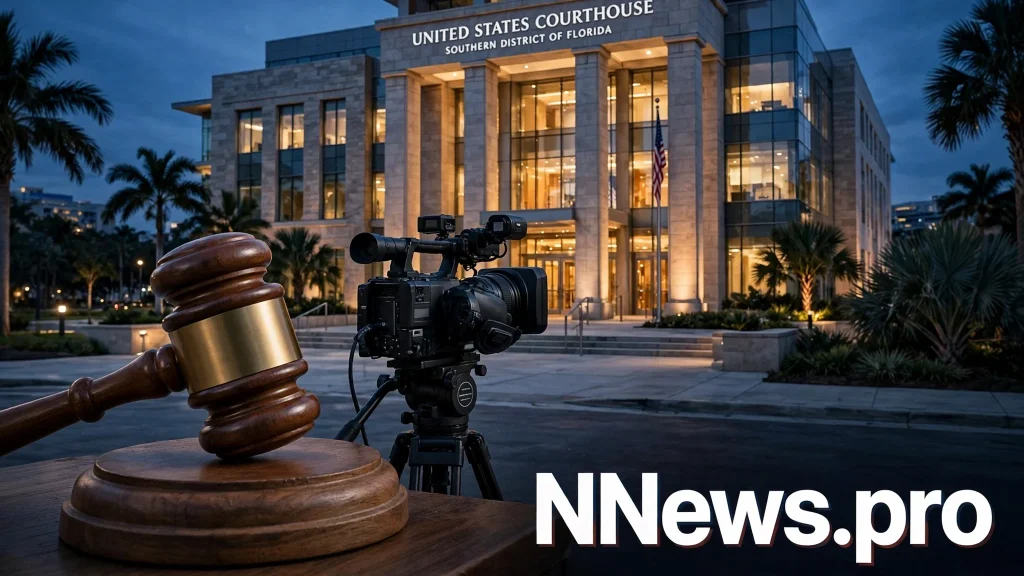
A federal judge in Florida has allowed President Donald Trump’s $10 billion defamation lawsuit against the BBC to move forward, rejecting the broadcaster’s bid to have the case thrown out. The ruling, issued on Tuesday, November 10, means the dispute over a misleadingly edited BBC documentary about Trump’s January 6, 2021 speech will now head toward discovery and a possible trial.
US District Judge Jeffrey T. Kuntz, sitting in the Southern District of Florida, held that Trump’s defamation claim was plausibly pleaded and that the Florida court has personal jurisdiction over the British broadcaster. At the same time, the judge dismissed a second claim brought under Florida’s consumer protection law and ordered the BBC to file its formal answer to the surviving defamation count by December 1, 2026.
The decision does not settle whether the BBC actually defamed the president. In the judge’s own words, quoted in the 40-page order, “whether President Trump can prove these claims and establish he sustained damages at summary judgement or trial is left for another day.”
What the Judge Decided
The case, President Donald J. Trump v. British Broadcasting Corp., No. 1:25-cv-25894, came before the court on the BBC’s motion to dismiss the First Amended Complaint, filed on August 24, 2026. The BBC argued both that the Florida court lacked jurisdiction over it and that the complaint failed to state a valid defamation claim.
Judge Kuntz rejected both arguments in part. Count I, defamation per se, survives: the motion to dismiss was denied and the claim proceeds. Count II, brought under the Florida Deceptive and Unfair Trade Practices Act, was dismissed after the court held that the documentary was not commercial speech. The BBC must answer the remaining defamation count by December 1, admitting or denying each allegation and setting out its defences. At this early stage, a judge accepts the complaint’s allegations as true and asks only whether they add up to a plausible claim; proof comes later, at summary judgment or trial.
The 12-Second Edit at the Center of the Case
The dispute concerns a 12-second segment in “Trump: A Second Chance,” a BBC Panorama documentary broadcast on October 28, 2024, one week before the presidential election. According to the court order, the segment joined two separate parts of Trump’s speech on January 6, 2021: “we’re going to walk down to the Capitol and I’ll be there with you” was spliced together with “we fight like hell,” words the complaint says were spoken nearly 55 minutes apart. The effect, Trump alleges, was to make it appear that he directly urged supporters to attack the US Capitol.
Judge Kuntz was blunt about the edit. Splicing together remarks made almost an hour apart, he wrote, was “not trimming around the edges.” He also rejected the BBC’s argument that the segment was protected opinion: a spliced sentence that Trump never spoke is a false statement of fact. The BBC’s chairman later wrote to Trump that the edit “gave the mistaken impression that you had made a direct call for violent action,” calling it “an editorial error.” The BBC published a retraction and apology in November 2025 but denies the incident amounts to legally actionable defamation.
The Actual Malice Question
Because Trump is a public figure, he must eventually prove “actual malice” — that the BBC knew the segment was false or recklessly disregarded whether it was true, the standard set by the Supreme Court in New York Times Co. v. Sullivan. The order noted that the judge questioned whether Sullivan fits the original meaning of the Constitution, but accepted that it “remains good law.”
At the pleading stage, the court found the complaint cleared the bar. The gap of nearly an hour between the two passages “tends toward a plausible inference” that the BBC knew the segment could not be truthful, the judge wrote, particularly since the broadcaster had the full speech for nearly three years. The court also treated the BBC’s apology — issued more than a year after the broadcast, and only after a legal threat — as weak evidence of good faith. The BBC won one point: the judge agreed that a failure to contact Trump for comment does not, on its own, show actual malice.
On damages, the court noted that Florida does not presume damages in defamation cases against media defendants, so Trump had to allege actual harm. The judge held that an allegation that a defamatory documentary released before an election caused reputational harm was enough at this stage.
Why a Florida Court Can Hear a Case Against the BBC
Jurisdiction was the BBC’s lead argument. Its motion described a documentary produced in London that the BBC did not air in the United States and that it took significant steps to keep American viewers from watching. The BBC said 34 attempted plays from Florida came from 10 users getting around its geoblocking by using a VPN.
Judge Kuntz held that the BBC is not “at home” in Florida, so there is no general jurisdiction. But specific jurisdiction rested on the statute’s “tortious act” provision, because allegedly defamatory material about a Florida resident that is accessible in Florida is treated as published there.
Applying the Calder “effects test,” the court found the BBC had aimed the programme at a US audience. It cited a BBC document saying the programme needed to air before the US election, and the complaint’s allegations that the BBC sent viewing links and instructions to Americans, including Florida resident Rick Wilson, and filmed in Florida. Geoblocking alone, the ruling signals, did not defeat jurisdiction once targeting was alleged.
The judge also drew a sharp distinction with Trump’s earlier defamation claims against CNN and Dow Jones. “Those cases involved a news entity reporting on a story. Here, the news entity created the story,” he wrote. The ruling comes about ten days after a different judge in the same court threw out the president’s defamation case against the Wall Street Journal.
Related Articles
How the Case Got Here
Trump’s lawyers first wrote to the BBC on November 9, 2025, threatening a $1 billion suit. The BBC published its retraction and apology on November 13, 2025, while disputing that any viable claim existed. Trump filed his complaint on December 15, 2025, seeking $5 billion on each of two counts.
In August 2026, the case was reassigned from Judge Roy Altman to Judge Kuntz, and the First Amended Complaint raised the demand to $10 billion on each count in the alternative. The BBC filed its motion to dismiss on August 24. On October 27, Magistrate Judge Enjolique A. Lett ordered Trump to sit for a deposition by December 11, 2026, warning of sanctions including dismissal of the lawsuit. In objections filed on November 10, Trump’s lawyers said he has never disputed that he must testify and offered a window of January 11 to 22, 2027, while asking to extend the discovery, pretrial and trial deadlines.
BBC News reported in August that a trial was scheduled for February 2027 and that Trump had requested a jury. Whether that date holds now depends on the extension Trump’s lawyers have foreshadowed. Judge Kuntz is a former Florida appeals judge nominated by Trump and confirmed by the Senate by 51 votes to 46.
Why This Matters
The ruling matters well beyond the parties. For media lawyers, it is a significant data point on two fronts: how far a US court will go in holding a foreign broadcaster accountable for content aimed at an American audience, and how the courts treat the editing of a public figure’s words. The order’s reasoning on jurisdiction — that geoblocking does not shield a publisher that also steered American viewers toward the programme — will be read closely by every publisher whose content can be reached from the United States.
For Trump, the decision is a procedural win in a broader legal campaign against news organisations he accuses of unfair coverage. He celebrated the ruling on Truth Social on Tuesday, writing: “A Huge Victory against Fake News BBC, a terrible abuser of the truth, just handed down by highly respected District Court Judge, Jeffrey T. Kuntz, of the Southern District of Florida.” The BBC said through a spokesperson: “We are surprised by this decision but respect the Court’s authority and note the case will now proceed to the next stage,” adding that the broadcaster remains confident in its position.
The case also lands in a crowded period for the president. The Senate has just passed a deal to end the longest government shutdown in US history, with a House vote expected on Wednesday evening, and Trump has questioned the honesty of the 2026 midterm elections while declaring the war with Iran effectively over after talks in Qatar. The BBC case is a reminder that his confrontations with the press are playing out in courtrooms as well as on social media.
What Happens Next
The next steps are procedural, and some are already contested. First, the BBC must answer the defamation count by December 1, admitting or denying each allegation and pleading its defences. Second, the deposition fight continues: Trump’s lawyers have objected to the December 11 deadline and proposed January dates instead, while asking to push back the discovery, pretrial and trial schedule.
An appeal of Tuesday’s ruling is unlikely in the short term. A denial of a motion to dismiss is not usually appealable straight away; the district judge would have to certify a controlling question of law, and the order as entered contains no such certification. The case will then move toward summary judgment and, if it gets there, trial, where actual malice and damages must be proved on evidence. The February 2027 trial date may slip if the court grants the extension Trump’s lawyers have signalled they will seek.
Frequently Asked Questions
Did the judge rule that the BBC defamed Donald Trump?
No. Judge Kuntz decided only that Trump’s defamation claim was plausibly pleaded, accepting the complaint’s allegations as true for now. Whether Trump can prove actual malice and damages is left for summary judgment or trial.
Why can Trump sue the BBC in a Florida court?
The court found specific jurisdiction under Florida’s long-arm statute because allegedly defamatory material about a Florida resident was accessible in Florida, and held that the BBC aimed the programme at a US audience, including by sending viewing links to Americans. It rejected general jurisdiction over the BBC.
When is the Trump BBC case going to trial?
BBC News reported in August that a trial was scheduled for February 2027. On November 10, Trump’s lawyers said they will ask the court to extend the discovery, pretrial and trial dates, so that schedule may change.
What happened to Trump’s second claim against the BBC?
The judge dismissed the claim under Florida’s Deceptive and Unfair Trade Practices Act, holding that the documentary was not commercial speech. The case now continues on the defamation claim alone.
The BBC now has until December 1 to answer the defamation claim, and the case moves into discovery — the phase where both sides must produce evidence to support what they have alleged. The ruling keeps alive one of the largest defamation claims ever brought against a news organisation, but it settles nothing about who is right. That question, as the judge made clear, is left for another day.
Sources: CourtListener (Order, ECF No. 209, S.D. Fla. No. 1:25-cv-25894, 10 Nov 2026); BBC News (11 Nov 2026); TheWrap (11 Nov 2026); Corp-Intl (11 Nov 2026); The Guardian.