Storm Charles Shuts Down Portugal as 8,000 Schools Close and Hundreds of Flights Are Cancelled
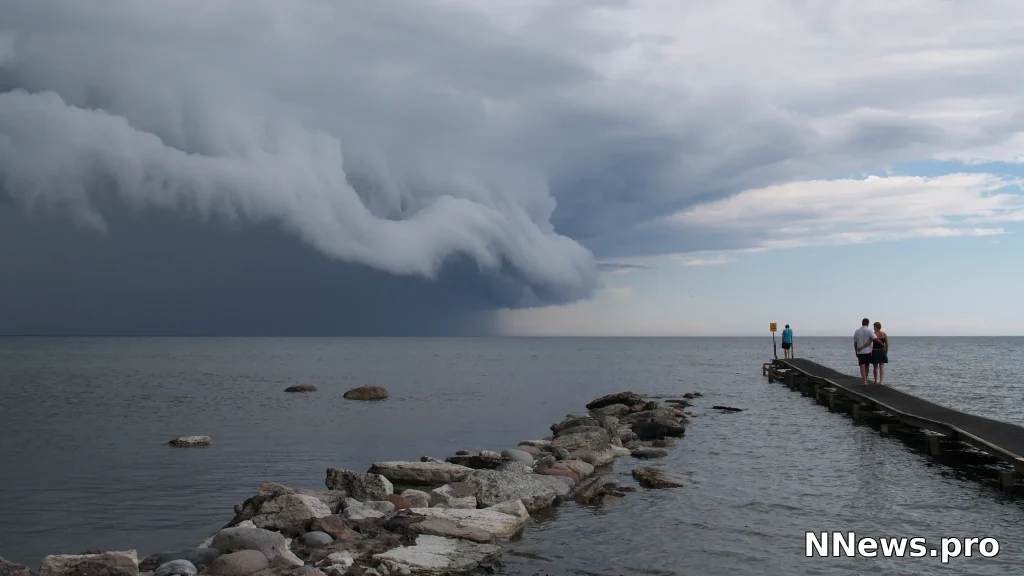
Storm Charles shut down almost entirely on Wednesday as Storm Charles swept in from the Atlantic, closing roughly 8,000 schools, cancelling about 400 flights and emptying the streets of Lisbon in what officials described as the first nationwide school closure over a storm forecast in living memory.
The storm, the third named storm of the 2026–27 season in southwestern Europe, struck the island of Madeira on Tuesday night before reaching mainland Portugal and southwestern Spain on Wednesday. By Thursday its rain had moved east, bringing flooding to southern France and putting Italy under its highest weather alert.
A country on pause
Portugal’s government declared a nationwide alert for the mainland on Wednesday, November 11, closing all public and private schools and non-essential public services and urging people to stay home and work remotely where possible. The Associated Press reported that about 8,000 schools cancelled classes — a first in living memory for a storm forecast.
The national weather service, IPMA, placed much of the mainland under red warnings, its highest level, for wind and rain. Forecasters had warned of gusts of up to 140 km/h (87 mph) along the Atlantic coast, and the storm was expected to hit hardest on Wednesday afternoon and evening.
Streets in Lisbon were largely deserted. Buses ran without passengers, some streets flooded because of clogged drains, and a national supermarket chain closed its stores. The Web Summit, one of the world’s largest technology conferences, called off its Wednesday programme in Lisbon. The event draws around 70,000 attendees.
Air travel was heavily disrupted. Reuters reported more than 200 cancellations on Wednesday morning, the AP more than 300 by the afternoon, and airport operator ANA said the total reached about 400 by Wednesday evening across Lisbon, Porto, Faro and Madeira. Lisbon alone accounted for 183 cancellations, roughly a third of its normal daily traffic.
Madeira took the first blow
Madeira, the Portuguese island in the Atlantic off northwest Africa, faced the storm’s worst conditions on Tuesday night. A red warning covered the island from 9 p.m. Tuesday to 6 a.m. Wednesday, with gusts of up to 137 km/h (85 mph) in the highlands and more than 240 mm (9.4 inches) of rain in six hours on high ground.
The island’s civil protection service counted 328 incidents by Wednesday evening, including 88 landslides and 50 fallen trees. In Funchal, the São Roque stream overflowed and swept away a man in his late 70s, who was found alive and rescued, according to Reuters and Portuguese media. Funchal’s marina suffered what officials called significant damage.
Weaker than feared — but still disruptive
On the mainland, the storm proved less severe than forecast. Early on Wednesday, IPMA said the system had split into two low-pressure centres and was passing farther south than expected, and it downgraded several districts from red to orange warnings. The strongest gust recorded on the mainland was 123 km/h (76 mph) at Fóia in the Algarve hills, while Lisbon saw gusts of 75 to 80 km/h.
Even so, the rain caused real damage. About 80 mm (3.1 inches) of rain fell around Lisbon in six hours. Cars were partly submerged near Lisbon’s Oriente station, streets flooded in Alverca north of the city, and several roads were cut. Portugal’s civil protection agency, ANEPC, logged 1,630 incidents from midnight to Wednesday evening, including 881 floods. About 2,000 customers lost power on Wednesday morning, though most were reconnected by the evening.
No deaths had been reported in Portugal or Spain as of Thursday, November 12.
Spain, the Canary Islands and France
In Spain, the storm’s arrival coincided with a general strike on Wednesday, complicating the picture. The state weather agency AEMET issued red rainfall warnings for parts of Cáceres and Ávila, with up to 120 mm of rain forecast within 12 hours. Extremadura suspended classes across the region, and more than 3,000 residents of Piedralaves remained out of their homes on Wednesday after being evacuated over fears that a nearby dam could overflow. More than 300 flights were cancelled across Spanish airports that day from the storm and the strike combined.
The Canary Islands recorded the storm’s highest wind speeds. AEMET measured gusts of 148 km/h (92 mph) at Izaña on Tenerife, and the Tenerife island government reported a gust of 180 km/h (112 mph) on Mount Teide, though that reading did not come from an official weather station. No injuries were reported in the islands, and schools reopened on Thursday.
Related Articles



By Thursday, the remains of Charles had moved east across the Mediterranean. Forecasters reported flooding in Cannes and rockfalls and road closures along the French Riviera, while Italy issued a red rainfall warning — its highest — for an area from Tuscany to Venice. A further 100 mm of rain was possible in Italy and the Balkans, with close to 200 mm in the mountains.
Why this matters
The shutdown has already prompted debate in Portugal. Prime Minister Luís Montenegro said Charles “did not have the impact on the mainland that the forecasts expected,” but defended the response, saying it was “better to prevent than to remedy.” Interior Minister Luís Neves said the government “made decisions very carefully” and “prevented what could have been terrible.”
The caution reflects recent history. Earlier this year, Portugal’s government faced harsh criticism for its slow response when Storm Kristin hit central Portugal, felling thousands of trees and causing widespread property damage that is still being repaired. IPMA’s head of forecasting, Jorge Ponte, said the measures were appropriate given the data available on Tuesday morning.
For travellers, the disruption was concentrated on Wednesday, November 11, but flood and rockfall risks in southern France and northern Italy were expected to continue into Friday, with mountain roads and coastal routes most likely to close.
Frequently asked questions
How many schools closed in Portugal because of Storm Charles?
About 8,000 schools cancelled classes nationwide on Wednesday, November 11, along with non-essential public services. The Associated Press described it as the first time in living memory that Portugal had closed its schools nationwide over a storm forecast.
How many flights were cancelled?
About 400 flights in and out of Portugal were cancelled by Wednesday evening, according to airport operator ANA, with Lisbon accounting for most of them. More than 300 flights were also cancelled across Spain, though that figure includes disruption from a general strike on the same day.
Was anyone killed by Storm Charles?
No deaths had been reported in Portugal or Spain as of Thursday, November 12. A man swept away by a flooded stream in Funchal, Madeira, was found alive and rescued.
Where is Storm Charles headed next?
The storm’s remains moved east across the Mediterranean, bringing flooding to Cannes and the French Riviera on Thursday, with Italy under a red rainfall warning from Tuscany to Venice and further heavy rain expected through Friday.
Storm Charles showed how quickly a single Atlantic system can paralyse a country — and how a government burned by a slow response earlier this year chose to shut everything down first and face questions about overreaction later. As the rain moves toward Italy and the Balkans, the test now shifts to the authorities there.
Related coverage: Delhi Overtakes Lahore as World’s Most Polluted City as Air Quality Turns Severe and NWS Confirms Tornado Touched Down in Wilmington, Delaware, in Rare November Storm
Sources
- Associated Press, “Portugal closes all schools and non-essential services ahead of a major Atlantic storm” (Nov 11, 2026): https://www.reflector.com/news/national/portugal-closes-all-schools-and-non-essential-services-ahead-of-a-major-atlantic-storm/article_27a942fd-d404-5b56-9663-d7085f7b5b3a.html
- Orbis Weather, “Storm Charles Floods Europe, Cancels Hundreds of Flights” (Nov 13, 2026): https://www.orbisweather.com/storm-charles-causes-floods-and-flight-cancellations-across-southern-europe/
- Al Jazeera / Associated Press, “Portugal cancels more than 300 flights, shuts schools due to Storm Charles” (Nov 11, 2026)
- Reuters via WHTC, “Portugal cancels 200-plus flights, shuts schools as Storm Charles hits” (Nov 11, 2026)