Rocket Lab Flies Its 100th Electron Rocket, Fastest Commercial Rocket to Reach the Milestone
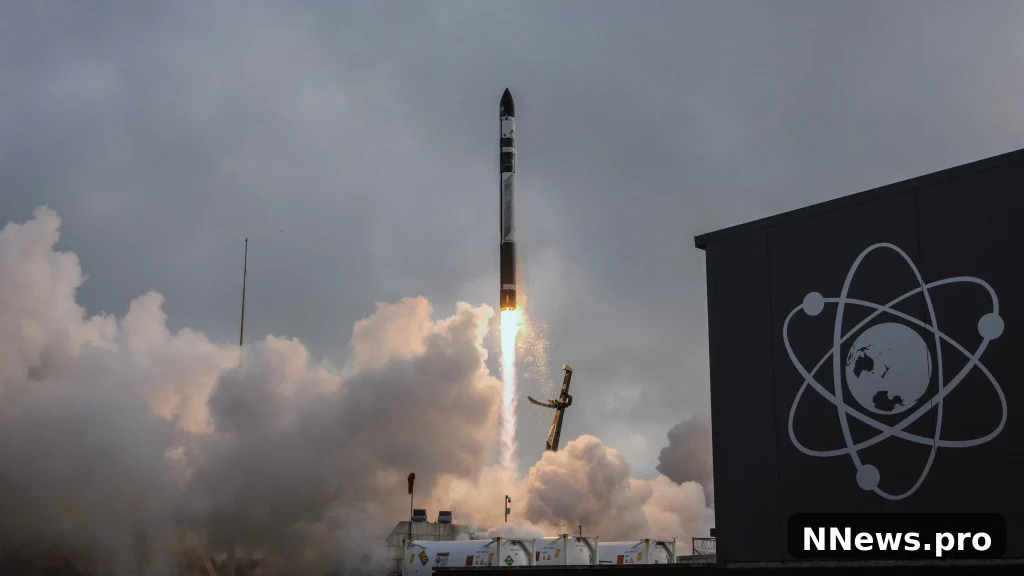
Rocket Lab’s Electron rocket completed its 100th flight on Saturday, November 14, 2026, carrying a Japanese radar-imaging satellite into orbit and reaching a milestone no commercially developed rocket has hit so quickly. The mission, named “The Mountain God Rises,” lifted off from Launch Complex 1 on New Zealand’s Mahia Peninsula at 6:30 p.m. local time and deployed the YAMATSUMI-II satellite into a 575-kilometer low Earth orbit.
The flight puts Electron in rare company. Only a handful of rockets in history have flown 100 times, and Rocket Lab says Electron got there faster than any other commercially developed rocket — in under a decade since its debut in May 2017.
A record flight for a small rocket
Electron is a small-lift rocket, standing 59 feet (18 meters) tall and able to carry about 661 pounds (300 kilograms) to low Earth orbit. It is built for dedicated launches of small satellites, a market that barely existed when the rocket first flew.
The 100th mission carried YAMATSUMI-II, also known as QPS-SAR-19, a synthetic aperture radar satellite for the Institute for Q-shu Pioneers of Space, or iQPS, a Japanese satellite operator. The spacecraft was inserted into orbit by Electron’s kick stage about 50 minutes after liftoff, and Rocket Lab confirmed the satellite’s first communication.
It was the 11th Electron launch for iQPS, and all 11 have succeeded since 2023. The Japanese company has booked seven more dedicated Electron launches through 2030 to complete a constellation of 36 radar satellites, which can capture high-resolution images day and night and through cloud cover.
“Few rockets reach 100 launches”
Rocket Lab founder and chief executive Sir Peter Beck said the milestone reflects how quickly small-satellite launch has matured.
“Few rockets reach 100 launches in their total operational lifetime. Not only has Electron now reached 100 launches, but it reached the milestone faster than any other commercially developed rocket,” Beck said in the company’s announcement.
For comparison, SpaceX’s Falcon 9, the workhorse of the modern launch industry, first flew on June 4, 2010, and reached its 100th flight on November 24, 2020 — about 10 and a half years later. Electron did it in about nine and a half years.
Rocket Lab says the next 100 Electron launches are already booked, with a backlog of more than 100 missions.
The count comes with a caveat
The 100-launch figure deserves one note of precision. Rocket Lab counts flights of HASTE, a suborbital variant of Electron used for hypersonic test flights, in its Electron mission totals. Counting only orbital flights, the total is roughly 91.
Electron’s record is also not flawless. The rocket failed four times — on flights 1, 13, 20 and 41 — but has now flown 59 consecutive successful missions since flight 41, for a lifetime tally of 96 successes in 100 flights.
The HASTE program itself has become a significant business. In March, Rocket Lab announced a $190 million block buy of 20 HASTE flights under the Pentagon’s MACH-TB 2.0 hypersonic test program.
Why this matters
Electron’s century matters because it shows that dedicated small-satellite launch can be a durable business, not just a stepping stone to bigger rockets. Before Electron, small satellites usually rode to orbit as secondary payloads on large rockets, waiting for spare capacity and accepting orbits chosen by someone else.
Related Articles


Dedicated small launchers let operators like iQPS pick their own orbit and schedule, which is why the Japanese company has committed to 18 Electron flights. The same model has made Rocket Lab one of the most active launch providers in the world: the 100th flight was its 21st mission of 2026, following the 99th on November 3.
The milestone also arrives as Rocket Lab prepares its larger Neutron rocket, designed to compete in the medium-lift market. Electron’s reliability record — 59 straight successes — is the foundation the company is building on.
Latest developments
Rocket Lab announced the planned 100th flight on November 12, with November 14 as the target date, and confirmed mission success the same day. The company said another 100-plus Electron launches are already in its backlog.
The next Electron missions will continue building the iQPS constellation, with seven more dedicated launches booked through 2030. Rocket Lab has not said whether the first stage of the 100th flight was recovered.
Frequently asked questions
What satellite did Rocket Lab’s 100th Electron launch carry?
The mission carried YAMATSUMI-II (QPS-SAR-19), a synthetic aperture radar Earth-imaging satellite for Japan’s Institute for Q-shu Pioneers of Space (iQPS). It was deployed into a 575-kilometer low Earth orbit.
Is Electron really the fastest commercial rocket to 100 launches?
According to Rocket Lab, yes — Electron reached 100 launches in about nine and a half years, faster than any other commercially developed rocket. One caveat: the company’s count includes HASTE suborbital test flights, so the orbital-only total is roughly 91.
How many Electron launches has Rocket Lab flown for iQPS?
Eleven, all successful since 2023. iQPS has booked seven more dedicated Electron launches through 2030 to complete its 36-satellite radar constellation.
What to watch next
The next Electron flights will keep building iQPS’s radar constellation, while Rocket Lab’s larger Neutron rocket moves toward its debut. If Electron’s current pace holds, the rocket’s second hundred flights could arrive well before the end of the decade — a tempo that would have seemed improbable when the small rocket first flew in 2017.
Related reading: SpaceX Catches Starship Ship 42 at the Tower in a First for Orbital Rocket Recovery and Voyager 1 Closes In on One Light-Day From Earth, a First for Any Human-Made Object.
Sources: Rocket Lab press release via GlobeNewswire (Nov 14, 2026); Tech Times (Nov 14, 2026); New Space Economy (Nov 14, 2026); Space.com; Rocket Lab mission page “The Mountain God Rises”.