Judge Blocks Trump’s East Potomac Golf Course Closure Hours Before 15-Month Shutdown
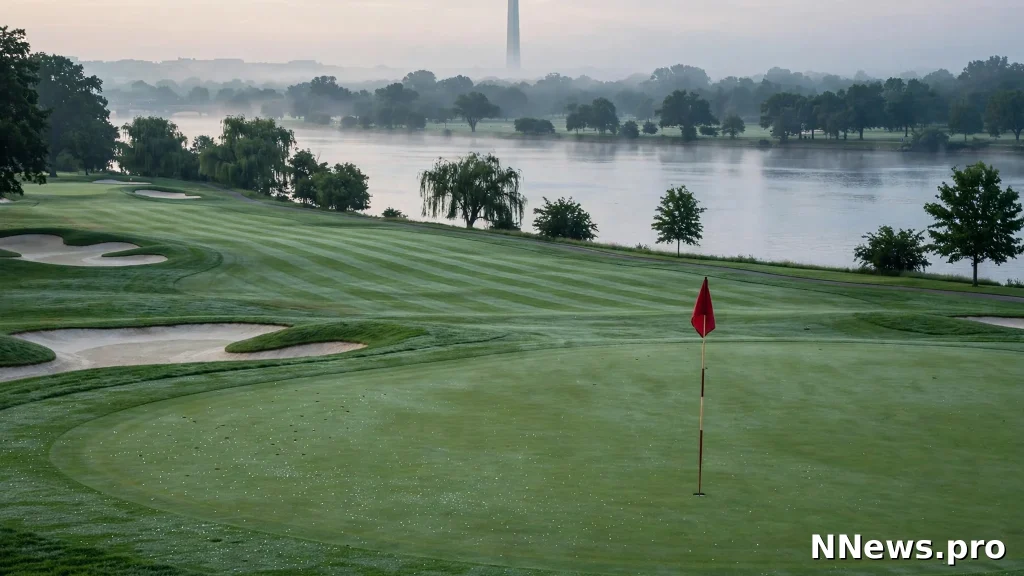
A federal judge on Saturday blocked President Donald Trump’s plan to close and redevelop Washington’s historic East Potomac Golf Links, ordering a two-week halt just hours before the public course was due to shut down Sunday for 15 months of construction.
U.S. District Judge Ana Reyes issued the temporary restraining order late Saturday, November 14, keeping East Potomac Park and its golf course open during the hours they operated as of that day. The order runs through November 28, 2026, or until the court issues a further order.
A closure announced on social media
Trump had announced on October 26 that the course would close on November 15 “in order to renovate and rebuild for Competitive (with other such projects!), Safety, Modernization, and Aesthetic reasons.” He said the goal was to rebuild “a World Championship Public Facility” along the Potomac River, about two miles from the White House.
The redevelopment plan would replace the course’s 36 holes with a single 18-hole championship layout designed by golf architect Tom Fazio.
The DC Preservation League and two local golfers sued to stop the project in February, arguing the plan would change the character of the accessible public course and make it unaffordable. Trump denies that. The plaintiffs sought the stop-work order, saying that closing the course and starting work “would irreparably injure plaintiffs and the public interest.”
The judge pointed to Trump’s own posts
Reyes said the president’s public announcements weighed heavily in her decision. “They indicate that the Washington National Plan is final and that NPS will close the Park to implement it,” she wrote. “Both points favor granting Plaintiffs’ motion for another temporary restraining order.”
The order bars the government from closing the park and the golf course during their normal operating hours, but it does not require the government to actively manage either one. It also leaves the government free to carry out repairs on any part of the park or course, with any notice required by an existing preliminary injunction.
Reyes had signaled throughout a five-hour court hearing on Friday that she was likely to issue some form of stoppage. The only question, according to the Associated Press, was how expansive it would be.
Justice Department lawyer Adam Gustafson argued that the entire East Potomac Park — which includes three golf courses, a miniature course, bike-riding lanes and other recreational areas — was being closed because of safety factors. He also noted that the lease between the government and the current operator, National Links Trust, was ending Sunday.
Reyes pointed out that safety had not been part of the discussion over the closure for months, and that ending the lease felt more like an action that provided a premise for the closure than one that led to it.
Administration response and a tense history
The Justice Department said in a statement Saturday that the judge acknowledged the National Park Service can limit access to its facilities where the public is at risk of harm. “Nothing in the Court’s order precludes planning for the development of a world class golf course to continue,” the department said. “The Department of Justice will always vociferously defend the Trump Administration’s agenda in court.”
Catherine Carroll, a senior legal adviser at Democracy Forward, which represents the plaintiffs, praised the ruling. “We are grateful that once again, a court has intervened to prevent irreparable harm caused by the Trump-Vance administration’s pursuit of another one of the president’s vanity projects,” she said. “The administration’s inexplicable drive to destroy East Potomac Park would have taken away a treasured park that could never be replaced.”
Even before the order, Trump lashed out in a social media post Saturday, contending that Reyes “doesn’t want us to quickly and inexpensively fix up the Course which is, also, very dangerous.” He said people who live in the Washington area would get a 50% discount on “any and all Rates charged” and that the redevelopment would “evolve into something very special, something which the Judge will be able to take great pride in seeing!”
The case, DC Preservation League v. Department of the Interior, has grown unusually tense. Reyes, who was nominated to the court by Democratic President Joe Biden, had for months been reluctant to approve the plaintiffs’ requests for work stoppages. Her reluctance ended in October, spurred in part by a tree-cutting spree by the administration over a holiday weekend with little notification to the judge or plaintiffs.
Related Articles


Officials said the tree work was part of a 2019 plan that recommended the cutting. In response, the judge confronted the administration over what she portrayed as deceitful actions over its intentions for the 106-year-old park. The Justice Department filed a request that Reyes be removed from the case because of what it called her “egregious behavior” and questioned her impartiality. Reyes has not recused herself.
She also announced plans last week to name Jessie Liu, a former U.S. attorney for the District of Columbia, to examine whether officials with the Interior Department and the National Park Service and attorneys with the Justice Department had violated ethics rules or misled her during the case.
Part of a wider pattern
Reyes’ order was the latest in a series of rulings in lawsuits challenging Trump’s projects that were issued just hours before construction was expected to begin. A different judge recently ordered a 14-day delay on work for the triumphal arch near Arlington National Cemetery, a decision that came shortly after a key planning commission stacked with Trump appointees approved plans for the project. Courts have also weighed in on other administration actions this month, including the Supreme Court’s decision clearing the way for border wall construction in Texas’ Big Bend.
The park’s redevelopment is one of multiple projects in the nation’s capital that Trump has championed to remake the city. They include the large memorial arch, a White House ballroom and the John F. Kennedy Center for the Performing Arts, among others.
Why this matters
The ruling keeps a century-old public golf course open, at least through November 28, preserving affordable access to a park that has served Washington golfers since 1920. It also marks another courtroom setback for the administration’s effort to reshape the capital’s public spaces, and it sets up a further hearing before the two-week order expires. The government can continue planning the redevelopment in the meantime, but it cannot close the park or begin construction work while the order stands.
Latest developments
- Judge Ana Reyes issued the temporary restraining order on Saturday, November 14, 2026, after a five-hour hearing the day before.
- The order stays in effect through November 28, 2026, or until the court issues a further order.
- The Justice Department says planning for the redevelopment can continue and has vowed to keep defending the project in court.
- The case is DC Preservation League v. Department of the Interior, No. 1:26-cv-00477, in the U.S. District Court for the District of Columbia.
Frequently Asked Questions
Why did the judge block the East Potomac golf course closure?
Judge Ana Reyes found that the administration’s own announcements showed the closure was meant to start work on the redevelopment plan, not to address safety. She wrote that Trump’s posts indicated the Washington National Plan was final and that the National Park Service would close the park to implement it.
How long does the order last?
The temporary restraining order runs through November 28, 2026, or until the court issues a further order, whichever comes first.
What is the Trump administration’s plan for East Potomac Park?
Under the plan, the course’s 36 holes would be replaced by a single 18-hole championship layout designed by golf architect Tom Fazio, as part of a broader effort to remake public spaces in the nation’s capital.
Can the government still work on the project?
Yes, in part. The Justice Department said the order does not stop planning for the redevelopment. The government also remains free to carry out repairs on the park and course. What it cannot do is close the park or the golf course, or begin construction work, while the order stands.
The court will decide what happens next before the order expires on November 28. Until then, East Potomac Golf Links stays open — and the fight over the future of one of Washington’s oldest public parks continues in federal court.
Sources: Associated Press via WHRO; Associated Press via KXL; The Apex Wire; Focal News.