ICC Closes Afghanistan Investigation That Could Have Examined Alleged Crimes by US Troops
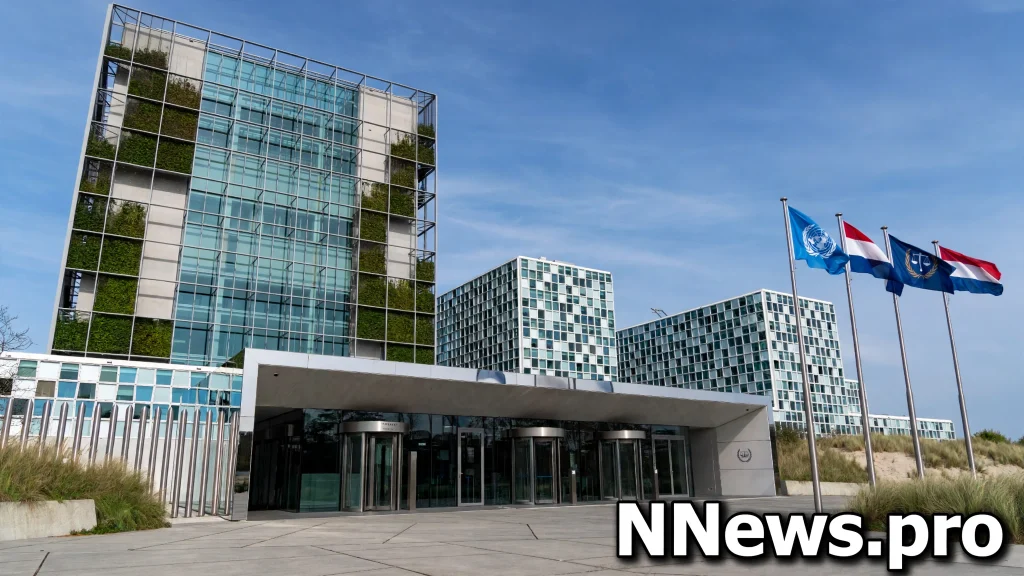
THE HAGUE — Judges at the International Criminal Court have formally closed the court’s original investigation into alleged war crimes in Afghanistan, ending a line of inquiry that could have examined the conduct of American troops and intelligence officers, court documents show.
The decision, ordered by the court’s Pre-Trial Chamber on Thursday, Nov. 12, and made public on Friday, Nov. 13, directs the court’s Registrar to close the records of the original Situation in Afghanistan. A separate investigation into alleged crimes by the Taliban since their return to power in August 2021 will continue.
What the judges decided
The closure ends two strands of the original investigation. The first covered alleged crimes by U.S. troops and intelligence personnel, a line of inquiry that had already lain dormant since 2021, when prosecutor Karim Khan deprioritized it. The second covered alleged crimes by the Islamic State Khorasan militia, known as ISIS-K.
Judges said they took the decision because prosecutors had not shown they would be able to effectively investigate the allegations in Afghanistan apart from the Taliban-focused probe. The prosecutor’s office told Reuters on Friday that it has appealed the decision, though it gave no further details. The Appeals Chamber has not yet set a date to rule on the appeal.
The ruling does not amount to an exoneration. The judges decided whether the case could be effectively investigated, not whether any alleged crimes occurred, and no verdict was ever reached on any named person. It also does not change the court’s founding statute, which allows it to prosecute anyone accused of atrocity crimes committed on the territory of ICC member states.
A case that ran for years
The original Afghanistan investigation was formally authorized in March 2020, when the court’s Appeals Chamber unanimously ruled that a lower chamber had been wrong to refuse one on the ground that it would not serve the interests of justice. Its scope covered alleged crimes in Afghanistan from May 1, 2003, the day Afghanistan joined the Rome Statute, the treaty that created the court.
According to Human Rights Watch, the prosecutor’s allegations concerning U.S. personnel involved U.S. military and CIA personnel and covered torture, cruel treatment, treatment that offended human dignity, and rape and other sexual violence. Those allegations were never proven in court.
Earlier this year, judges ordered prosecutors to split their Afghanistan inquiries into two separate probes: one focusing on alleged crimes committed by the Taliban since 2021, and the other on the original Afghanistan inquiry, which also looked at alleged war crimes by U.S. troops but had shifted toward examining ISIS-K.
The four arrest warrants issued against Taliban leaders remain in effect, and the separate Taliban investigation continues.
Why this matters
The decision is the latest step in a years-long legal tussle between the court’s prosecutors and its judges over the Afghanistan case, and it lands against a tense backdrop. The United States has issued institutional sanctions against the court, citing American opposition to arrest warrants issued for Israeli officials and to the investigation into the actions of U.S. soldiers in Afghanistan.
Related Articles

It is unclear whether formally closing part of the Afghanistan case will be enough to ease American concerns about the court exercising jurisdiction over U.S. nationals, since the closure does not change the Rome Statute itself. The United States is not a party to the statute.
For victims and rights groups, the ruling closes a door that had already been nearly shut for five years. The U.S. line of inquiry had been dormant since 2021, and the judges’ reasoning — that prosecutors could not show they were able to investigate effectively — suggests the practical obstacles, from access to evidence to cooperation on the ground, had become decisive.
Latest developments
The prosecutor’s appeal is now the key question. If the Appeals Chamber agrees with the prosecutors, the original investigation could be reopened; if it upholds the closure, the U.S. and ISIS-K strands of the Afghanistan case will remain shut for good.
The decision comes as Washington has pressed ahead with its own diplomatic calendar, including a planned first trilateral meeting between President Donald Trump, Vladimir Putin and Xi Jinping in Shenzhen next week. European leaders, meanwhile, have moved to secure a direct seat at Ukraine peace talks, naming a five-country team to represent Europe.
Frequently Asked Questions
Does the ICC decision clear U.S. troops of wrongdoing?
No. The judges ruled on whether prosecutors could effectively investigate the allegations, not on the facts themselves. The decision does not establish whether any alleged crimes occurred, and no named person was ever tried or acquitted.
What happens to the investigation into the Taliban?
It continues separately. The court’s probe into alleged crimes committed by Taliban authorities since their return to power in August 2021 is unaffected, and the four arrest warrants issued against Taliban leaders remain in effect.
Can the closure be reversed?
Yes, in principle. The prosecutor’s office has appealed the decision to the Appeals Chamber, the court’s top division of judges. No date has been set for a ruling on that appeal.
The court’s move closes one of the most politically charged chapters in its history, while leaving the question of accountability in Afghanistan to a narrower inquiry focused on the Taliban’s rule since 2021.
Sources: Reuters; Associated Press; The Apex Wire.