Eisenkot Accuses Netanyahu of “Racist and Violent” Campaign Against Arab Citizens
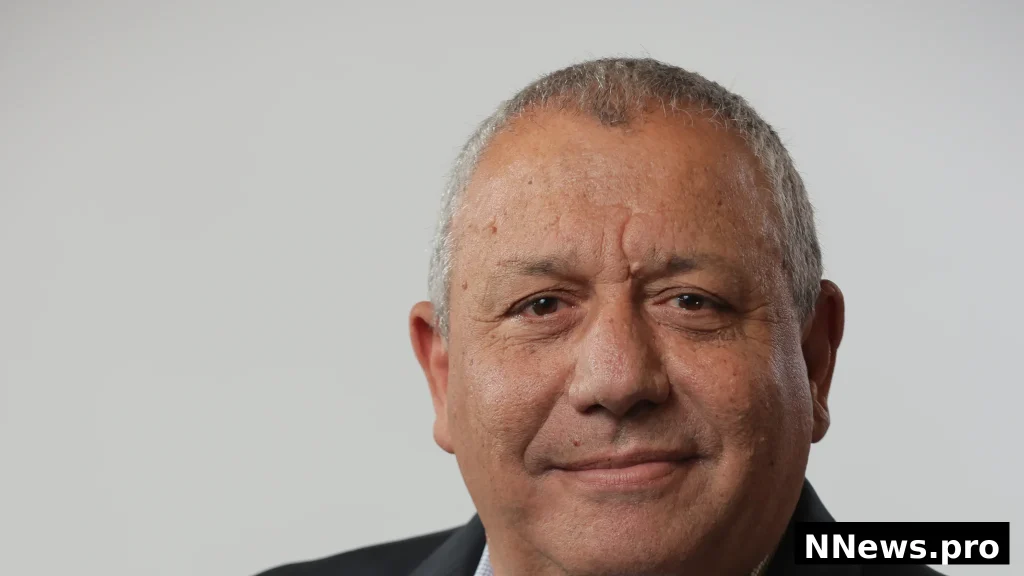
Gadi Eisenkot, the Israeli opposition leader tasked with forming the country’s next government, accused caretaker Prime Minister Benjamin Netanyahu on Friday of fuelling a “racist and violent” campaign against Arab citizens, in one of the sharpest public clashes between the two men since last month’s inconclusive election.
Eisenkot made the accusation in a lengthy statement posted on social media, saying Arab citizens of Israel had been targeted for political gain since the election campaign began. The intervention puts the rights of the Arab minority at the center of coalition talks that will decide whether Netanyahu, Israel’s longest-serving prime minister, finally leaves office.
“Arab citizens of Israel make up 21 percent of the total population. Since the start of the election campaign, they have faced a racist and violent campaign of delegitimisation fuelled by the outgoing prime minister and his circle for political reasons,” Eisenkot wrote.
He added that Israel’s prime minister must represent all citizens, including those who did not vote for him. “Arab citizens of Israel are part of the Israeli story. The attempt to marginalise them and smear them as a group is an anti-state act,” he wrote, adding: “The attempt to marginalize them and vilify them collectively is a profound violation of the principles of statesmanship.”
A row rooted in the election campaign
The clash follows a divisive speech Netanyahu delivered to the opening session of the Knesset, Israel’s parliament, on November 10, in which he referred to Arab lawmakers as “terror supporters” and “haters of Israel.” Netanyahu has criticised Arab-party lawmakers for allegedly refusing to recognise Israel as a Jewish state or to call Hamas a terrorist organisation after its October 7, 2023 attack.
Netanyahu has also alleged electoral fraud involving Arab-majority parties. Israel’s Central Elections Committee certified the results on November 4, finding no evidence that the outcome was compromised.
In his November 10 speech, Netanyahu said his criticism was aimed at politicians rather than Arab voters generally, declaring: “I am not talking about Arabs.” Leaders of the Arab parties condemned the Hamas-led attack, and Ra’am leader Mansour Abbas has previously recognised Israel as a Jewish state, according to The Guardian.
Eisenkot’s statement pushed back directly against that framing. Nadav Eyal, a leading columnist for the centrist newspaper Yedioth Ahronoth, said Eisenkot’s intervention was aimed at Netanyahu’s efforts to delegitimise any cooperation with Arab parties.
The coalition arithmetic behind the row
The dispute matters because the Arab parties hold the balance of power in the new Knesset. In the October 27 election, Eisenkot’s four-party alliance won 48 of the 120 seats, while Netanyahu’s right-wing and religious bloc secured 53. Neither side reached the 61 seats needed for a parliamentary majority.
The two Arab-led parties won a record 19 seats between them — 11 for the Joint List and eight for Ra’am — after receiving more than 835,000 votes. President Isaac Herzog gave Eisenkot the mandate to form a government on November 8, after 67 lawmakers recommended him, against 46 for Netanyahu, with seven abstaining. The seven lawmakers of United Torah Judaism, part of Netanyahu’s 53-seat camp, withheld their endorsement, The Times of Israel reported.
Those recommendations are not commitments to join a coalition, and Eisenkot’s path to 61 seats remains narrow. He has resisted governing with Arab-led parties, while his ally Avigdor Lieberman has said he would not join a coalition that includes them. Eisenkot said negotiations were progressing but announced no agreement.
Under Israeli law, Eisenkot has 28 days to assemble a government, with a possible 14-day extension — giving him until December 6, or December 20 if extended. If he fails, Herzog has three days to decide whether to hand the job to someone else, and it could then fall to Netanyahu.
Why this matters
Arab citizens, most of them Palestinian citizens of Israel, make up about a fifth of the population, and their parties’ record result has made them impossible to ignore in the coalition arithmetic. The argument over their place in Israeli politics is now the central obstacle to forming a government: Eisenkot needs support beyond his own bloc, but the parties whose votes could get him to a majority are the same ones his allies refuse to sit with.
The first test comes on Tuesday, November 17, when the Knesset is scheduled to vote on replacing Speaker Amir Ohana, with former minister Matan Kahana as the opposition candidate. Sixty-seven lawmakers demanded the vote, and the outcome will show whether Eisenkot can command a working majority on the floor.
Related Articles



Netanyahu, meanwhile, remains caretaker prime minister and has renewed his call for a unity government under his own leadership. Eisenkot has instead proposed a national emergency government and said he would do anything possible to prove his camp worthy of trust.
Eisenkot also confirmed that he met Netanyahu for a security briefing on Thursday and called for scrutiny of the caretaker administration’s decisions. He had earlier written to Netanyahu urging restraint after the security cabinet reportedly ordered the military to prepare for a possible strike on Iran. The row also comes as the Mossad chief in Washington pressed the case for renewed strikes on Iran, a move President Donald Trump has so far resisted.
Background: who is Gadi Eisenkot?
Eisenkot is a former military chief who leads the centrist Yashar party, which he founded on an anti-corruption and government reform platform. He previously served in Netanyahu’s government as a member of the emergency war cabinet before leaving with Benny Gantz, another former general, in 2024.
Herzog announced his decision to task Eisenkot with forming a government on November 7 and formally conferred the mandate at a ceremony at the President’s Residence on Sunday, November 8. In his response, Eisenkot framed the moment as a call for a national emergency government, writing on X: “This is the time to establish a national emergency government. I will do anything possible to prove us worthy.”
Latest developments
Eisenkot said coalition negotiations were progressing but announced no agreement as of Friday. He has set four conditions for parties seeking to participate in his government, and has rejected Netanyahu’s unity proposal in its current form. No formal response from Netanyahu’s office to Eisenkot’s accusation had been issued as of Friday evening.
The coming days will show whether the row hardens positions or clears the way for a deal. The speaker vote on Tuesday is the first concrete test of whether Eisenkot’s 67 recommenders can act together. If they cannot, the mandate could return to Herzog — and eventually to Netanyahu.
Frequently Asked Questions
Who is Gadi Eisenkot?
Gadi Eisenkot is a former Israeli military chief and leader of the centrist Yashar party. President Isaac Herzog gave him the mandate to try to form Israel’s next government on November 8, after the October 27 election left no bloc with a parliamentary majority.
What did Eisenkot accuse Netanyahu of?
Eisenkot accused caretaker Prime Minister Benjamin Netanyahu of fuelling a “racist and violent” campaign of delegitimisation against Arab citizens of Israel since the start of the election campaign, saying the community — about 21 percent of the population — had been smeared collectively for political reasons.
Why do the Arab parties matter in the coalition talks?
The two Arab-led parties, the Joint List and Ra’am, won a record 19 seats in the 120-seat Knesset. Eisenkot’s alliance holds 48 seats and Netanyahu’s bloc 53, so neither can reach the 61-seat majority without support from outside its own camp.
What happens if Eisenkot cannot form a government?
Eisenkot has 28 days, until December 6, with a possible 14-day extension to December 20. If he fails, or if his government fails a confidence vote, President Herzog has three days to decide whether to give another lawmaker the chance to form a government.
Final paragraph
Eisenkot’s accusation has turned Israel’s coalition talks into a public argument about who belongs in the country’s political life. With the speaker vote on Tuesday as the first test and a December deadline looming, the dispute over the Arab parties’ role may decide not only who forms the next government, but what kind of government Israel gets.
Sources
Al Jazeera — “Eisenkot slams Netanyahu’s ‘racist’ campaign against Palestinian Israelis,” November 13, 2026
The New York Times — “Eisenkot Accuses Netanyahu of Fueling ‘Racist’ Hostility Against Arabs,” November 13, 2026
Interbellum News — “Israel Coalition Talks Face Rift Over Arab Party Support,” November 13, 2026
The Times of Israel — reporting on the Knesset recommendations and United Torah Judaism’s abstention, November 2026
Anadolu Agency — reporting on Eisenkot’s statement and the Arab parties’ election results, November 13, 2026