Democrat Cindy Holscher Wins Kansas Governor’s Race, Defeating Trump-Backed Ty Masterson
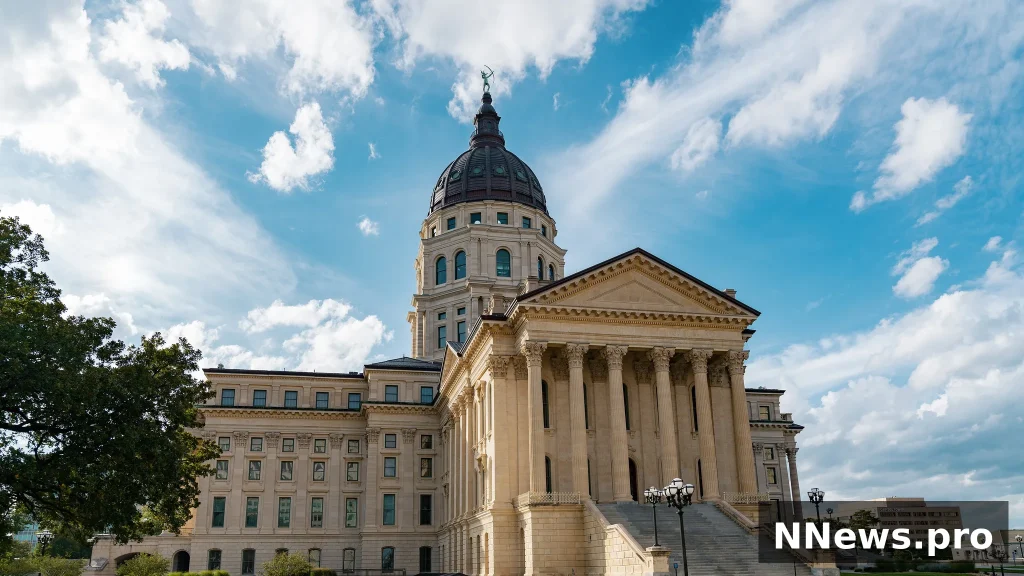
Democrat Cindy Holscher has won the race for governor of Kansas, defeating Republican Ty Masterson in one of the closest and most closely watched contests of the 2026 midterm elections, The Associated Press projected on Thursday, November 12.
Holscher, a 57-year-old state senator from Overland Park, held a lead of roughly 7,000 votes — about 50.3 percent to 49.7 percent — when the AP called the race, nine days after Election Day on November 3. Masterson conceded the same day, calling Holscher to congratulate her.
A narrow win in a deep-red state
Kansas was widely seen as the Republicans’ best chance to flip a governor’s office this cycle. Of the 36 governor’s races held across the country in 2026, Kansas was considered the most likely to change hands from Democratic to Republican control, according to NPR. Instead, Democrats will keep the governor’s mansion for a third consecutive election.
The result came despite a steep spending gap. Republicans outspent Democrats on advertising by nearly 3 to 1, according to AdImpact figures cited by NBC News, and Masterson carried the endorsement of President Donald Trump.
Holscher will succeed term-limited Democratic Governor Laura Kelly, who served eight years in a state with a heavily Republican legislature that usually votes Republican for other offices and in presidential elections. Kansas has backed the Republican candidate for president in every election since 1968. Holscher is set to be sworn in as governor on January 11, 2027.
Why the race took nine days to call
The race remained too close to call on election night, with Holscher holding only a slim lead. The AP did not project a winner until days of counting provisional ballots were complete and local officials had carried out recounts in the closely contested election.
Under Kansas law, a close-race audit is required when the margin between the top two candidates is within 1 percent of the total votes cast. The audit involves reviewing ballots in 10 percent of precincts in each county. Holscher had declared victory the morning after the election, and Kelly had already referred to her as “governor-elect” before the AP call.
Masterson, the president of the Kansas Senate, acknowledged the outcome in a post on X, writing: “It looks like we will come up just short, but the things we fought for are no less important today than they were yesterday.” He said he had called Holscher to congratulate her on her election.
Two very different campaigns
Holscher, who has served in the Kansas Senate since 2021 after four years in the state House, ran a campaign with populist notes, promising to fight what she called “sweetheart deals” for billionaires. She tied Masterson to his work in the state Senate when it passed a tax cut under former Republican Governor Sam Brownback that led to a series of budget crises and was later repealed.
She opposed school vouchers and called for more support for public schools. She also called for a moratorium on new data centers and for legalizing cannabis as a way to generate state revenue.
Masterson, 57, campaigned on lower property taxes and said faith influenced all his decisions, including in politics. He promised to be the “most pro-ag, pro-business, pro-oil and gas governor” the state has seen, and he backed school vouchers. During the campaign he called Holscher the “most radical, liberal, socialist” Democrat ever on a ticket in Kansas.
“He likes to throw around a whole lot of labels,” Holscher responded. “You know why? Because that’s all he’s got.”
Related Articles

What happens next
Holscher’s victory does not change the balance of power in Topeka. Republicans continue to hold majorities in both chambers of the Kansas Legislature, and Masterson said he would return to the Senate in January to focus on property taxes, public safety, affordability and schools.
That divided government will shape her first term. As governor, Holscher will face a legislature that can override her vetoes, and her proposals — including the data center moratorium and cannabis legalization — will need Republican support to become law.
The Kansas result adds to a strong midterm showing for Democrats, who were also projected to win control of both chambers of Congress. Alongside the Mississippi Senate race, where Democrat Scott Colom defeated Republican Cindy Hyde-Smith, it showed Democrats winning statewide in states that usually vote Republican.
Why this matters
Governors control vetoes, budgets and the implementation of state policy, and Kansas was the top Republican pickup target in the country this year. Holding the office keeps Democrats in charge of a state government in the middle of the country, even as Republicans dominate its legislature and its presidential voting.
For Masterson, the loss ends a bid to take the state’s top job after years as one of its most powerful lawmakers. For Holscher, the win caps a rise from the state House to the governor’s office in less than a decade — and sets up four years of negotiation with a Republican legislature.
Frequently asked questions
Who won the Kansas governor’s race in 2026?
Democrat Cindy Holscher defeated Republican Ty Masterson. The Associated Press projected her as the winner on Thursday, November 12, 2026, nine days after Election Day. She won by about 7,000 votes, roughly 50.3 percent to 49.7 percent.
Did Ty Masterson concede?
Yes. Masterson conceded on November 12, the same day the AP called the race. He said he had called Holscher to congratulate her and posted that “it looks like we will come up just short.”
When does Cindy Holscher take office as Kansas governor?
Holscher is set to be sworn in as governor of Kansas on January 11, 2027, succeeding term-limited Democratic Governor Laura Kelly.
Why did the Kansas governor’s race take so long to call?
The margin was under 1 percent, which triggered a close-race audit under Kansas law. Officials spent days counting provisional ballots and reviewing ballots in 10 percent of precincts in each county before the AP projected a winner.
The bottom line
Cindy Holscher’s narrow win keeps the Kansas governor’s office in Democratic hands for a third straight election, denying Republicans their top pickup target of the 2026 midterms. She takes office on January 11, 2027, facing a Republican-controlled legislature that will test her agenda from day one.
Sources
- Associated Press via NPR/KDLG — “Cindy Holscher wins in Kansas, holding governor’s office for Democrats” (Nov 12, 2026)
- NBC News — “Democrat Cindy Holscher defeats Republican Ty Masterson in Kansas governor’s race” (Nov 12, 2026)
- Fox News — “Democrat Cindy Holscher wins Kansas governor’s race, extending party’s hold on governor’s mansion” (Nov 12, 2026)
- KCTV and KMBC — reporting on vote totals and Masterson’s concession (Nov 12, 2026)