Boeing to Cut 5% of Commercial Airplane Workforce as 737 Max Production Ramp Slows
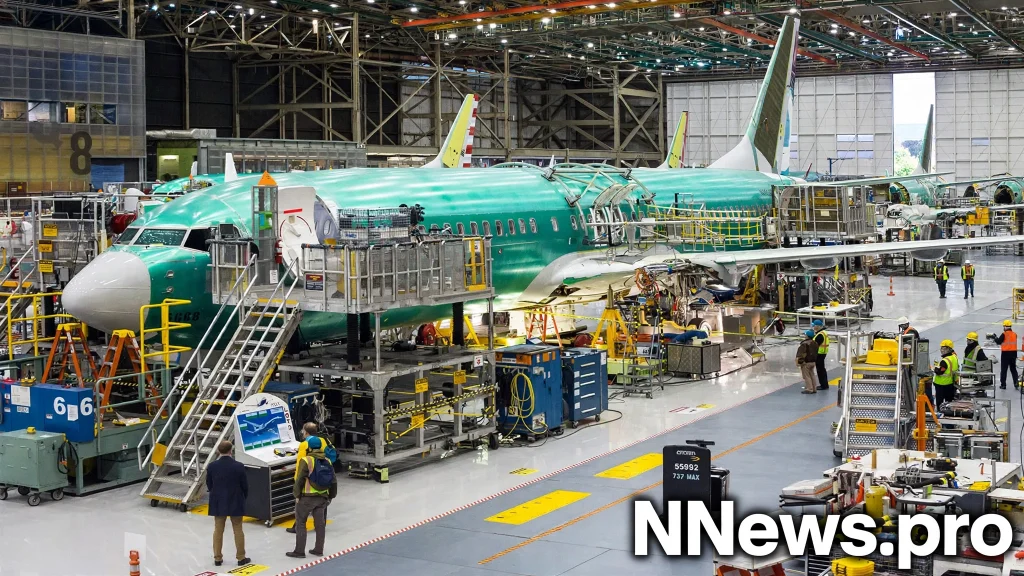
Boeing will cut about 5% of the workforce in its commercial airplanes division, the company told employees on Monday, as a slower-than-expected ramp-up in 737 Max production leaves the planemaker with more staff than its revised production schedule can support. The reductions will come through a mix of attrition and involuntary layoffs, with affected employees set to begin receiving notices in December.
The move, announced in an internal memo from Stephanie Pope, chief executive of Boeing Commercial Airplanes, is the company’s first round of job cuts since chief executive Kelly Ortberg eliminated 17,000 positions in 2024. It lands at a moment when Boeing’s recovery — long promised to investors — is again running behind schedule.
What Boeing Announced
Pope told employees in the memo, which was reviewed by Reuters and by Leeham News and Analysis, that Boeing needs to reset the pace of its production increases to give its factories and suppliers more time to reach stability.
“As shared in our third-quarter earnings, we need to reset the pace of our production rate ramps to provide our factories and supply chain partners additional time to achieve stability. Adjusting our production schedules and reducing aircraft output puts us in an overstaffed position,” Pope wrote.
“Unfortunately, that means we need to align our staffing levels to our revised business plan, resulting in a reduction of approximately 5% through a combination of attrition and involuntary layoffs,” she added.
Boeing has not said exactly how many people will lose their jobs, or which teams and locations will be hit hardest. The commercial airplanes division employed 50,494 people as of December 2025, according to the company’s website, which would put a 5% reduction at roughly 2,500 positions. That figure is an estimate based on the headcount, not a number Boeing has confirmed.
Notices will go out in December at the earliest, according to the memo. Boeing is required in many states to give workers 60 days’ notice before a layoff takes effect, so most affected employees would leave the payroll early next year. Some of the reduction will come from open positions left unfilled rather than from layoffs, and there was no immediate indication of how the cuts will be distributed across the division.
Shares of Boeing slipped less than 1% in afternoon trading on Monday after the news emerged.
Why Production Is Slowing
The 737 Max, Boeing’s best-selling jet and its single largest source of cash, is at the center of the problem. The company disclosed during its third-quarter earnings call late last month that it was moving more slowly on its monthly production ramp than previously expected, with wing production the pacing item, according to Leeham News.
Ortberg told analysts last month that Boeing would miss its 737 production and delivery targets for this year. The company now expects to reach a rate of 47 jets a month in early 2027, after previously projecting it would hit that pace by summer 2026. It does not expect to reach 52 a month until the second half of 2027.
The delays are not limited to the 737. Boeing has also struggled to increase production of its popular 787 widebody jet from eight jets a month to ten a month, and its 767 and 777 programs have been disrupted as well, Reuters reported last month.
The pattern is familiar to anyone who has followed Boeing in recent years: the company sets an ambitious production target, its factories and suppliers cannot keep up, and the schedule slips. Each delay pushes back the cash flow Boeing needs to pay down the heavy debt it took on during years of crisis and controversy, and each one tests the patience of airlines waiting for jets they ordered years ago.
What It Means for Workers
For Boeing’s commercial airplane employees, the memo confirmed a fear many had already voiced. Ahead of Monday’s announcement, several workers told Reuters they had worried layoffs could be coming.
Pope pointed to signs of progress in the division over the past two years, including certification of the 737 Max 7 and Max 10 and a broad culture shift focused on safety and quality. “While we have made substantial progress, we have not yet fully recovered,” she wrote, adding that the company would support workers through the “career transitions” ahead.
Earlier this year, Boeing avoided a strike by reaching a new four-year contract with the white-collar SPEEA union, which represents mostly commercial employees. That agreement removed one source of uncertainty for the division, but it did not change the underlying production math.
The cuts will fall on a workforce concentrated in the Seattle area, where Boeing’s commercial airplane operations are based, although the company has not said which sites will be affected most. Washington state law, like that of many states, requires advance notice of mass layoffs, which is one reason notices will not begin until December.
Boeing’s Long Road Back
The job cuts are the latest reminder that Boeing’s turnaround remains fragile. Ortberg, who became chief executive in 2024, inherited a company with a dented reputation, heavy debt and stricter regulatory scrutiny after years of crises. His first major act was cutting 17,000 jobs — about 10% of the workforce at the time — to steady the company’s finances.
Related Articles



Since then, Boeing has made progress in fits and starts. Its commercial airplanes backlog stood at more than 6,300 airplanes, valued at a record $612 billion, at the end of the third quarter. Airlines still want its jets. The problem is building them fast enough, and safely enough, to satisfy both customers and regulators.
Ortberg also told analysts last month that Boeing does not expect to reach $10 billion in annual free cash flow until 2029, a year later than analysts had expected. That target is seen by investors as a critical milestone in the company’s financial recovery, because free cash flow is what Boeing needs to reduce debt and eventually return money to shareholders.
The 737 is central to that calculation. As Boeing’s single largest cash generator, higher output is essential to the recovery. Every month the production ramp slips is a month of delayed deliveries — and delayed payments from airlines.
The broader market context has been mixed. Wall Street staged its best day since April on Monday, with the Dow Jones Industrial Average jumping more than 1,100 points as oil prices plunged, but Boeing shares moved the other way after the layoff news. Even as corporate America resets plans — Anthropic, for example, recently withdrew pricing details for a nearly $70 billion IPO after the numbers circulated — Boeing’s challenge is more basic: it must build airplanes at the pace it promised.
Why This Matters
For American workers, the cuts are a reminder that the aerospace industry’s recovery is uneven. Boeing is one of the country’s largest manufacturers and exporters, and its commercial airplane division supports tens of thousands of jobs directly, plus many more at suppliers across the country. A 5% reduction is modest compared with the 17,000 jobs cut in 2024, but it still means roughly 2,500 people facing an uncertain holiday season.
For airlines and travelers, slower production means longer waits for new aircraft. Carriers that ordered 737 Max jets years ago may have to keep older, less efficient planes in service longer, which can affect ticket prices and route planning.
For investors, the announcement confirms that Boeing’s recovery timeline keeps slipping. The company’s own forecasts — 47 jets a month in early 2027, $10 billion in free cash flow in 2029 — are now the yardsticks by which Ortberg’s turnaround will be judged.
And for the Pacific Northwest, where Boeing has been a pillar of the economy for more than a century, each round of cuts reopens a familiar question: how much of the company’s future will still be built in the Seattle area.
Latest Developments
The memo went out to Boeing Commercial Airplanes employees on Monday, November 9. Layoff notices are expected to begin in December, and the company has not yet said which departments or locations will be most affected.
Boeing’s next quarterly earnings report will offer more detail on costs and delivery expectations, and investors will be watching for any update to the production targets. The company’s next steps — including how many of the reductions come through attrition rather than layoffs — will become clearer as December approaches.
Frequently Asked Questions
How many jobs is Boeing cutting?
Boeing said it will reduce its commercial airplanes workforce by about 5%. The division employed 50,494 people as of December 2025, which would imply roughly 2,500 positions — but Boeing has not confirmed an exact number, and some of the reduction will come through attrition rather than layoffs.
When will affected employees be notified?
Notices will begin going out in December at the earliest, according to the memo from Stephanie Pope. Boeing must give workers 60 days’ notice in many states, so most departures would take effect early next year.
Why is Boeing cutting jobs now?
The company says slower-than-expected production increases have left the division overstaffed. Boeing is resetting the pace of its 737 Max production ramp — wing production is the pacing item — and now expects to reach 47 jets a month in early 2027 rather than by summer 2026.
Which Boeing programs are affected?
The 737 Max is the main driver, but Boeing has also struggled to raise 787 production from eight to ten jets a month, and its 767 and 777 programs have been disrupted. The company has not said which teams or locations will be hit hardest by the cuts.
Boeing’s decision to cut about 5% of its commercial airplane workforce is a measured response to a production recovery that keeps falling behind schedule. The company still has a record order backlog and airlines still want its jets, but until its factories and suppliers can build airplanes at the promised pace, Boeing will keep paying for the gap — this time with jobs. The next test comes in December, when the first notices go out, and again when the company reports its next quarterly results.
Sources: Reuters (via SRN News); Leeham News and Analysis; CNBC (via Stocktwits); HRD America.