France Accuses Iran’s Revolutionary Guards of Cyberattack That Set Supermarket Fridges on Fire
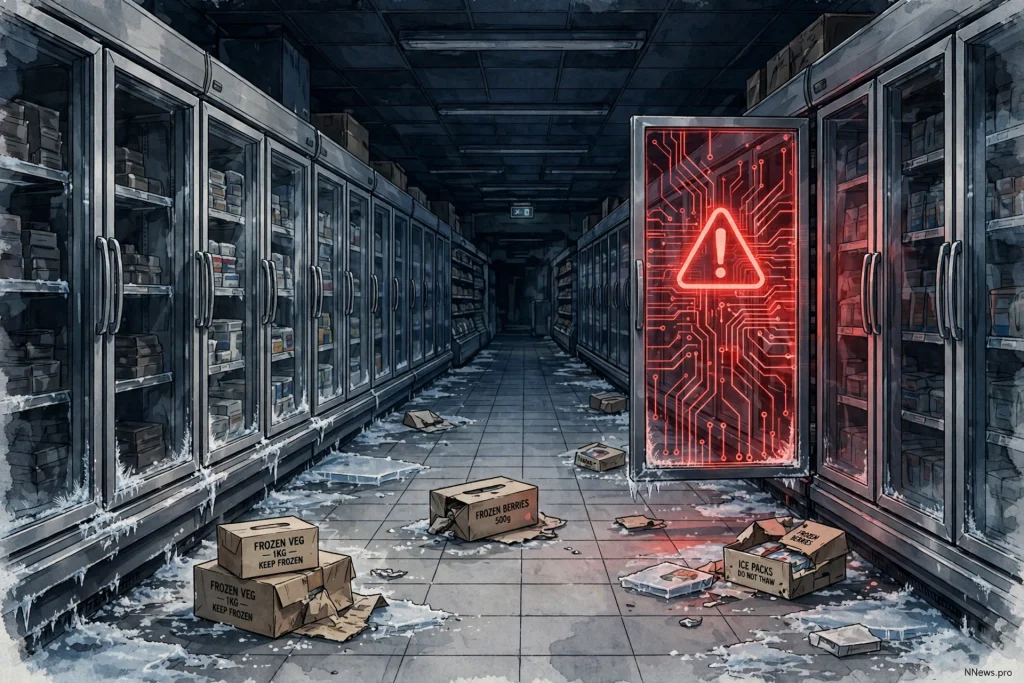
PARIS — France accused Iran on Monday, November 9, of carrying out cyberattacks that knocked out commercial refrigerators in supermarkets across the country, causing fires, millions of euros in spoiled food, and a second wave of attacks that reached blood banks and stores across Europe.
Foreign Minister Jean-Noel Barrot said a cyber unit affiliated with Iran’s Islamic Revolutionary Guard Corps (IRGC) was responsible for the attacks on October 11 and 12. “I can confirm that this attack was carried out by the Islamic Revolutionary Guard Corps of the Islamic Republic of Iran,” Barrot said. “This attack is unprecedented in both its scale and its level of aggression.”
The Paris prosecutor’s office said it had requested international arrest warrants against the leader of Shahid Kaveh, an offensive cyber unit affiliated with the Revolutionary Guards, and his two deputies. Barrot said the Iranian ambassador had been summoned and that sanctions would be brought against Iran at a “European level”.
How the attack worked
According to French authorities, hackers gained internet access to refrigeration systems and remotely raised temperatures to 50 degrees Celsius (122 degrees Fahrenheit) during the night, when shops were closed. Millions of euros worth of food was spoiled, retailers said. In some cases, the raised temperatures sparked fires or melted equipment.
The scale was large. More than 1,000 stores were hit, according to Al Jazeera’s summary of the French account. At least 300 of Intermarche’s stores and its Netto brand were affected. Cooperative U said more than 100 of its supermarkets were targeted, Carrefour said 80 supermarkets were affected, and Monoprix reported that about 5 percent of its roughly 490 stores were hit. E-Leclerc was also among the supermarket groups affected.
Reuters, citing two people familiar with the matter, reported that French officials suspected Iranian state-backed hackers were behind the attacks. Experts had previously told Reuters the attack appeared easy to carry out: several units were obsolete or running outdated firmware. The total cost could add up to tens of millions of euros nationwide, one supermarket owner estimated. Iran routinely denies carrying out malicious cyber operations.
Related Articles



A second wave — and a warning from the US
The attacks did not stop in October. Reuters reported that the hacks were followed this month by a second wave that hit more than 100 establishments across Europe and affected refrigerators used by French blood banks, prompting employees to move some blood to different cold storage units.
The sabotage in Europe was preceded by at least one similar incident in the United States. In August, refrigerators in at least half a dozen military commissaries went out of commission. Pentagon investigators are treating the malfunctions as a suspected cyberattack and are working with French officials, Reuters reported. A person familiar with the matter said the Pentagon considers Iran a suspect in the August commissary hacks, but that the investigation is still in progress.
Why this attack matters
The fridge attacks show how a relatively simple intrusion can cause outsized harm when it targets everyday infrastructure. The systems were not military networks or government servers. They were the refrigeration units that keep food safe in supermarkets — and, in the second wave, blood safe in blood banks. Outdated firmware and internet-connected controls turned an ordinary appliance into a point of failure for food supply and public health.
The risk now is repetition. The same Danish-made refrigeration systems are used beyond France, and the second wave shows the method can be reused across borders. European governments will need to answer two questions quickly: how many similar systems are still exposed, and how fast they can be patched or taken offline. Until those answers are clear, the warning from Paris is not only about who carried out this attack, but about how easily the next one could happen.







[…] industry has spent much of the past week dealing with security fallout on several fronts. France blamed Iran’s Revolutionary Guards for a cyberattack that set supermarket refrigerators on … at nearly 700 food distribution sites in October, and Nvidia said its board had opened an […]