SpaceX Starship Flight 15 Booster Catch Aborted as Ship 42 Heads to Orbit
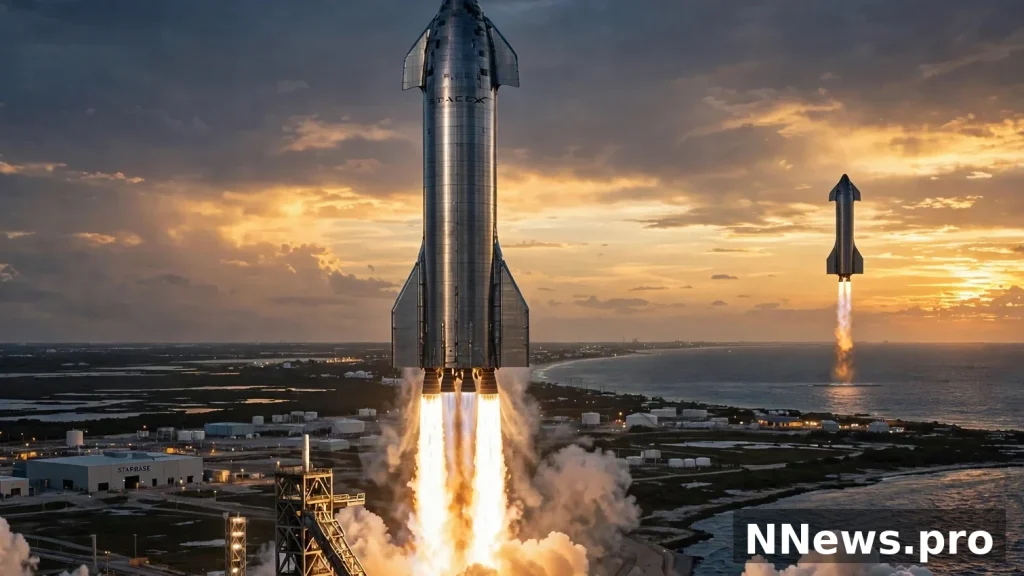
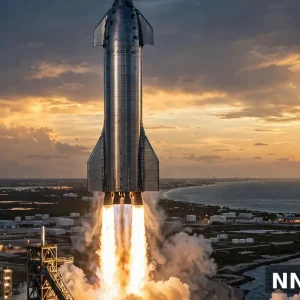
SpaceX launched its giant Starship rocket on its 15th test flight Friday evening, but the planned first catch of the Super Heavy booster at the launch tower was called off minutes after liftoff, and the booster was diverted to a splashdown in the Gulf of Mexico.
The 407-foot-tall vehicle lifted off at 5:45 p.m. EST from Orbital Launch Pad 2 at SpaceX’s Starbase facility in Texas, at the opening of a 75-minute launch window. The upper stage, Ship 42, reached orbit successfully and was due to deploy 26 Starlink V3 satellites before a planned return to the same tower on Saturday afternoon.
What happened to the booster
The flight’s opening minutes went largely as planned. The rocket passed through maximum aerodynamic pressure about 58 seconds after liftoff, the booster’s engines cut off at two minutes 19 seconds, and hot-staging separated the two stages cleanly.
The trouble began during the booster’s return. One engine failed to relight during the boostback burn, according to SpaceX’s flight timeline. The booster then began its landing burn at about six minutes 10 seconds into the flight, stepping down from 13 engines to five, then three, as it descended toward the tower.
At six minutes 35 seconds, the planned catch did not happen. SpaceX aborted the tower-catch attempt and diverted Booster 22 offshore. The webcast commentary confirmed a successful splashdown in the Gulf of Mexico, where the booster had a pre-planned contingency landing zone.
The aborted catch means SpaceX will not achieve a full double recovery on this flight. The booster catch was the first half of the mission’s headline goal: catching both stages of an orbital rocket at the same launch tower on a single flight.
Ship 42 is still flying
While the booster came down in the Gulf, the mission’s second half remains alive. Ship 42, nicknamed “Don’t Panic,” shut down its engines at eight minutes nine seconds and entered a low Earth orbit at an altitude of about 275 kilometers (171 miles).
The ship was scheduled to deploy its 26 Starlink V3 satellites about 35 minutes after liftoff, then coast for roughly 21 hours and complete about 14 orbits. Three of the satellites carry cameras intended to inspect the ship’s heat shield during the flight.
If the ship’s systems pass their health checks, it will fire a deorbit burn on Saturday and attempt the first catch of a Starship upper stage at the tower, at about 4:17 p.m. EST. SpaceX has never caught a ship before, and the attempt requires the vehicle to fly back over northern Mexico and southern Texas before flipping vertical above the launch pad.
Why this flight mattered
Flight 15 was designed as the most ambitious Starship test yet. SpaceX has caught the Super Heavy booster three times before, most recently in March 2025, but Friday’s attempt was the first for a Block 3 booster and the first catch attempt at the new Pad 2 tower.
A successful double catch would have marked the first full recovery of an orbital launch system, a milestone SpaceX describes as a breakthrough toward making Starship a reliable, rapidly reusable rocket. Company chief executive Elon Musk said in September that he put the odds of catching the ship on the first attempt at “at least 50 or 60 percent,” and confirmed in October that both catches would be attempted.
Related Articles


The mission is also only the second operational Starship flight. Flight 14, on September 28, became the first Starship mission to reach orbit and deploy operational satellites, putting 26 Starlink V3 satellites into orbit despite an engine shutdown during ascent. That booster made a soft splashdown in the Gulf, and the ship came down in the Pacific Ocean after about three hours.
A license granted on launch day
The Federal Aviation Administration issued the launch license for Flight 15 on Friday, the day of the flight, including permission for both stages to return to Starbase. The approval had been the final open item before launch, because the ship’s return path crosses populated areas in northern Mexico and southern Texas.
The launch came on the same day the FAA ordered the FAA’s nationwide ground stop for departing flights at all United States airports after a communications failure hit air traffic control centers. The ground stop applied to airport departures, not to the rocket launch, which proceeded as scheduled at 5:45 p.m. EST.
Latest developments
Ship 42 remains in orbit as of Friday evening, with its satellite deployment and long coast phase ahead. SpaceX will decide during the coast whether the ship is healthy enough to attempt the tower catch on Saturday afternoon.
If the ship’s reentry, landing burn or tower approach systems fail their checks, the vehicle has pre-cleared splashdown options in the Pacific Ocean near Hawaii or off Chile, and a contingency landing zone in the Gulf of Mexico. Controllers can also end the reentry early by tumbling the ship so it burns up.
The next update will come after the satellite deployment and again on Saturday, when the ship’s return attempt will determine whether Flight 15 still delivers a first: the first catch of an orbital spacecraft at a launch tower.
Frequently Asked Questions
Did the Starship Flight 15 booster explode?
No. The Super Heavy booster catch was aborted and the booster was diverted to a planned offshore landing zone, where SpaceX’s webcast commentary confirmed a successful splashdown in the Gulf of Mexico.
Is the Starship Flight 15 mission over?
No. Ship 42 reached orbit and is due to deploy 26 Starlink V3 satellites, then coast for about 21 hours before attempting a tower catch at Starbase on Saturday afternoon, November 14.
What would a successful double catch have meant?
Catching both the booster and the ship on one flight would have been the first full recovery of an orbital launch system, a key step toward SpaceX’s goal of rapidly reusing Starship for satellite launches and, eventually, Moon and Mars missions.
When is the ship catch attempt?
The ship is scheduled to attempt its tower catch at about 4:17 p.m. EST on Saturday, November 14, about 22 and a half hours after liftoff, if its systems pass their health checks.
SpaceX launched Starship Flight 15 with the goal of recovering both stages at one tower, and only half of that plan survived the first seven minutes. The booster is in the Gulf, but the ship is still in orbit — and Saturday’s catch attempt will decide whether the flight still makes history.
Sources: Wikipedia (Starship flight 15); SpaceX (Starship Flight 15 mission page); NASASpaceflight; Space.com; Spaceflight Now; Reuters (via 1027 WBOW).